
The rapid evolution of industrial environments from static production lines to highly adaptive, software-defined ecosystems has fundamentally altered the expectations placed upon global engineering partners. Quest Global has established itself as a cornerstone of this transition, recently earning a “Leader” designation in the ISG Provider Lens report for Manufacturing Industry Services and Solutions. This recognition is not merely a reflection of market share but a testament to the company’s ability to synchronize complex digital strategies with the rigorous physical requirements of modern global enterprises. As manufacturing entities move away from fragmented workflows, the demand for mid-tier firms that possess both deep domain expertise and technical agility has reached an all-time high. By maintaining a workforce of over 21,500 specialized professionals across 93 delivery centers, the organization has demonstrated that localized delivery combined with massive global scale is the most effective way to navigate the current industrial landscape.
The strategic vision required to lead in this space involves more than just implementing new software; it requires a fundamental rethinking of how products are conceived, built, and maintained throughout their entire lifecycle. The ISG report specifically highlights the company’s competitive strength in categories such as Design and Development Services and Smart Factory solutions, positioning them at the forefront of the industry’s most critical technical shifts. These sectors require a unique blend of historical engineering knowledge and forward-looking digital fluency, a combination that many generalist providers struggle to maintain. By focusing on specific high-growth areas like semiconductors, aerospace, and energy, the firm provides tailored solutions that address the nuanced regulatory and technical challenges inherent in these fields. This targeted approach ensures that manufacturing clients do not just adopt new technologies for the sake of modernization but instead leverage them to achieve measurable improvements in efficiency and market readiness.
Advancing Product Lifecycles Through Digital Thread Integration
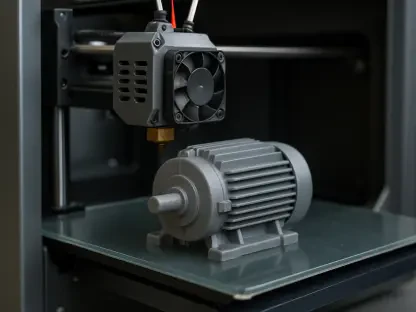
The implementation of sophisticated Product Lifecycle Management (PLM) systems serves as the primary engine for creating a seamless digital thread that connects every stage of the manufacturing process. Quest Global has mastered the nuances of major industry platforms, including Siemens Teamcenter, Dassault Systèmes 3DEXPERIENCE, and PTC, allowing them to construct unified data environments for diverse manufacturing clients. This technical capability ensures that every piece of data generated during the design phase remains accessible and actionable during production, maintenance, and eventual decommissioning. By breaking down the silos that traditionally exist between design teams and shop floor operators, the firm enables a level of lifecycle traceability that was previously impossible to achieve. This continuity is essential for companies in discrete manufacturing that must manage thousands of individual components while maintaining strict quality control and adherence to evolving international safety standards.
Beyond basic software implementation, the firm integrates advanced control systems and product test engineering into the development cycle to accelerate the path to market. This holistic approach means that potential production bottlenecks or material failures are identified and addressed long before a physical prototype is even constructed. By utilizing simulated environments and virtual testing protocols, the organization helps manufacturers reduce the costs associated with physical iterations while simultaneously enhancing the reliability of the final product. The ability to manage these complex digital threads across multiple geographic locations and time zones allows global enterprises to maintain a consistent standard of excellence, regardless of where their design or manufacturing hubs are located. This level of integration is what ultimately distinguishes a modern engineering partner from a traditional service provider, as it transforms the engineering process into a dynamic, data-driven discipline.
Bridging The Gap Between Information And Operational Technologies
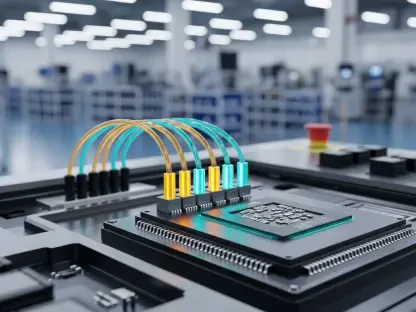
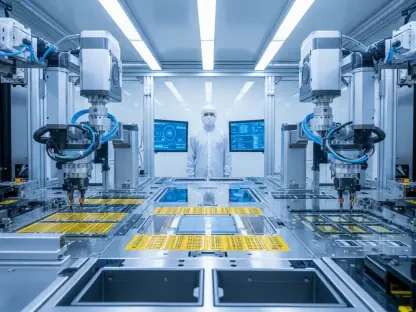
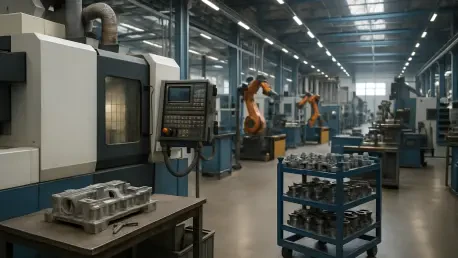
Modernizing shop floor operations requires a sophisticated convergence of Information Technology (IT) and Operational Technology (OT), a task that remains one of the most significant hurdles for legacy manufacturers. Quest Global addresses this challenge by deploying a comprehensive suite of Smart Factory Services that utilize Artificial Intelligence (AI) and digital twins to create secure, scalable production environments. These technologies allow for the creation of virtual replicas of physical assets, enabling operators to monitor performance in real-time and predict maintenance needs before they lead to costly downtime. By integrating these digital insights directly with Manufacturing Execution Systems (MES), the firm provides a transparent view of the entire production line, from raw material intake to final packaging. This visibility is crucial for building the resilient, data-driven production frameworks that are necessary to survive in a volatile global market characterized by fluctuating demand and supply chain disruptions.
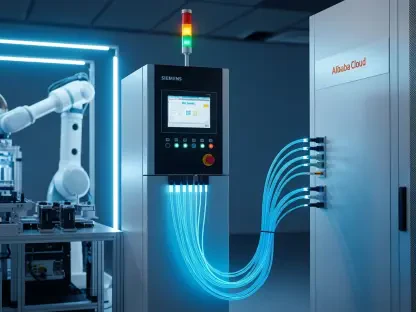
The infrastructure supporting these smart factories is increasingly reliant on major cloud platforms like AWS, Microsoft Azure, and Google Cloud, which provide the necessary computing power for high-level data analytics. Quest Global’s expertise in these cloud environments ensures that the massive amounts of data generated by connected factory devices are not only stored securely but are also processed into actionable business intelligence. This transition to a cloud-augmented manufacturing model allows for greater flexibility, as production parameters can be adjusted remotely based on real-time market data or supply constraints. Furthermore, the focus on cybersecurity within these integrated environments ensures that the proprietary designs and operational data of manufacturing clients remain protected against increasingly sophisticated threats. This dual focus on connectivity and security creates a stable foundation for the next generation of industrial growth, where the physical and digital realms operate in near-perfect synchronization.
Strategic Impacts On Global Industrial Supply Chains
The successful execution of these engineering strategies resulted in a profound shift in how global industrial supply chains managed complexity and uncertainty throughout the current year. By prioritizing end-to-end engineering solutions, manufacturers achieved a higher degree of agility, allowing them to pivot production capabilities in response to rapid technological shifts in the automotive and semiconductor sectors. The integration of AI-driven analytics into the shop floor provided the necessary foresight to mitigate logistics bottlenecks, while the use of digital threads ensured that regulatory compliance was maintained without sacrificing the speed of innovation. Organizations that adopted these holistic engineering frameworks found themselves better positioned to handle the demands of a hyper-connected market, as their internal processes became as dynamic as the external environments in which they operated. This transition demonstrated that the value of an engineering partner is measured by their ability to provide long-term operational stability.
Looking ahead, the emphasis for manufacturing leaders must remain on the continuous refinement of these digital-physical integrations to ensure sustained competitive advantages. Executives should consider deepening their investments in IT/OT convergence and expanding the use of digital twins beyond individual factories to encompass entire global supply networks. This systemic approach will be vital for addressing the sustainability and efficiency targets that are now mandatory for large-scale industrial operations. Firms are encouraged to evaluate their current engineering partnerships based on the ability to deliver specialized, domain-specific expertise rather than generic digital support. As the industry moves further into this era of intelligent production, the organizations that prioritize deep technical integration and data-driven decision-making will be the ones to define the future of the global industrial landscape. The path forward required a commitment to innovation that was both technically ambitious and practically grounded in the realities of physical production.