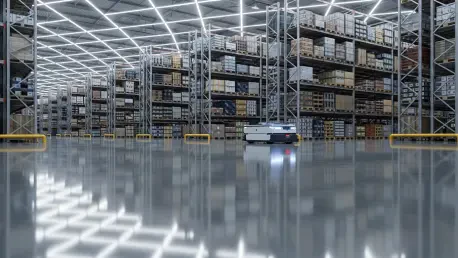

The transformation of a simple concrete slab into a seamless, high-performance surface capable of withstanding immense industrial punishment is a testament to advanced polymer chemistry, and launching a manufacturing plant to produce these systems is an equally complex and strategic undertaking. As global demand for durable, hygienic, and aesthetically pleasing flooring solutions accelerates, the opportunity for new manufacturers to enter the market has never been more compelling. This venture, however, extends far beyond the simple blending of chemicals; it requires a sophisticated integration of formulation science, precision engineering, rigorous quality control, and an astute understanding of a diverse and demanding market. Successfully navigating this landscape involves a meticulous approach to planning, from initial capital investment and plant design to product development and channel strategy, ultimately determining whether a new enterprise thrives or falters in this competitive yet rewarding industry.
Understanding the Market and Manufacturing Essentials
The core discipline of epoxy flooring manufacturing involves the intricate industrial process of formulating and producing multi-component resinous coating systems designed for high-performance applications. This process begins with the careful selection and combination of base epoxy resins, typically derived from bisphenol A or bisphenol F, which are then precisely blended with a range of curing agents, or hardeners, that initiate the polymerization reaction. To achieve specific performance characteristics, this chemical backbone is augmented with functional fillers such as silica sand and quartz for strength and texture, specialized pigments for color and opacity, and a suite of advanced additives that control critical properties like viscosity, air release, UV stability, and flow. The end result is a flooring system celebrated for its exceptional adhesion to concrete substrates, superior mechanical strength, outstanding chemical resistance, and remarkable long-term durability. Modern production transcends basic mixing, incorporating sophisticated formulation science, automated batching and dispersion technologies, stringent quality assurance protocols at every manufacturing stage, advanced packaging solutions, and comprehensive technical support services to ensure flawless application in the field.
The market opportunity for these advanced systems is both broad and deep, with primary applications spanning a wide array of demanding sectors. The industrial and logistics sectors are major consumers, where manufacturing facilities, heavy-duty workshops, and distribution centers require floors capable of withstanding constant forklift traffic, heavy impacts, and severe abrasion. In parallel, the food and beverage industry, along with pharmaceutical and healthcare facilities, drives significant demand due to stringent regulatory requirements for seamless, non-porous, and easy-to-sanitize surfaces that prevent microbial growth and withstand aggressive cleaning protocols. The commercial and automotive sectors, including retail spaces, shopping malls, and vehicle service centers, leverage epoxy flooring for its high-gloss aesthetic appeal, resilience to foot and vehicle traffic, and resistance to tire marks and chemical spills. Furthermore, a growing market exists in high-end residential applications, particularly for garages and basements, where homeowners seek a clean, durable, and visually appealing finish that elevates the space beyond a simple utility area.
Developing a Diverse Product Portfolio
Self-leveling epoxy systems are meticulously formulated to deliver a smooth, seamless, and high-gloss finish, making them a preferred choice where aesthetics and hygiene are paramount. Typically applied at a thickness of two to four millimeters, their excellent flow characteristics enable them to level out over minor substrate imperfections, creating a mirror-like surface that is both visually striking and easy to clean. This makes them ideal for environments such as commercial showrooms, healthcare facilities, laboratories, and light industrial applications. While offering moderate chemical and impact resistance, their primary value proposition lies in their premium, monolithic appearance. In contrast, high-build epoxy coatings are engineered for enhanced durability and are applied in thicker layers, ranging from five to ten millimeters. These systems provide significantly superior chemical and abrasion resistance compared to their self-leveling counterparts, rendering them suitable for heavy-duty industrial environments like manufacturing plants, warehouses, and maintenance bays. They can also incorporate decorative elements like colored vinyl flakes or quartz aggregates to create textured, multi-hued, and slip-resistant surfaces, combining functionality with design flexibility.
At the apex of durability are epoxy mortar systems, heavy-duty flooring solutions applied at a thickness of six to twelve millimeters or more. These formulations contain a high concentration of graded aggregates, creating a trowel-applied mortar that delivers exceptional impact resistance, compressive strength, and thermal shock resistance. Epoxy mortars are the definitive solution for the most extreme industrial conditions, including areas with constant heavy forklift traffic, heavy machinery, and frequent temperature cycling, such as those found in food processing plants and chemical storage facilities. On the other end of the spectrum, metallic epoxy systems are designer flooring solutions prized for their unique, three-dimensional visual effects. Special metallic pigments are incorporated into a clear epoxy binder, which move and flow during the curing process to create the appearance of molten metal, swirling clouds, or cratered landscapes. While their performance is generally suited for light to moderate-duty environments like high-end retail stores, hotel lobbies, and luxury residences, their value lies in their unparalleled aesthetic customization, allowing them to command a premium price point.
Specialized formulations cater to critical, niche applications where standard systems fall short. Anti-static, or electrostatic dissipative (ESD), epoxy systems are vital for environments sensitive to electrostatic discharge, such as electronics manufacturing facilities, data centers, and cleanrooms. These systems contain conductive additives like carbon fibers or specialized metallic particles that safely dissipate static charge to a grounding point, thereby protecting sensitive electronic components from catastrophic damage. Compliance with rigorous industry standards, such as ANSI/ESD, is non-negotiable for these products. Meanwhile, chemical-resistant epoxy systems are formulated for maximum protection in environments exposed to aggressive substances. Often utilizing advanced novolac or modified epoxy resins, they offer superior resistance to a wide range of acids, alkalis, solvents, and other corrosive chemicals. They are indispensable in chemical processing plants, secondary containment areas, battery charging stations, and laboratories where unprotected concrete substrates would otherwise be rapidly degraded, ensuring both safety and structural integrity.
Blueprint for Capital Investment Plant Setup Costs
Establishing a state-of-the-art epoxy flooring manufacturing plant requires a substantial capital investment, beginning with the strategic acquisition of land and the development of specialized infrastructure. The choice of location is paramount, balancing proximity to raw material suppliers with efficient access to key industrial and construction markets. The facility itself must be purpose-built to handle chemical processing, featuring critical safety elements such as explosion-proof electrical systems, segregated storage areas for hazardous and reactive components, and dedicated zones for production, warehousing, and quality control. Essential infrastructure includes a temperature-controlled finished product warehouse to ensure product stability, a fully equipped research and development and quality control laboratory, bulk material handling areas, and automated packaging lines equipped with proper ventilation. Furthermore, a robust waste treatment facility is necessary to comply with environmental regulations and manage industrial byproducts responsibly. The initial investment in this physical plant forms the foundation upon which all operational efficiencies and quality standards are built.
The heart of the capital outlay is directed toward sophisticated production equipment and integrated manufacturing systems. This includes a range of mixing and dispersion equipment tailored to different product types. High-speed dispersers are required to efficiently incorporate pigments and fillers into low-viscosity systems, while heavy-duty planetary mixers are essential for producing high-viscosity paste formulations like epoxy mortars. For achieving optimal color development and particle size reduction, bead mills may also be necessary. To ensure product quality, jacketed vessels for precise temperature control and vacuum mixing systems to eliminate entrapped air are critical for producing high-quality, defect-free products. Complementing the mixing equipment are automated material handling systems, which are key to both efficiency and operator safety. This includes pumps and piping for transferring bulk resins, screw conveyors for moving aggregates, and precision metering and dosing equipment linked to load cells and weighing systems to ensure accurate and repeatable batch formulation, which is fundamental to product consistency.
Beyond the primary production floor, a significant investment is required for quality control, research, and information technology infrastructure. A state-of-the-art laboratory is non-negotiable for ensuring product quality and driving innovation. The quality control (QC) lab must be equipped with a suite of instrumentation to test critical properties, including Brookfield viscometers for viscosity, spectrophotometers for color consistency, Shore durometers for hardness, and Taber abrasers for abrasion resistance. The research and development (R&D) lab, the engine of future growth, requires small-scale pilot production equipment for validating new formulations, environmental simulation chambers to test performance under extreme conditions, and advanced analytical equipment. Supporting these physical assets is a modern IT infrastructure, which typically includes an Enterprise Resource Planning (ERP) system for overall business management, a Manufacturing Execution System (MES) for tracking production in real-time, and a Laboratory Information Management System (LIMS) for managing QC data and ensuring traceability.
Strategic Decisions Shaping Your Investment
The total capital investment required for an epoxy flooring plant is heavily influenced by several foundational strategic decisions, with production capacity being one of the most significant. A small-scale plant, designed with a capacity of 500 to 2,000 tons per year, can effectively serve a regional market. This approach typically involves lower initial capital, less automation, and greater operational flexibility, making it a viable entry point for new ventures. In contrast, a large-scale plant with a capacity exceeding 15,000 tons per year is engineered to target national or international distribution. This model demands a substantial upfront investment in high levels of automation, bulk material handling systems, and sophisticated logistics, but it benefits from significant economies of scale, lower per-unit production costs, and the ability to compete on price in high-volume markets. The choice between these two scales fundamentally shapes the business model, market reach, and competitive strategy of the enterprise from its inception.
Another critical decision that profoundly impacts investment is the composition of the product portfolio. A strategy focused on standard, high-volume systems, such as basic self-leveling coatings or general-purpose primers, requires less initial investment in research and development and can leverage more commoditized raw materials. However, this segment of the market is characterized by intense price competition and lower profit margins. Conversely, pursuing a portfolio of premium, specialty systems—such as anti-static (ESD) flooring, advanced chemical-resistant novolac epoxies, or decorative metallic systems—commands significantly higher margins and creates a stronger competitive moat. This path, however, necessitates a substantial and ongoing investment in formulation technology, a highly skilled R&D team, rigorous testing and certification processes, and targeted market development efforts to educate customers on the value of these high-performance solutions. The ideal strategy often involves a balanced portfolio that leverages high-volume products for operational stability while using specialty systems to drive profitability and brand differentiation.
Driving Profitability and Maximizing Returns
A successful epoxy flooring manufacturing business generates revenue through a multi-channel approach designed to capture diverse market segments. The most direct channel is sales to professional flooring contractors and installers, who are the primary consumers of the product. Building strong relationships with these professionals through technical support, training, and reliable product performance is crucial. Another major revenue stream comes from establishing a network of distributors who specialize in construction materials, providing broader market access and leveraging their existing customer base. For manufacturers with significant production capacity, private label manufacturing for other brands offers a consistent source of volume, albeit at lower margins. Direct sales to large industrial facilities for maintenance, repair, and operations (MRO) purposes can also be highly profitable, as can pursuing international export opportunities in growing markets. Furthermore, creating value-added services, such as certified applicator training programs and on-site technical consultation, can generate additional income and build deep customer loyalty.
The cost structure of an epoxy flooring plant is dominated by the procurement of raw materials, which represents the single largest operating expense. Epoxy resins alone can account for 40 to 50 percent of the total manufacturing cost of a finished product, with curing agents contributing another 15 to 20 percent. Fillers, pigments, and additives make up the remainder of the formulation costs. Consequently, profitability is highly sensitive to fluctuations in the price of these petrochemical-derived materials. Other significant operating costs include direct labor, which typically accounts for 8 to 12 percent of expenses, followed by packaging materials at 5 to 7 percent and energy consumption at 3 to 5 percent. A keen focus on managing these costs through efficient processes and strategic procurement is essential for maintaining healthy profit margins. Key profitability drivers include securing favorable pricing on raw materials through bulk purchasing and long-term supply agreements, maximizing manufacturing efficiency through high equipment utilization and minimal waste, and optimizing the product mix to achieve a strategic balance between high-volume commodity products and high-margin specialty formulations.
Navigating Challenges and Ensuring Long Term Success
While the market for epoxy flooring is promising, manufacturers must navigate a landscape fraught with distinct challenges and risks to ensure long-term success. One of the primary market challenges is the intense competition from other high-performance coating technologies, such as polyurethanes and polyaspartics, which offer different performance characteristics like faster cure times or enhanced UV stability. This necessitates continuous innovation and clear communication of epoxy’s unique value proposition. Additionally, the industry often faces significant price pressure from low-cost imports, requiring domestic manufacturers to differentiate themselves through superior quality, technical support, and reliable supply chains. The business is also inherently tied to the cyclical nature of the construction industry, making it vulnerable to economic downturns. A critical operational challenge is the persistent need for skilled and certified applicators in the field; improper installation can lead to flooring failures, which can unfairly damage the reputation of the material manufacturer.
A proactive and comprehensive risk management strategy is therefore essential for sustainable growth. To mitigate supply chain risk and reduce dependence on a single source for critical raw materials like epoxy resins, manufacturers should qualify multiple suppliers and consider maintaining a strategic inventory of key components. To buffer against market cyclicality, a diversified go-to-market strategy that targets different segments is advisable; for example, focusing on industrial maintenance and repair projects can provide a stable revenue stream when new construction activity slows. The risk of technology substitution can be managed by a commitment to continuous research and development, ensuring the product portfolio remains at the forefront of performance and addresses evolving customer needs. To manage product liability risks, manufacturers must implement stringent quality control protocols, provide comprehensive applicator training programs, publish clear and detailed installation guides, and maintain robust product liability insurance. Finally, proactive regulatory compliance, particularly in developing low-VOC (Volatile Organic Compound) formulations, is crucial to staying ahead of evolving environmental regulations and avoiding costly reformulations or fines.
A Framework for Enduring Market Leadership
The establishment of a successful epoxy flooring manufacturing plant was ultimately a testament to strategic foresight and operational excellence. The journey from initial concept to a profitable, market-leading operation proved to be a complex endeavor that demanded a masterful blend of chemical expertise, disciplined manufacturing practices, and astute market positioning. Those enterprises that achieved enduring success did so by moving beyond mere production to become true solution providers. Their success was fundamentally hinged on the ability to develop superior, high-performance formulations that solved specific customer problems in demanding environments. They built and nurtured strong, collaborative relationships with distributors and contractors, viewing them as partners in delivering quality to the end-user. Unwavering batch-to-batch quality control became the bedrock of their reputation, and it was complemented by unparalleled technical support that ensured successful outcomes on the job site. For the entrepreneurs and investors who mastered these critical elements, the epoxy flooring manufacturing sector offered not just a lucrative business opportunity, but a chance to shape the future of modern industrial, commercial, and institutional infrastructure.