
The landscape of American industrial manufacturing is currently witnessing a transformative shift as traditional production methods give way to high-velocity, digital fabrication techniques that redefine what is possible in metalwork. This evolution is perfectly encapsulated by the recent acquisition of a majority stake in Incodema3D by AFM Capital Partners, a move that signals a maturation of the metal additive manufacturing sector from a niche technology into a cornerstone of heavy industry. By merging the operational rigor of a specialized investment firm with the technical dominance of a leader in 3D printing, this partnership aims to bridge the gap between experimental prototyping and the rigorous demands of full-scale aerospace and defense production. As global supply chains face ongoing volatility, the creation of robust, domestic manufacturing platforms has become a strategic necessity rather than a mere corporate objective. This transaction does not just represent a change in ownership; it serves as a blueprint for how middle-market advanced industrials can scale to meet the specialized needs of the most demanding engineering sectors in the world today.
Enhancing Technical Capabilities and Vertical Integration
Driving Innovation Through Hybrid Manufacturing Models
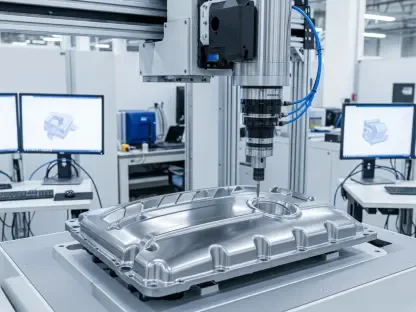
The success of modern additive manufacturing relies heavily on the ability to integrate disparate production technologies into a single, cohesive workflow that ensures both speed and precision. Incodema3D has mastered this by championing a hybrid manufacturing model that treats 3D printing as just one critical component of a much larger production ecosystem. Instead of delivering raw, as-printed parts that require significant external handling, the company offers a vertically integrated suite of services including multi-axis CNC machining, specialized heat treatment, and intricate post-processing. This internal synergy is essential because high-performance metal components for jet engines or satellite housings must adhere to tolerances measured in microns. By maintaining control over every step from the initial laser sintering to the final surface finishing, the firm eliminates the risks associated with third-party vendors and ensures that every part meets the stringent quality standards required for flight-critical applications.
Building on this foundation, the integration of traditional subtractive methods with advanced additive processes allows for a level of complexity that was previously unattainable or prohibitively expensive. In many cases, a part might be 3D printed to achieve an internal cooling geometry and then immediately moved to a five-axis milling center to perfect its mating surfaces. This seamless transition between additive and subtractive phases is what defines the “hybrid” advantage, allowing for the creation of components that are both geometrically complex and mechanically precise. For industries like energy and defense, where downtime is not an option, this capability significantly reduces lead times while increasing part reliability. The operational philosophy here is clear: the value of 3D printing is maximized only when it is supported by a robust infrastructure of traditional engineering excellence, ensuring that the final product is ready for immediate deployment in the field without further modification.
Leveraging Design Expertise for High-Performance Sectors
The true potential of metal additive manufacturing is unlocked long before a laser ever touches metallic powder, beginning instead in the sophisticated digital environment of Design for Additive Manufacturing (DfAM). Incodema3D has established itself as a premier partner for aerospace and space organizations by moving beyond the role of a simple service bureau and acting as a high-level engineering consultant. Through DfAM, engineers can consolidate what used to be an assembly of twenty separate fasteners, brackets, and tubes into a single, unified printed structure. This process of part consolidation does more than just simplify the supply chain; it eliminates potential points of failure, such as welded joints or bolted connections, thereby increasing the overall structural integrity of the component. This design-led approach is particularly transformative for the space sector, where reducing the part count directly correlates to higher mission success rates and lower assembly costs over the lifetime of a program.
Furthermore, the mastery of lightweighting through complex lattice structures and topology optimization offers a massive competitive edge in sectors where every gram of weight carries a significant financial penalty. By utilizing high-powered lasers to fuse metallic powders only where structural strength is required, the company can produce parts that are forty to sixty percent lighter than their traditionally manufactured counterparts while maintaining the same mechanical properties. In the context of modern aerospace, these weight savings translate directly into improved fuel efficiency and increased payload capacity for launch vehicles. This expertise ensures that the firm is not just a manufacturer, but a vital contributor to the engineering breakthroughs that allow satellites to stay in orbit longer and aircraft to operate more sustainably. By pushing the boundaries of what metallic materials can achieve through creative design, they have become an indispensable link in the advanced industrial supply chain.
Strategic Growth and Market Expansion
Strengthening Domestic Production for National Security
The strategic rationale behind AFM Capital’s investment is deeply rooted in the broader national push to secure and modernize domestic manufacturing capabilities for critical infrastructure and defense. In an era where international logistics can be disrupted by geopolitical shifts, the ability to produce high-end, mission-critical components within the United States has become a matter of national security. Incodema3D, as an ITAR-registered entity with AS9100D and ISO 9001:2015 certifications, represents the type of “advanced industrial platform” that the U.S. defense ecosystem increasingly relies upon. AFM Capital intends to leverage this status to secure long-term government contracts, positioning the company as a primary supplier for the next generation of defense hardware. This focus on domesticity ensures that sensitive intellectual property and critical manufacturing data remain protected while providing the military with a reliable, high-speed source for specialized replacement parts and new prototypes.
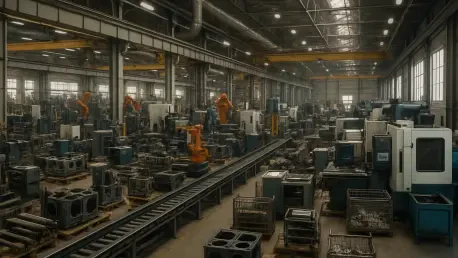
This move toward a consolidated domestic platform also addresses the need for scalability in government programs that have traditionally struggled with the slow pace of legacy manufacturing. By investing in a facility that already boasts one of the largest fleets of industrial metal printers in North America, AFM Capital is providing the “muscularity” needed to move from small-batch production to high-volume manufacturing for major defense programs. This transition is vital for the modernization of the U.S. industrial base, as it allows for the rapid iteration of designs and the swift deployment of updated technology to the field. The partnership effectively creates a center of excellence that can absorb large-scale production orders that smaller shops simply cannot handle. Consequently, the collaboration serves as a stabilizing force in the market, ensuring that the technological superiority of domestic aerospace and defense sectors is maintained through superior manufacturing agility and capacity.
Investing in Large-Format Printing and Infrastructure
A central pillar of the growth strategy under the new ownership involves a significant expansion of the physical and technological footprint of the Ithaca facility to accommodate larger and more complex projects. While standard industrial 3D printers are limited by their build volumes, the demand for “large-format” additive manufacturing is skyrocketing in the energy and space sectors, where components like rocket engine nozzles and large-scale turbine parts are required. AFM Capital is funneling resources into the acquisition of massive, multi-laser systems capable of printing metal components that exceed the dimensions of traditional machines. This investment allows the company to move into high-value markets where competition is sparse due to the extreme capital requirements and technical difficulty associated with large-scale printing. By staying ahead of the equipment curve, the firm ensures it can tackle the most ambitious engineering challenges of the coming decade.
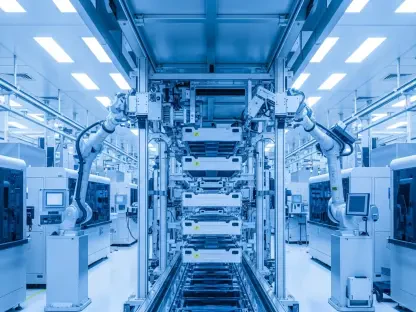
Beyond just buying new machinery, the expansion plan includes a comprehensive upgrade of the facility’s infrastructure to support the increased throughput and data requirements of a 24/7 production environment. Scaling up to a 60,000-square-foot operation requires sophisticated logistics, automated powder handling systems, and advanced environmental controls to maintain the purity of the metallic alloys being used. This focus on the “factory of the future” concept involves integrating real-time monitoring and data analytics to predict maintenance needs and optimize printer uptime across the entire fleet. Such infrastructure investments prevent the technological obsolescence that often plagues rapidly evolving industries, ensuring that the company remains a top-tier provider for years to come. The goal is to create a scalable manufacturing engine that can grow in lockstep with the burgeoning demand for additive parts, providing a reliable foundation for the long-term industrial strategy envisioned by AFM Capital.
Leadership Continuity and Operational Excellence
Maintaining Technical Expertise Through Proven Leadership
One of the most critical elements of the AFM Capital acquisition is the deliberate decision to retain the original leadership team, including the founder and CEO, Sean Whittaker, to ensure a seamless transition and preserve institutional knowledge. In high-tech industries like metal additive manufacturing, the value of a company is often tied directly to the specialized expertise and deep industry relationships held by its management. By keeping the leadership intact and ensuring they retain significant equity, AFM Capital aligns the interests of the investors with the visionaries who built the company from a prototyping shop into a market leader. This continuity prevents the “brain drain” that often occurs during private equity buyouts, allowing the technical teams to remain focused on innovation rather than organizational upheaval. It sends a strong signal to long-term clients in the aerospace and defense sectors that the technical excellence they have come to rely on will remain the company’s top priority.
This retention strategy also fosters a culture of stability that is attractive to the highly skilled engineers and technicians who operate the complex machinery at the heart of the business. Metal 3D printing is a highly specialized field that requires a unique blend of material science, mechanical engineering, and software proficiency, making experienced staff a company’s most valuable asset. By maintaining the existing leadership, Incodema3D preserves the internal training pipelines and mentorship structures that have historically fueled its growth. This stability is essential when navigating the rigorous certification processes required by organizations like NASA or major commercial aerospace manufacturers. The management team’s deep understanding of these regulatory hurdles, combined with their technical foresight, provides a steady hand as the company scales its operations to meet the new demands of a larger, more aggressive industrial platform backed by AFM Capital’s resources.
Utilizing Operational Support for Scalable Success
The partnership with AFM Capital introduces a level of operational sophistication and financial backing that allows Incodema3D to transcend the limitations typical of independent, middle-market manufacturing firms. Unlike purely financial investors who might focus solely on short-term margins, AFM Capital provides “hands-on” operational support designed to professionalize and streamline every aspect of the business. This includes implementing advanced enterprise resource planning (ERP) systems, optimizing global supply chain procurement for rare metallic powders, and refining quality control protocols to meet even more stringent international standards. This operational “muscularity” is what enables a company to grow from a successful regional player into a dominant national force without losing its core identity. With the backing of major financial institutions like JPMorgan Chase and Gladstone Capital, the firm has the liquidity to move aggressively on new market opportunities as they arise.
This collaborative approach naturally leads to a more resilient and scalable business model that is better equipped to handle the complexities of modern manufacturing. The infusion of strategic resources means that the company can now pursue larger, multi-year contracts that require significant upfront investment and long-term stability. By offloading the burden of high-level financial planning and strategic networking to the experts at AFM Capital, the technical team at Incodema3D is free to do what they do best: push the limits of metal additive technology. This division of labor ensures that the firm remains agile enough to innovate while possessing the structural strength of a much larger corporation. The result is a modernized manufacturing powerhouse that is uniquely positioned to lead the North American industrial base through the next era of technological advancement, solidifying its status as a critical player in the global market for high-performance metallic components.
The strategic acquisition of Incodema3D by AFM Capital Partners successfully demonstrated how targeted investment can transform a specialized technical leader into a cornerstone of the national industrial infrastructure. By focusing on the integration of additive and subtractive manufacturing, the partnership addressed the critical need for complex, flight-ready components in the aerospace and defense sectors. The retention of the original leadership team ensured that the company’s technical soul remained intact, while the infusion of capital provided the necessary resources to expand into large-format printing and advanced facility upgrades. Moving forward, the industry should look to this model as a blueprint for domestic manufacturing resilience, emphasizing that technical mastery must be paired with operational scale to meet modern demands. Stakeholders in the manufacturing sector would be well-advised to prioritize similar hybrid models and vertical integration strategies to ensure long-term competitiveness in an increasingly digital production landscape. This collaboration effectively set a new standard for how middle-market firms can achieve sustainable, high-velocity growth through strategic alignment and technical excellence.