
The modern machine shop floor is undergoing a quiet yet profound revolution, where the precision of human craftsmanship is merging with the predictive power of artificial intelligence to redefine the boundaries of manufacturing. As industries from aerospace to automotive demand ever-tighter tolerances and more complex geometries, traditional machining processes are reaching their operational limits, making waste reduction and first-part success more critical than ever. The challenge is no longer just about programming a CNC machine to follow a path, but about creating an intelligent, self-optimizing ecosystem that can anticipate problems, refine its own processes, and turn raw code into flawless components with unprecedented efficiency. This shift is giving rise to a new generation of software solutions designed to create a perfect digital replica of the entire machining environment, allowing for exhaustive testing and optimization before a single piece of metal is cut. This evolution marks a pivotal moment where digital simulation moves beyond simple error-checking to become an active, intelligent partner in the manufacturing journey.
From Verification to Intelligent Optimization
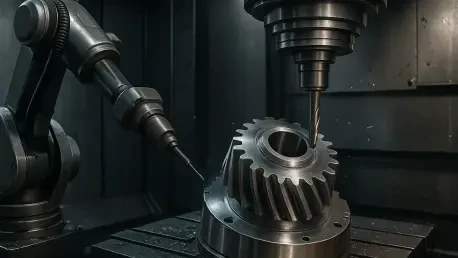
The integration of artificial intelligence into CNC machining is fundamentally shifting the paradigm from passive verification to active, intelligent optimization. For years, simulation software has served as a crucial safety net, allowing programmers to verify toolpaths and prevent costly collisions. However, the next wave of innovation infuses this process with a layer of proactive intelligence. Advanced systems are now capable of analyzing G-code and applying physics-based algorithms to optimize feed rates and cutting parameters dynamically. This is achieved by creating a “digital twin” of the machining operation, a virtual model that understands not just the geometry of the part but also the unique characteristics of the machine tool, the cutting tool, and the raw material. By simulating the forces exerted during every moment of the cut, these AI-driven optimizers can adjust speeds and feeds to maintain consistent tool pressure, which in turn reduces cycle times, extends tool life, and improves surface finish. This represents a significant leap forward, transforming the verification stage from a simple ‘pass/fail’ check into a powerful engine for process enhancement and efficiency gains.
The Dawn of a Unified Machining Ecosystem
Further advancing this evolution is the development of a more connected and intelligent software ecosystem, where AI acts as a centralized knowledge base and an intuitive guide for users. The next generation of machining software is being designed with built-in intelligence that learns from past operations and provides contextual assistance to programmers and operators. Imagine an intelligent assistant that can suggest optimal strategies based on the specific task, or a system that centralizes tribal knowledge from across the shop floor, making best practices instantly accessible to everyone. This trend extends to the integration between different stages of the production workflow. By linking CAM programming and post-processing directly with the verification and optimization environment, manufacturers can create a seamless, error-resistant pipeline from design to production. This unified approach eliminates the dangerous gaps where manual data transfer or interpretation could introduce errors, ensuring that the G-code sent to the machine is not only safe but fully optimized for peak performance from the very beginning.
A Retrospective on the AI-Driven Shift
The path forward was illuminated by a focus on transforming digital tools from passive checkers into active participants in the manufacturing process. It became clear that the goal was no longer merely to avoid mistakes but to proactively enhance every facet of production, from programming efficiency to machine performance. The development of AI-powered assistants and integrated knowledge systems demonstrated a commitment to empowering users, making complex optimization accessible without requiring a deep specialization in software mechanics. Ultimately, the industry recognized that the true potential of AI in machining was unlocked not by a single feature, but by creating a cohesive, intelligent ecosystem that connected the design, programming, and production stages into a single, optimized workflow. This strategic vision laid the groundwork for a more automated, efficient, and reliable future in advanced manufacturing.