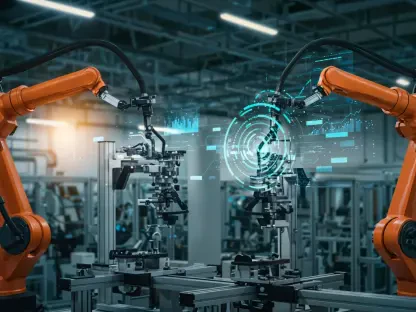

The unexpected discovery of a structural misalignment during the final stages of a vehicle assembly line often triggers a cascading series of financial losses and logistical nightmares. In modern industrial environments, the pressure to maintain rapid production cycles frequently clashes with the complex physics of part joining, leading to expensive recalls and warranty claims that erode corporate profitability. Keysight Technologies addressed this vulnerability by launching a virtual process simulation tool designed to identify potential assembly defects long before any physical components are manufactured. By focusing on the “shift left” methodology, the software allowed engineering teams to predict dimensional risks and part distortion in a risk-free digital environment. This proactive approach significantly reduced the reliance on traditional trial-and-error methods, which historically consumed vast amounts of time and material resources during the pre-production phase. Moreover, the tool provided a centralized platform where cross-functional teams could collaborate on refining assembly sequences, ensuring that potential bottlenecks were mitigated before the first physical prototype was ever assembled.
Bridging the Gap: Integrating Simulation With Reality
Industrial manufacturers previously faced a steep barrier when attempting to implement high-fidelity simulations because these tasks typically required deep expertise in finite element modeling. The democratization of these complex engineering functions became a cornerstone of the new simulation framework, providing guided workflows and pre-defined templates for shop-floor processes. Engineers could now simulate intricate maneuvers such as part positioning, joining, and clamping without needing specialized training in numerical analysis. This accessibility ensured that visibility into manufacturing risks was no longer confined to a small group of specialists but was instead integrated into the daily operations of the broader design team. By lowering the technical threshold for entry, the system empowered organizations to validate their assembly strategies earlier in the development lifecycle, ensuring that process sensitivities were identified and addressed when design changes were still relatively inexpensive to execute. This transition from a niche engineering task to a standard operational procedure allowed for much greater flexibility in responding to design iterations.
The integration of stamping simulation data into the assembly environment represented a major leap forward in creating a truly comprehensive manufacturing workflow. By bridging the gap between disparate production stages, the software allowed for a seamless transfer of data from individual stamped parts directly into the virtual assembly line for final validation. This connectivity enabled manufacturers to compare predictive models against pre-production scans, creating a feedback loop that refined the accuracy of the entire system. Such a unified understanding of how components interact during the physical joining process eliminated much of the guesswork that plagued traditional automotive and industrial projects. Furthermore, the ability to account for material variances and stamping imperfections in the simulation phase meant that the final assembly outcomes were much more predictable. This end-to-end visibility not only shortened the overall production timeline but also ensured that the high standards required for modern safety and performance were consistently met. The resulting decrease in scrap and rework translated directly into higher operational efficiency and more robust profit margins for early adopters.
Leaders in the industrial sector recognized that the transition to predictive virtual environments was no longer an optional luxury but a fundamental requirement for competitive survival. Organizations that prioritized early-stage validation successfully mitigated the financial and operational risks associated with physical manufacturing failures. The adoption of these simulation tools provided a clear roadmap for streamlining production and enhancing build accuracy across diverse product lines. Moving forward, it was recommended that companies audited their current prototyping workflows to identify bottlenecks where virtual simulation could replace costly physical iterations. Manufacturers were encouraged to invest in training that synchronized design and production data, ensuring that every stakeholder had access to real-time dimensional insights. By embracing this shift, innovators secured their position in the market by accelerating time-to-market while maintaining rigorous quality control standards. This evolution in assembly strategy ultimately proved that moving validation to the earliest possible stage was the most effective way to safeguard long-term operational success.