
The partnership between these two tech giants marks a milestone in how physical simulation and generative AI combine to solve complex engineering challenges. This collaborative effort represents a fundamental shift in the electronics manufacturing landscape, where the demand for high-precision components meets the need for unprecedented production agility. By integrating advanced industrial software with sophisticated physical AI, the industry is moving away from the rigid, hardware-dependent workflows that have historically slowed down innovation. Specifically, the introduction of the NVIDIA Cosmos platform into the Siemens Xcelerator ecosystem allows engineers to bypass the traditional trial-and-error phases of assembly line setup. Instead of waiting for physical prototypes to calibrate quality control systems, manufacturers can now rely on high-fidelity virtual simulations that predict real-world outcomes with remarkable accuracy, ensuring that production lines remain active and productive during high-frequency changeovers.
Bridging the Gap: Virtual and Physical Manufacturing
The Digital Twin: A Foundation for Industrial AI
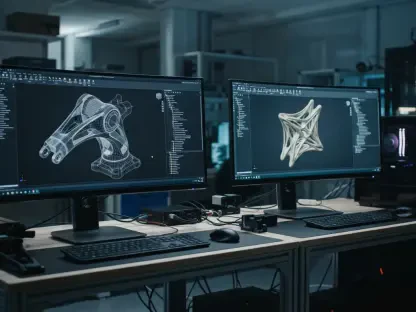
In the contemporary manufacturing environment, the concept of the comprehensive digital twin has undergone a significant evolution, moving beyond its origin as a mere static 3D representation. Today, it serves as an active, dynamic foundation for industrial AI, providing the deep contextual data required for complex decision-making processes. Through the Siemens Xcelerator business platform, specifically utilizing Teamcenter and Process Preparation X, companies are now able to manage intricate printed circuit board designs and vast component libraries within a single, unified digital thread. This integration allows for the creation of a high-fidelity virtual replica that encompasses every nuance of the physical assembly, from the precise placement of microscopic resistors to the thermal properties of the substrate. By establishing this digital truth early in the development cycle, manufacturers can effectively eliminate the guesswork often associated with new product introductions.
Synthetic DatGeneration via NVIDIA Cosmos
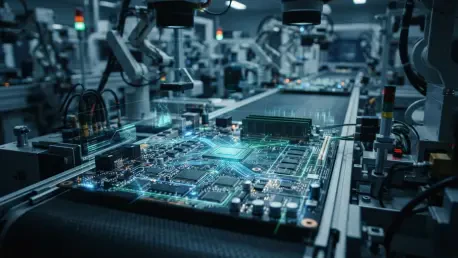
A standout feature of this technological partnership is the utilization of the NVIDIA Cosmos Data Factory to generate thousands of photorealistic synthetic images for machine learning. Historically, training artificial intelligence for defect detection required the collection of thousands of physical samples, a process that was both time-consuming and expensive. Now, by using the virtual golden board as a reference, the system can autonomously produce a vast array of synthetic images that represent both perfect conditions and a diverse range of potential manufacturing defects. This includes rare or complex anomalies that might not appear in a physical pilot run but could still compromise the integrity of a final product. By training AI models on this synthetic data, manufacturers can ensure that their automated optical inspection systems are fully calibrated and operational from the very moment the first physical circuit board arrives on the factory assembly line.
Physical AI: Adhering to Material Realism
The concept of Physical AI goes beyond simple image generation by ensuring that virtual models strictly adhere to the fundamental laws of physics and material science. This level of realism is essential because it guarantees that the AI trained in a virtual environment can accurately recognize and respond to real-world conditions without the need for extensive retraining. For example, the simulation accounts for how light reflects off different solder types or how component shadows might interfere with visual sensors. By incorporating these physical variables, the partnership between Siemens and NVIDIA ensures that the transition from digital training to physical execution is seamless and reliable. This physics-based approach provides a level of precision that abstract data patterns alone cannot achieve, allowing for more robust and trustworthy automated systems. Consequently, manufacturers can achieve a higher degree of confidence in their automated quality assurance processes.
Operational Excellence: The Customer Zero Model
Real-World Validation: The Erlangen Factory
The effectiveness of this integrated technology is currently being proven at the Siemens Electronics Factory in Erlangen, Germany, which serves as the primary testing ground or Customer Zero. This facility is characterized by a high-mix, low-volume production environment where product changes and new variants are introduced as often as five times per week. In such a volatile setting, traditional calibration methods would result in nearly constant downtime, severely limiting the overall efficiency of the plant. However, by implementing the virtual-first workflow, the Erlangen facility has demonstrated how a virtual golden board allows for rapid production shifts without taking the physical assembly line out of commission. This real-world application provides a blueprint for how other electronics manufacturers can navigate the challenges of increasing customization and shorter product lifecycles while maintaining high standards of operational excellence across their entire enterprise.
Engineering Efficiency: Reducing Manual Input
The implementation of this AI-powered workflow targets several critical performance metrics that have a direct and measurable impact on a company’s bottom line. One of the most significant achievements of this collaboration is the projected 85% reduction in the manual engineering hours typically required to generate inspection programs. Previously, engineers had to spend hours manually identifying component boundaries and defining defect parameters for every new board variant. Now, the automated system handles the bulk of this work, allowing highly skilled technicians to focus on more strategic tasks rather than repetitive programming. This massive reduction in labor not only speeds up the time-to-market for new electronics but also significantly lowers the operational costs associated with quality assurance, providing a competitive edge in an industry where margins are often thin and the pressure to innovate is constant.
Yield Optimization: Precision in Inspection
In addition to labor savings, the system aims for a 40% reduction in false calls, which occur when inspection machines incorrectly identify a non-existent defect. These false alarms are a major source of inefficiency, as they require human intervention to verify the results, often leading to unnecessary bottlenecks in the production flow. By improving the precision of the initial AI screening through better training data, the factory can achieve a 5% improvement in first-pass yield. This metric is essential for both profitability and sustainability, as it represents the percentage of products that meet quality standards on the first attempt without requiring rework. Reducing scrap and minimizing the energy spent on re-manufacturing faulty parts aligns with broader corporate goals of environmental responsibility and resource efficiency. Consequently, the collaboration delivers a dual benefit: it enhances the speed of production while simultaneously improving the quality and sustainability of the output.
Future Readiness: Achieving End-to-End Agility
Strategic Implementation: The Lifecycle Perspective
This collaboration reflects a broader industry trend toward Digital-to-Real workflows, which emphasize the importance of maintaining a continuous digital link throughout the entire production lifecycle. By moving away from rigid, static manufacturing setups, companies can now develop highly adaptive factories that respond instantly to shifts in market demand or supply chain disruptions. The synergy between Siemens’ deterministic digital twins and NVIDIA’s generative AI provides a level of predictability that was previously unattainable in complex assembly operations. This ensures that the learning processes of the AI are grounded in the actual physical realities of the manufacturing floor, rather than being based on abstract or incomplete data sets. As a result, the transition from the design phase to full-scale production becomes a fluid movement, characterized by fewer errors and a much higher degree of consistency across different product lines and manufacturing facilities.
Secondary Inspection: Final Quality Assurance
The integration of these advanced technologies established a new benchmark for how industrial leaders approached the intersection of software and physical hardware. Manufacturers who adopted these virtual-first inspection strategies realized significant improvements in their operational agility and product reliability. By moving the preparation phase into the digital realm, companies successfully minimized the risks associated with manual programming and physical prototyping. The insights gained from the Erlangen facility demonstrated that the combination of synthetic data and physical AI was not merely an incremental update, but a vital solution for the future of electronics assembly. Moving forward, the industry prioritized the expansion of these digital-to-real workflows to ensure long-term sustainability and efficiency. Those who invested in these comprehensive digital twins and AI frameworks secured a more robust position in the global market, effectively bridging the gap between innovative design and flawless execution.