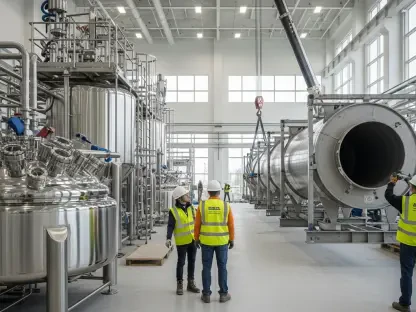

A sprawling manufacturing operation that produces over 4.5 million kitchen cabinets annually reached a critical inflection point, as the very systems that once enabled its success became the primary obstacles to future growth. For UK-based supplier Howdens Joinery, the surge in demand and a strategic shift toward mass customization stretched its outdated, homegrown manufacturing execution systems (MES) to their absolute limit. The resulting operational friction, characterized by pervasive data silos and an inability to provide a holistic view of the supply chain, created a compelling and urgent business case for a complete digital overhaul. This was not merely a technological upgrade but a fundamental reinvention of its production philosophy, designed to meet the evolving expectations of the modern consumer and build a resilient foundation for the next generation of manufacturing.
The Imperative for a Customer-Centric Overhaul
The transformation at Howdens was propelled by a profound understanding of a shift in consumer behavior, recognizing that the kitchen has evolved from a purely functional area into the central living space of the home. This insight prompted a strategic departure from a traditional make-to-stock model to a more dynamic, customer-centric approach centered on mass customization. To facilitate this, the company dramatically expanded its product catalog, introducing a vast array of colors and styles that allow customers to personalize their living spaces. This strategy served a dual purpose: it met the rising demand for bespoke design while also providing Howdens with an invaluable feedback loop. The expanded offerings effectively acted as a market trial, enabling the company to collect data on the popularity of new styles before committing to large-scale production. Supporting this newfound agility required significant capital investment in a new factory and upgraded paint lines, but the most critical component was a new digital manufacturing system capable of orchestrating the immense complexity of high-mix, high-volume output.
This pivot to customization exposed the profound intricacies of the company’s unique, piece-based production model, which presented a significant logistical challenge. Unlike manufacturers that produce fully assembled products, Howdens operates on a sales order-driven system where individual components like cabinet doors, shelves, and panels are ordered separately. Consequently, a single customer order often fragments into numerous distinct production orders, each requiring a specific, predetermined route through the factory based on its physical characteristics and required machinery. The legacy system struggled to manage this complexity, particularly with its method of grouping production orders into shop floor controls (SFCs). In many instances, especially when a single piece corresponded to a single production order, the SFC number became a redundant identifier that cluttered workflows rather than streamlining them. This inefficiency was magnified for shop floor operators, who were often forced to manually initiate dozens of disparate orders, creating a clear and pressing need for a system that could intelligently batch similar items for efficient processing.
Engineering a New Digital Heartbeat
After conducting a detailed assessment of multiple MES platforms, Howdens selected SAP Digital Manufacturing as the technological core of its revitalized operations. The decision was driven by the platform’s inherent flexibility, which allowed it to function less as a rigid, prescriptive software and more as a customizable “manufacturing landscape.” This adaptability was paramount for Howdens to tailor the system precisely to its unique, piece-based production model and develop its own extensions. The new system was architected to become the “heartbeat” of the factory floor, providing a robust mechanism to solve the persistent order-grouping problem. It empowered operators to manage cohesive batches of similar production orders with far greater efficiency, replacing the cumbersome and error-prone process of handling them one by one. This capability directly addressed the core inefficiency of launching countless small orders simultaneously, creating a unified and more responsive operational environment that could seamlessly support both the company’s legacy make-to-stock requirements and its burgeoning make-to-order business.
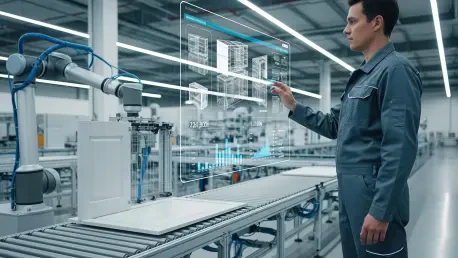
The successful implementation yielded a massive leap in operational efficiency by tightly integrating Information Technology (IT) with Operational Technology (OT) across the factory floor. Through the use of custom SAP Business Technology Platform (SAP BTP) processes and specialized production connectors, Howdens established direct, automated communication with its diverse array of factory machinery. This deep integration was transformative, enabling the automation of complex production workflows and drastically reducing the need for manual operator intervention. The system provided real-time visibility into every stage of production, breaking down the data silos that had previously hindered decision-making. By creating a single source of truth for all manufacturing data, the platform facilitated more accurate planning and scheduling, ensuring that resources were allocated optimally and that production flowed smoothly from order inception to completion. This cohesive digital ecosystem not only boosted throughput but also enhanced the quality and consistency of the final product, creating a more streamlined and reliable manufacturing process from end to end.
Realizing Unprecedented Performance and Future Ambitions
The strategic investment in digital manufacturing delivered tangible and remarkable results, validating the company’s ambitious vision for the future of its operations. The most prominent achievement was a 33% reduction in order production lead time, which fell from 21 days to just 14 days over the past year. This dramatic improvement translates directly into faster fulfillment for customers and provides a significant competitive edge in a demanding market. Furthermore, the company achieved an exceptional 99.98% service level from its primary manufacturing sites to its distribution depots in 2025, a clear indicator of outstanding product availability and superior supply chain reliability. The transformation also unlocked an impressive new level of agility; by completely overhauling its order-to-delivery strategy—a complex endeavor accomplished in under 12 months—Howdens can now manufacture and ship a fully custom order in an impressively short five-day cycle. These metrics are a testament to the power of a well-executed digital strategy to redefine operational excellence.
This successful transformation marked not an endpoint but a pivotal milestone in an ongoing journey of continuous improvement. The implementation of SAP Digital Manufacturing laid a robust and flexible foundation upon which Howdens has built its future strategy. The company’s immediate plans included the systematic phasing out of all its remaining legacy MES systems, a move that would create a fully integrated and streamlined digital manufacturing ecosystem. With a solid bedrock of high-quality data and a versatile system architecture now in place, Howdens has positioned itself to explore the next frontier of industrial innovation. The company has now turned its attention toward the strategic integration of Artificial Intelligence (AI) into its manufacturing processes, a proactive step that demonstrated its commitment to leveraging cutting-edge technology to drive further efficiencies, enhance product quality, and solidify its leadership in a rapidly evolving industry.