
Engineering departments across the globe have long grappled with the inherent limitations of standard additive manufacturing materials that often fail under the persistent stress of industrial operation. While 3D printing was once strictly relegated to the realm of rapid prototyping for visual verification, the landscape of 2026 reveals a fundamental shift toward functional, end-use production. The German motion plastics specialist igus is at the forefront of this evolution, effectively bridging the gap between a digital concept and a durable mechanical asset. By moving away from generic resins and filaments that lack the structural integrity for high-friction environments, the company has introduced a sophisticated suite of tribologically optimized polymers. These materials are not merely designed to look like the final product; they are engineered to perform as such. This shift is supported by a massive 41,000-square-foot laboratory dedicated to rigorous empirical testing, ensuring that every printed component can withstand the rigors of real-world mechanical work without premature failure or excessive wear.
Engineering Durability Through Advanced Polymer Chemistry
The secret to transitioning 3D printing into a viable production method lies in the molecular composition of the materials themselves, specifically through the integration of solid lubricants. Traditional 3D printing materials often suffer from high coefficients of friction, which lead to heat buildup and rapid degradation when used in moving assemblies. In contrast, the high-performance polymers developed by igus incorporate microscopic lubricating particles directly into the base plastic matrix. This eliminates the need for external grease or oil, which can attract dust and contaminants in industrial settings. These self-lubricating properties ensure that components such as sliding bearings or linear guides maintain their structural integrity over millions of cycles. Because the lubricant is distributed evenly throughout the part, the wear resistance remains consistent even as the surface layer gradually erodes. This innovation allows engineers to specify printed parts for demanding applications that were previously reserved for machined metals or injection-molded plastics.
Beyond the chemical composition, the reliability of these motion-ready plastics is validated through extensive data collection that sets a new standard for the additive manufacturing industry. While many material suppliers provide theoretical performance figures, the current approach involves testing thousands of samples annually to generate precise service-life predictions. Laboratory results indicate that these specialized tribo-polymers offer wear resistance up to 50 times greater than that of standard 3D printing materials like ABS or polycarbonate. This empirical foundation allows designers to utilize online configuration tools that calculate the expected lifespan of a part based on specific load, speed, and environmental variables. By removing the guesswork from the design process, manufacturers can confidently integrate 3D-printed gears and bushings into heavy-duty machinery. This level of predictability is essential for industries where downtime is costly, transforming additive manufacturing from an experimental novelty into a cornerstone of modern industrial maintenance and production strategies.
Adapting Material Science to Modern Printing Technologies
Achieving industrial-grade performance requires a versatile material strategy that spans multiple printing technologies, including Selective Laser Sintering, Fused Deposition Modeling, and Digital Light Processing. Each of these methods offers distinct advantages, but the challenge has historically been maintaining material quality across different platforms. Igus has addressed this by tailoring its tribological formulations to suit the specific physical requirements of each process. For instance, the powders used in laser sintering provide exceptional isotropic strength and complex geometries without the need for support structures, making them ideal for intricate gear sets. Meanwhile, high-performance filaments allow for the creation of large-scale structural components with localized reinforcements. Even the high-resolution resins used in light-based printing have been updated to include wear-resistant properties, allowing for the production of tiny, precise parts that do not sacrifice durability. This cross-platform compatibility ensures that engineers can select the best manufacturing method for their specific geometry.
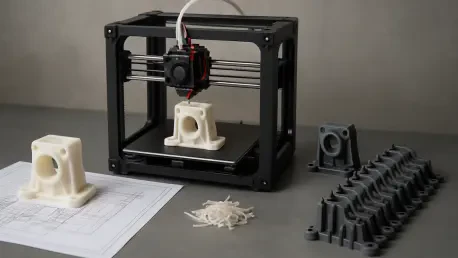
The practical application of these technologies is most evident in the production of complex mechanical assemblies that require precise tolerances and high load-bearing capacities. In the current industrial climate of 2026, the focus has shifted toward creating components that can perform sustained mechanical work in harsh environments, such as chemical processing plants or outdoor construction equipment. For example, 3D-printed bushings made from these advanced polymers are now frequently used in place of traditional bronze bearings because they offer superior corrosion resistance and weight savings. Furthermore, the ability to print customized gears with optimized tooth geometries allows for quieter operation and improved power transmission efficiency. These parts are no longer seen as temporary fixes; they are functional assets that contribute to the overall reliability of the system. By synthesizing advanced polymer chemistry with high-resolution printing, the transition to functional production has become a reality, allowing for the rapid deployment of specialized hardware that meets or exceeds traditional standards.
Streamlining the Industrial Production Cycle
The maturation of additive manufacturing is also driven by the digital infrastructure that connects design engineers with high-end production capabilities through intuitive online platforms. By providing a streamlined interface for CAD uploads and material selection, the barrier to entry for industrial-grade 3D printing has been significantly lowered. These digital tools allow for instant quoting and technical feasibility checks, which dramatically accelerate the development cycle from weeks to just a few days. This democratization of technology means that even small-scale manufacturers can access the same high-performance materials and precision equipment as global corporations. There are no minimum order requirements, which encourages iterative design and the cost-effective production of spare parts or low-volume custom components. This shift toward a more agile manufacturing model is essential for maintaining competitiveness in a rapidly changing market. The integration of service-life calculators directly into the ordering process further ensures that the selected material is perfectly suited for the intended application.
To maximize the benefits of these advancements, organizations were encouraged to transition from purely visual prototyping to functional testing using high-performance polymers. This proactive approach allowed for the identification of mechanical issues early in the design phase, reducing the need for expensive tooling changes later in the cycle. Engineers evaluated their existing inventory for parts prone to friction-related failure and replaced them with tribologically optimized alternatives to extend machine uptime. Furthermore, the adoption of decentralized manufacturing through online printing services reduced the reliance on complex global supply chains. By utilizing predictable, wear-resistant materials, companies achieved a more sustainable production model with less material waste and lower energy consumption. Looking forward, the focus was placed on continuous material monitoring and the integration of smart sensors within printed parts to provide real-time feedback on wear status. These steps collectively ensured that additive manufacturing remained a reliable, scalable, and high-performance solution for modern industrial needs.