
Machines that once merely screamed for help when breaking down have finally learned to diagnose their own ailments and perform surgery on their own control circuits without needing a human hand to guide the scalpel. This transformation marks the definitive end of the “dashboard era,” where engineers spent hours interpreting charts and graphs to prevent a production halt. In the current landscape of 2026, the Industrial AI Evolution represents a departure from static monitoring toward a dynamic, self-correcting ecosystem that prioritizes uptime through localized intelligence. This review examines how this technology has transcended its predictive origins to become an active participant in factory management.
The shift toward autonomous intelligence is not just a software update; it is a fundamental reconfiguration of the relationship between digital logic and physical hardware. By moving beyond transparency, industrial systems now possess the agency required to maintain operational continuity under stress. The relevance of this technology in the broader landscape is found in its ability to handle the increasing complexity of modern manufacturing, where human reaction times are no longer sufficient to manage the sheer volume of data produced by interconnected machines.
The Shift from Passive Prediction to Autonomous Action
The evolution began with predictive maintenance, a strategy that provided visibility but lacked the agency to fix identified problems. While identifying a failing bearing several days in advance was revolutionary in previous years, it still necessitated a scheduled shutdown and manual labor. Today, the focus has shifted toward closed-loop systems that bypass the need for human notification altogether. These systems function like a biological immune system, identifying a threat and deploying a response before the “organism” of the factory floor even recognizes a symptom.
Instead of merely recognizing that a machine is vibrating strangely, modern AI interprets synchronized inputs within the specific context of the current task. This allows the system to distinguish between a harmless operational variance and a developing fault that requires intervention. By isolating the source of a malfunction, the AI can initiate responses such as redistributing workloads across other machines or adjusting operating parameters to keep production running. This transition from recognizing patterns to executing corrective actions represents a significant leap in industrial maturity.
Core Technological Pillars of Modern Industrial AI
Edge Computing and Real-Time Processing
The move away from cloud-centric architectures toward localized edge computing has fundamentally altered the physics of industrial response times. In a high-speed production line, a delay of even a few hundred milliseconds while data travels to a remote server can result in catastrophic equipment damage. By processing telemetry directly at the source, edge-enabled AI minimizes latency to near-zero levels. This allows for instantaneous decision-making, such as micro-adjusting a motor’s torque the moment a friction spike is detected, effectively neutralizing risks in real time.
Multi-modal AI and Data Fusion
A singular focus on vibration or temperature often misses the subtle nuances of mechanical fatigue. Multi-modal AI solves this by synthesizing diverse data streams—acoustic signatures, thermal imaging, and control-loop telemetry—into a singular, coherent narrative of machine health. When these disparate signals are fused, the AI can distinguish between an expected operational load and a genuine internal failure. This holistic view is what allows modern systems to maintain high precision even when operating under variable environmental conditions that would baffle simpler, unimodal sensors.
Root-Cause Diagnosis and Automated Remediation
Advanced models have progressed from simple pattern recognition to sophisticated causal analysis, allowing them to pinpoint the exact reason behind a malfunction. Instead of reporting a general error code, the system identifies the specific loose fastener or contaminated lubricant causing the deviation. Once diagnosed, the AI executes corrective adjustments without waiting for human authorization. This automated remediation ensures that the production flow remains consistent, even when individual components begin to drift from their ideal specifications.
Emerging Trends in Industrial Intelligence
One of the most significant hurdles in training these systems is the scarcity of real-world failure data, as well-maintained machines rarely break. To overcome this, the industry has turned to digital twins and synthetic data generation to simulate a vast library of rare events. By training models in these high-fidelity virtual environments, AI can learn to handle catastrophic scenarios it has never actually encountered on a physical shop floor. This proactive training regimen ensures that the system is prepared for every eventuality from the moment of deployment.
Furthermore, a shift toward self-supervised learning is reducing the reliance on labor-intensive data labeling. Modern industrial intelligence now leverages context-aware modeling, which accounts for external variables like ambient humidity or the specific batch of raw materials being processed. This level of granularity ensures that the AI’s understanding of “normal” is not a fixed point but a flexible range that adapts to the shifting realities of the factory environment.
Real-World Applications and Sector Deployment
In the semiconductor industry, where microscopic vibrations can ruin a batch of wafers, these autonomous systems are already proving their worth. By implementing a four-stage closed-loop lifecycle—detection, diagnosis, determination, and execution—manufacturers are achieving levels of production consistency that were previously unreachable. These systems do not just flag a problem; they calculate the exact adjustment needed to keep the machinery within a nanometer of tolerance and implement it during the manufacturing cycle.
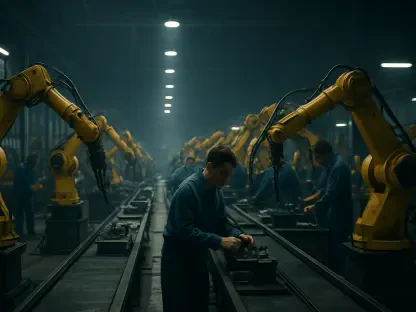
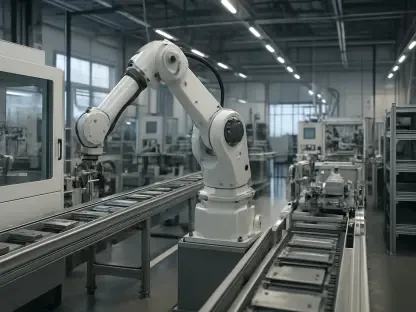
Automated assembly plants are also seeing a major impact, particularly in the coordination of robotic fleets. The ability of an AI system to manage the entire lifecycle of a mechanical fault means that maintenance shifts from a reactive chore to a managed, background process. This has fundamentally changed the economics of manufacturing, allowing for longer operational stretches and significantly lower overhead costs across high-volume production sectors.
Challenges and Operational Guardrails
Despite the rapid pace of development, the industry continues to struggle with the “data plumbing” required to connect decades-old legacy equipment with modern AI orchestration. Many factories operate as a patchwork of different technologies, making it difficult to establish a unified data highway. Bridging this gap requires significant investment in middleware and standardized communication protocols that can translate ancient sensor outputs into a format that modern edge processors can digest.
Safety concerns also necessitate the use of “supervised autonomy” to prevent unintended consequences in high-stakes environments. Hardware interlocks and confidence scoring act as essential guardrails, ensuring that the AI only takes action when it is certain of its diagnosis. If the system’s confidence falls below a predetermined threshold, it is programmed to hand control back to a human operator. This hybrid approach mitigates the risk of a “runaway” AI making a decision that could lead to physical harm or structural damage.
Future Outlook and Collaborative Intelligence
The trajectory of industrial AI points toward an agent-based environment where multiple specialized intelligences coordinate their efforts across the entire factory floor. Rather than a single master brain, these decentralized agents will negotiate and share resources to optimize the production line as a whole. This level of multi-agent coordination will allow for unprecedented flexibility, enabling factories to reconfigure themselves on the fly to meet changing market demands without extensive downtime.
Moreover, the development of explainable AI will foster a new era of collaborative intelligence between humans and machines. Future systems will likely possess the capability to explain the reasoning behind their autonomous actions to human colleagues in plain language. This transparency will build trust and allow human engineers to fine-tune the AI’s decision-making process, creating a synergistic relationship where the speed of the machine is tempered by human creative problem-solving.
Conclusion and Assessment
The transition from advisory tools to active participants in the industrial process represented a fundamental shift in the global manufacturing paradigm. By moving beyond simple predictions, industrial AI addressed the core inefficiencies that had plagued the sector for decades. The integration of edge computing and autonomous remediation created a more resilient ecosystem that survived the transition into a more volatile economic era. These systems successfully transformed maintenance from a necessary evil into a seamless, invisible component of the production cycle.
Moving forward, manufacturers should prioritize the standardization of data protocols to ensure that legacy hardware does not become a bottleneck for autonomous orchestration. The next logical step involved deep-tuning the interaction between multi-agent systems and human supervisors to maximize both safety and speed. Ultimately, the evolution of industrial AI proved that the most effective factories were those that embraced decentralized, self-healing architectures. The focus now turns to expanding these self-optimizing ecosystems to manage entire global supply chains with the same level of granular autonomy.