
As the global aerospace industry stands at a critical juncture, facing unprecedented pressure to achieve ambitious sustainability targets while navigating volatile geopolitical landscapes, the conversation has intensely shifted toward the foundational strength and reliability of its manufacturing supply chains. The drive to develop the next generation of aircraft is not merely a question of innovative design and advanced materials; it hinges on the capability to turn those blueprints into reality efficiently and dependably. Recent dialogues at major industry conferences, such as the Regional Aerospace Alliances (RAA) Mix & Mingle and the ATI Conference, have illuminated a growing consensus among original equipment manufacturers (OEMs), Tier 1 suppliers, and small to medium-sized enterprises (SMEs). The central theme emerging from these discussions is the increasingly critical need for a resilient, high-quality, and agile domestic manufacturing base to support the sector’s future. The traditional reliance on extended, global supply chains is being re-evaluated in favor of localized partnerships that can offer greater security, responsiveness, and collaborative potential, suggesting a fundamental rethinking of how the aerospace giants of tomorrow will be built.
The Imperative for Regional Collaboration
Fostering Agility and Resilience
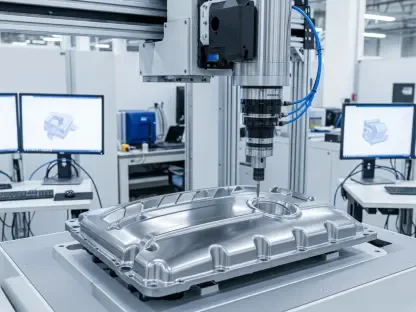
The intricate process of developing and manufacturing modern aircraft involves immense complexity, where delays or quality issues in a single component can cascade into significant project setbacks. Within this high-stakes environment, larger corporations are increasingly seeking to de-risk their programs by partnering with agile and responsive SMEs. Discussions at the RAA event underscored this trend, highlighting how specialized firms can provide a crucial buffer against supply chain disruptions. Companies like North-East Wales-based Tarvin Precision, a “Made in Britain” member, exemplify the value proposition of these smaller partners. By focusing on low-to-medium volume, high-complexity CNC machining, such firms can offer the proactive problem-solving and rapid lead times that are often challenging for larger, more bureaucratic organizations to achieve internally. This symbiotic relationship allows OEMs to concentrate on core design and assembly while relying on a network of trusted local suppliers to manage specialized manufacturing tasks with precision and speed.
This model of regional collaboration directly enhances the overall resilience of the aerospace supply chain. When Tier 1 suppliers and OEMs engage with local, certified partners, they significantly reduce logistical risks associated with long-distance shipping, customs delays, and geopolitical instability. The ability to have direct, face-to-face interaction fosters a deeper level of partnership, enabling quicker resolution of technical queries and a more collaborative approach to component development. The consensus viewpoint from industry gatherings is that the future of aerospace manufacturing in the UK depends on cultivating these strong regional ecosystems. The strategic advantage lies not just in proximity but in the shared commitment to quality and innovation that a tightly integrated domestic supply network can provide, ensuring that the UK remains at the forefront of aerospace engineering and production for years to come.
The Strategic Advantage of Localized Sourcing
Sourcing critical components domestically presents a clear strategic advantage that extends beyond simple logistics and into the realms of quality assurance and economic stability. For the aerospace industry, where traceability and compliance are non-negotiable, a domestic supply chain offers unparalleled transparency. Utilizing UK-based firms with certifications such as AS9100 and ISO9001 provides OEMs with the confidence that every machined part meets the highest international standards for quality, safety, and reliability. This localized oversight is fundamental to meeting the stringent demands of both regulators and customers. The “Made in Britain” status is more than a mark of origin; it serves as a direct solution to modern supply chain challenges, signifying a commitment to verifiable quality and robust manufacturing processes that are easily audited and managed. By placing work with national firms, aerospace leaders are not just acquiring components; they are investing in a secure and accountable manufacturing ecosystem.
Furthermore, a deliberate focus on domestic sourcing is a direct investment in the nation’s economic health and technological capabilities. It sustains a high-value skills base in precision engineering and advanced manufacturing, ensuring that critical expertise is retained and developed within the country. This approach fosters a virtuous cycle: a strong domestic demand for CNC machining and precision assembly encourages further investment in technology and training, which in turn enhances the capabilities of the national supply chain. Proximity to major aerospace facilities also allows for unparalleled responsiveness to urgent operational needs or rapid design changes. This ability to react quickly and collaboratively is a powerful enabler of innovation, creating a dynamic environment where groundbreaking designs can be transformed into tangible, flight-ready components without the delays and risks inherent in an overseas supply model.
Navigating Toward a Sustainable Future
Engineering for Destination Zero
The aerospace industry’s ambitious pursuit of “Destination Zero”—a future defined by ultra-efficient aircraft and clean propulsion systems—represents one of the greatest engineering challenges of the century. Achieving these goals requires a radical departure from conventional designs and manufacturing methods, demanding a level of innovation that can only be sustained by a strong and adaptable industrial base. The ATI Conference brought this dependency into sharp focus, with leaders across the sector acknowledging that a robust domestic manufacturing capability is a prerequisite for success. The journey toward zero-emission flight will be built upon a foundation of rapid, high-quality prototyping and development machining. The ability to quickly iterate on complex designs for new engine components, lightweight aerostructures, and advanced systems is paramount, and this process is significantly streamlined when R&D teams can work closely with local manufacturing partners.
This need for speed and precision makes a domestic supply chain indispensable. Turning visionary concepts for hydrogen fuel systems or next-generation hybrid-electric powertrains into certified hardware requires a manufacturing ecosystem that can keep pace with the demanding cycle of design, test, and refinement. Relying on distant suppliers introduces unacceptable delays and communication barriers that can stifle innovation. Instead, having access to a national network of advanced machining specialists, such as those with expertise in 3, 4, and 5-axis milling and CNC turning, allows for a more integrated and agile development process. The UK’s existing CNC machining capacity is not just a resource; it is a critical enabler of the industry’s green transition, providing the essential capability to transform ambitious environmental targets into tangible technological advancements.
The Role of Certified Domestic Partners
In an industry where safety and reliability are paramount, the quality and traceability of every single component are of the utmost importance. As aerospace technology advances and systems become more integrated, the need for fully traceable and certified supply chains has intensified. A key advantage of sourcing from domestic partners is the assurance of quality that comes with established certifications and a shared regulatory environment. UK-based suppliers operating under rigorous standards like AS9100, the international quality management system for the aerospace industry, provide a level of confidence that is difficult to replicate with a dispersed global supply chain. This certification ensures that every process, from material procurement to final inspection, is documented and adheres to the strictest protocols, giving OEMs and Tier 1 suppliers the verifiable proof of quality they need to meet regulatory and customer obligations without compromise.
This framework of trust and reliability is bolstered by the inherent benefits of proximity. A strong domestic partnership allows for closer collaboration, easier site audits, and a more integrated approach to quality management. When an urgent need arises or a design modification is required, engineers and procurement specialists can engage directly with their local manufacturing partners, fostering a responsive and solutions-oriented relationship. The UK’s available CNC machining capacity, represented by a network of flexible and highly skilled SMEs, stands ready to support the country’s most demanding aerospace programs. This national resource provides a clear path for transforming innovative designs into high-integrity components, securing the supply chain, and ensuring that the UK’s aerospace sector can continue to build the future of flight on a foundation of quality, reliability, and domestic strength.
A Strengthened Foundation for Aerospace Innovation
The collective insights from recent industry events pointed toward a decisive shift in strategic thinking. It became clear that the long-held reliance on sprawling, globalized supply chains was being re-evaluated in the face of new technological ambitions and persistent market volatility. The dialogue underscored that a resilient, responsive, and technologically advanced domestic manufacturing base was no longer a preference but a necessity for securing the future of the UK’s aerospace sector. The capacity and expertise, particularly in high-precision CNC machining and assembly, were recognized as readily available within Great Britain. This realization prompted a renewed focus on leveraging these national assets to de-risk complex programs, accelerate innovation toward sustainability goals, and fortify the entire industrial ecosystem against external shocks, setting a new course for collaboration and national industrial strategy.