
The familiar hum of the factory floor is beginning to sound less like machinery and more like a conversation, as industrial systems evolve beyond executing pre-programmed commands to actively interpreting their own operational context. This profound paradigm shift reframes the entire concept of production, moving away from a history dominated by rigid control and into a future defined by cognitive understanding. We are witnessing the emergence of a new generation of industrial architecture guided by the principles of “Reflective Automation” and “Situated Intelligence.” In this new model, the factory is not merely a collection of deterministic mechanisms but is becoming a self-aware, learning organism capable of constructing genuine meaning from the vast oceans of data it generates. This transformation from simple operational visibility to deep-seated industrial cognition is set to redefine competitiveness, value, and the very nature of manufacturing itself.
The Dawn of Industrial Cognition
From Control to Understanding
For decades, the primary goal of industrial automation was to achieve stability and efficiency by enclosing systems within predictable, deterministic boundaries, a paradigm that prioritized strict control over adaptive awareness. While this approach guaranteed a certain level of predictable operation, its inherent rigidity made it ill-suited for the dynamic, data-rich environments of modern industry. The contemporary challenge, amplified by digitalization and pervasive connectivity, has fundamentally shifted from merely observing operational states to genuinely comprehending them. This evolution represents a critical transition away from a model of simple reaction to one of profound interpretation, moving from basic functional execution toward the complex construction of meaning. This change is not incremental; it is a complete re-evaluation of what automation is and what it can achieve in a world where data holds more value than the machinery that produces it.
This complex challenge is being met by the rise of “Reflective Automation,” a concept that reimagines the act of production as an inherently cognitive process. Within this framework, industrial systems transcend their role as passive executors of pre-programmed instructions or simple reactors to external stimuli. Instead, they become active learners, interpreting the continuous streams of data they produce and effectively leveraging their own operational history as a source of knowledge. Machines and integrated systems evolve from being passive tools into active participants in the construction of meaning, transforming every sensor reading, every cycle time, and every error code into an act of perception. This allows the system as a whole to develop an understanding of its own processes, bottlenecks, and potential failures, creating a self-improving loop that was previously the exclusive domain of human oversight and intervention.
Intelligence in Context
Complementing the cognitive leap of reflective automation is the crucial principle of “Situated Intelligence.” This concept posits that true, functional intelligence does not reside within a centralized, isolated computational core but emerges organically from the continuous, dynamic interaction between an agent and its specific environment. In the industrial context, the factory itself is the agent, and its operational reality is the environment. Intelligence, therefore, becomes inherently contextual, widely distributed, and profoundly adaptive. The system learns directly and immediately from its own behavior within its unique setting, whether that’s a specific welding line in an automotive plant or a bottling process in a beverage facility. This localized learning process ensures that the intelligence developed is directly relevant and immediately applicable to the system’s own challenges and opportunities.
This approach creates a powerful and perpetual feedback loop where the system constantly refines its understanding of its own operations. Every action taken, every deviation from the norm, and every successful outcome becomes a valuable source of knowledge that feeds back into the system’s operational model. It is a departure from static, top-down programming toward a bottom-up, emergent intelligence where knowledge is not just stored but is actively lived and embodied by the system. This continuous cycle of sensing, acting, and learning allows the industrial architecture to move beyond simple automation and toward a state of genuine operational wisdom. The factory, in effect, learns to think on its feet, adapting its behavior based on a constantly evolving understanding of its world, a capability essential for navigating the complexities of modern supply chains and consumer demands.
The Architecture of a Thinking Factory
The Nervous System and the Mind
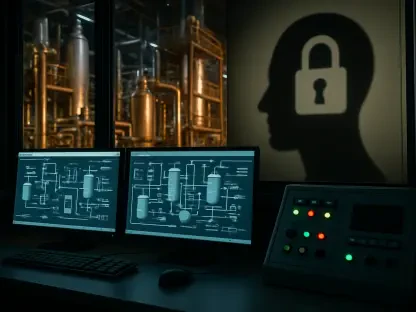
Realizing this cognitive model requires a completely new industrial architecture, composed of distinct yet deeply integrated layers. The foundation of this structure is the “perceptual foundation,” which functions as the factory’s sensory nervous system. Modern Supervisory Control and Data Acquisition (SCADA) systems, enhanced by open and interoperable protocols like OPC UA and MQTT, are at the heart of this layer. Their role has expanded from simple monitoring to aggregating, collecting, and normalizing heterogeneous data from a vast array of sources, including sensors, Programmable Logic Controllers (PLCs), robotic arms, and enterprise systems. This foundational layer creates a coherent, unified, and real-time view of the complete operational state, translating the chaotic noise of thousands of individual data points into a clear and comprehensive signal that the system can begin to interpret and understand.
Built directly upon this perceptual layer is the “interpretive stratum,” which can be thought of as the operational mind of the industrial system. This is where raw data is transformed into actionable knowledge and foresight. This stratum consists of advanced analytical models, sophisticated predictive algorithms, and high-fidelity digital twins that mirror the physical processes in a virtual space. Here, the system begins to infer complex patterns, predict future states such as impending equipment wear or material shortages, and formulate hypotheses about cause and effect relationships within the production line. An advanced automotive welding line, for example, can use sensor data to infer electrode degradation, autonomously adjust its own parameters to compensate, and communicate its reasoning to an operator, demonstrating active interpretation and problem-solving rather than simple programmed control.
Redefining Performance and Value
The emergence of these cognitive industrial systems is fundamentally rewriting the metrics of competitive advantage. Historically, companies competed on production capacity, unit cost, and raw functional efficiency, benchmarks that favored scale and repetition. The new standard for success is “interpretive agility”—the speed and accuracy with which an organization can understand its own operational context, anticipate future events, and translate that deep understanding into effective, decisive action. In this new landscape, awareness and comprehension supersede raw efficiency as the true measures of industrial value. A factory that can predict a failure before it occurs or dynamically re-route production to meet a sudden change in demand possesses a strategic advantage that a faster but less intelligent competitor simply cannot match. This shift places a premium on insight over output.
Consequently, this transformation is giving rise to an entirely new economic model where value is derived from knowledge as much as from physical products. Companies that successfully implement these cognitive architectures begin to sell not just manufactured goods, but “capacities for understanding.” They can monetize their accumulated productive experience by transforming it into analytical and predictive services, offering insights into process optimization, supply chain resilience, and energy consumption to their partners and customers. In this evolving marketplace, contextual intelligence becomes the “new industrial currency,” creating novel revenue streams and business models. The data generated by a smart factory is no longer just an operational byproduct; it is a valuable asset that can be packaged and sold, turning the production floor into a source of intellectual property.
The Human-Machine Partnership
The New Role of the Human Operator
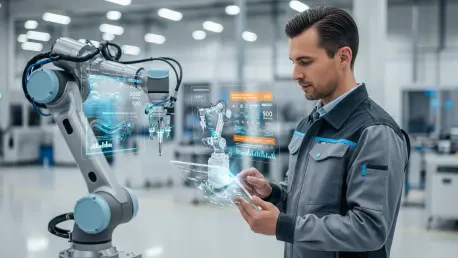
Contrary to widespread fears of automation leading to human obsolescence, this technological evolution does not render people obsolete; on the contrary, it elevates the human role to one of unprecedented importance. Operators transition from being simple monitors or commanders, tasked with overseeing repetitive processes, to becoming integral components of the system’s core reasoning process. They become “negotiators of interpretations,” collaborating directly with advanced algorithms to confirm hypotheses, correct misinterpretations, and enrich the system’s understanding with their own experience and intuition. In this symbiotic relationship, technology’s primary purpose shifts from replacing human competence to amplifying it, freeing human workers from mundane tasks to focus on complex problem-solving, creative process improvement, and strategic oversight where their unique cognitive abilities are most valuable.
This collaborative dynamic is facilitated by the development of “cognitive mediators,” the next generation of Human-Machine Interfaces (HMIs). These systems are no longer simple command-and-control panels for turning machines on and off. Instead, they function as sophisticated mediators that translate the complex data relationships and abstract reasoning of the automated system into intuitive visual and narrative representations. This allows for a true dialogue to occur between the operator and the system. An HMI might not just display an alarm; it might present a hypothesis for the alarm’s root cause, along with supporting data and a recommended course of action, inviting the human operator to validate or challenge its conclusion. This partnership ensures that the system’s powerful analytical capabilities are guided by human wisdom, creating a whole that is far greater than the sum of its parts.
The Ethical and Organizational Frontier
The development of an industrial system that can reason about its own actions and make autonomous decisions carried significant ethical implications. For such a system to be trusted and safely integrated into critical production environments, its decision-making processes had to be transparent and accountable. This led to the foundational requirement of “cognitive traceability”—the ability to understand precisely why an automated decision was made. This principle went beyond simple error logging; it demanded that the system could articulate its reasoning in a way that humans could comprehend and audit. Establishing this new standard of industrial responsibility was crucial for building the necessary trust between human operators and their increasingly intelligent machine counterparts, ensuring that safety and accountability remained paramount as autonomy increased.
Ultimately, the greatest challenge in realizing the full potential of reflective automation proved not to be technological but organizational. The advanced tools of situated intelligence could only be fully leveraged by enterprises that were willing to fundamentally reshape their internal structures, processes, and culture. Success required a move away from rigid, hierarchical command structures toward a more collaborative, learning-oriented paradigm where information flowed freely and experimentation was encouraged. The true differentiator that separated leaders from laggards was the “human factor”—the ability to adapt human roles and organizational models to this reflective framework. The ultimate vision was the creation of a new form of value where the factory truly understood its own purpose, unifying knowledge, action, and production into a single, continuous act of shared intelligence.