
In the intricate and high-stakes world of semiconductor manufacturing, KLA Corporation operates as a critical, yet often unheralded, architect of the digital age, providing the essential quality control systems that make the artificial intelligence revolution possible. The company’s unique position places it at the epicenter of a monumental technological shift, designing and building the sophisticated process control and yield management solutions required to fabricate the increasingly complex microchips that power everything from data centers to autonomous vehicles. This analysis delves into the compelling dichotomy of KLA as an investment: a high-quality business with a formidable competitive moat, propelled by the relentless demand for more powerful computing, yet simultaneously facing substantial and unavoidable headwinds from escalating geopolitical tensions. U.S. export controls aimed at curtailing China’s technological ascent represent the most significant threat, directly impacting a historically vital revenue stream. This regulatory pressure, compounded by the semiconductor industry’s inherent cyclical nature and a premium stock valuation, creates a complex calculus for investors. The central question is whether KLA’s powerful long-term growth trajectory, fueled by the insatiable appetite for AI, can successfully navigate the turbulent waters of a volatile and unpredictable global landscape.
The Unassailable Fortress KLA’s Market Dominance
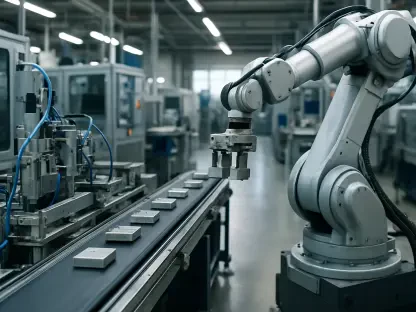
KLA Corporation’s role is foundational to the entire electronics ecosystem; it does not produce the chips themselves but provides the indispensable “eyes and brains” for the fabrication process, ensuring the near-atomic perfection required for modern technology to function. Its core business centers on process control, a discipline involving a sophisticated suite of tools designed to inspect, detect, and identify microscopic defects on silicon wafers and the photomasks used to pattern them. As semiconductor features continue to shrink to the nanometer scale—2nm and beyond—the margin for error becomes infinitesimal. A single, imperceptible dust particle or a minuscule atomic-level flaw can render an entire multi-million-dollar wafer useless. KLA’s advanced optical and e-beam inspection systems are the industry’s primary defense against these “killer defects,” making them a non-negotiable component of any advanced fabrication facility. Complementing this is the company’s leadership in yield management, which employs metrology tools to perform hyper-precise measurements of critical dimensions, film thicknesses, and the alignment of successive layers on a chip. This wealth of data, processed through sophisticated software, empowers chipmakers to monitor, analyze, and optimize their production lines in real time, thereby maximizing the number of functional chips per wafer—a critical metric known as “yield.” As the complexity of chips increases, often involving over a thousand manufacturing steps, the probability of a yield-destroying error grows exponentially, cementing KLA’s solutions not as an optional expense but as a fundamental requirement for achieving commercially viable production.
The company’s formidable market dominance is the result of decades of strategic evolution and technological leadership, fortified by exceptionally high barriers to entry that deter potential competitors. This market power was significantly consolidated through a pivotal 1997 merger that combined the distinct strengths of two industry pioneers: KLA Instruments, a specialist in automated defect inspection, and Tencor Instruments, a leader in metrology for measuring film layer thickness. The fusion created a comprehensive powerhouse providing end-to-end yield management solutions that the industry quickly came to rely on. As of late 2025, KLA’s competitive position is nothing short of commanding, holding over 56% of the overall semiconductor process control market, nearly 63% of the metrology and inspection segment, and a staggering share exceeding 85% in optical inspection. These barriers are built not just on market share but on a deep foundation of accumulated intellectual property, with over 8,500 active patents safeguarding its innovations. This is further reinforced by deep scientific expertise in physics and optics and massive, sustained R&D investments required to stay ahead of the relentless pace of Moore’s Law—a financial commitment few rivals can hope to match. Furthermore, KLA’s tools are deeply embedded within the manufacturing roadmaps and processes of its customers, creating extremely high switching costs and solidifying its role as an indispensable long-term strategic partner rather than just another equipment supplier.
The Financial Engine Powering Innovation
KLA operates a financially robust and highly efficient business model that is strategically aligned with the escalating demands of the AI era, enabling it to fund continuous innovation while delivering substantial shareholder returns. The company’s revenue is primarily derived from two distinct yet complementary sources. The largest portion comes from product revenue, which includes the sale of its extensive portfolio of inspection and metrology systems, specialty process tools, and packaging solutions. A key growth driver within this category is the burgeoning field of advanced packaging, where KLA has established a strong foothold; revenue from this segment is projected to surge past $925 million in calendar year 2025, representing a year-over-year increase of approximately 70%. The second pillar of its financial strength is its service revenue, which provides a significant and highly stable income stream, accounting for roughly 22% of total revenue in fiscal year 2025. This business is characterized by multi-year, subscription-like contracts for system maintenance, upgrades, and support. With over 75% of this revenue under long-term contracts and renewal rates exceeding a remarkable 95%, it provides a resilient, high-margin foundation that effectively smooths out the inherent cyclicality of capital equipment sales. Management has expressed confidence in this segment’s continued growth, targeting a 12-14% Compound Annual Growth Rate (CAGR) through 2026.
The company’s financial statements paint a picture of an exceptionally profitable and well-managed operation, reflecting the premium value and critical nature of its offerings. For the fiscal year ending in June, KLA reported record revenues of $12.16 billion, a 23.89% increase from the prior year. More impressively, it boasts industry-leading profitability, with a net profit margin for fiscal year 2025 standing at an impressive 33.83% and non-GAAP gross margins consistently exceeding 60%. KLA is a prodigious cash-generating machine, producing $4.08 billion in cash flow from operations and $3.75 billion in free cash flow (FCF) in fiscal year 2025, underscoring its operational efficiency. This strong financial position allows KLA to consistently return significant capital to its shareholders. In the last fiscal year, the company returned $3.05 billion through a combination of dividends and share repurchases, a commitment reinforced by a new $5 billion share repurchase authorization and consistent increases in its quarterly dividend. While its balance sheet shows total debt of $6.08 billion, this is manageable against a market capitalization of $156.87 billion. The stock’s strength is also evident in its premium valuation metrics; trading at a trailing P/E ratio of 37.49, it commands a premium over the industry average, signaling high investor expectations for its continued growth and market leadership.
Riding the AI Supercycle
The primary catalyst propelling KLA’s recent growth and bullish long-term outlook is the “AI supercycle,” a widespread and sustained investment in the hardware required to power artificial intelligence. The manufacturing of high-performance AI accelerators, such as those designed by NVIDIA, AMD, and Intel, is an incredibly intricate process that pushes the very boundaries of physics and materials science. These chips often feature advanced architectures like 2.5D/3D stacking and chiplets, and require high-bandwidth memory (HBM) to function effectively. This explosion in complexity necessitates an unprecedented level of process control, placing KLA’s solutions at the heart of the AI revolution. Its tools are absolutely essential for achieving high yields, as large and complex AI chips are notoriously difficult to manufacture without defects. KLA’s systems are critical for identifying and eliminating the sources of these flaws, making production economically viable. Moreover, the company is a key enabler of advanced packaging, where techniques like stacking multiple chips require perfect alignment and defect-free bonding. KLA provides specialized inspection and metrology systems tailored for these critical steps. As the entire industry pushes toward 2nm process nodes and beyond, the need for what is known as “process control intensity”—the number of inspection and measurement steps per wafer—increases significantly, directly driving demand for KLA’s products and allowing it to grow faster than the overall wafer fab equipment market.
KLA maintains its significant technological advantage through a relentless commitment to innovation, backed by substantial and sustained investment in research and development. The company committed $2.3 billion through 2025 for emerging technologies, with quarterly R&D expenses often exceeding $340 million. A key area of focus is the integration of AI and machine learning algorithms directly into its own inspection and metrology tools. This creates a powerful, self-reinforcing cycle of improvement, enabling faster, more accurate defect detection and predictive data analysis for its customers. The company is also at the forefront of developing specialized e-beam inspection and metrology tools to support the industry’s critical and costly transition to Extreme Ultraviolet (EUV) lithography, the cutting-edge technology used for the most advanced nodes. Beyond the current generation, KLA is pioneering research into solutions for next-generation technologies like quantum computing detection through its global R&D centers. This forward-looking strategy and technological supremacy have been reflected in its exceptional stock performance. Over the decade leading up to December 15, 2025, the stock delivered an outstanding total return of approximately 2,049%, a clear testament to its fundamental strength and indispensable strategic positioning within the technology value chain.
The Gathering Storm Navigating Geopolitical and Market Headwinds
Despite its formidable strengths and dominant market position, KLA faces a complex array of significant risks that form the core of the bear case against the company and its stock. These challenges are largely external and systemic, but they have a direct and material impact on its business operations and future growth prospects. The most immediate and significant of these challenges is the evolving regulatory landscape surrounding U.S.-China trade relations. In an effort to curb China’s technological and military ambitions, the U.S. Bureau of Industry and Security (BIS) has implemented a series of stringent export controls that restrict the sale of advanced semiconductor equipment and technology to Chinese entities. This policy directly impacts KLA, as China has historically represented a major market, contributing a significant portion of its annual revenue. The regulations are expected to cause KLA’s revenue share from China to fall dramatically, from a high of 41-44% in 2024 to an anticipated range of 15-30% in 2025-2026. This precipitous decline represents a substantial headwind that the company must work to offset with accelerated growth in other regions and market segments, a task that tests the resilience and adaptability of its global business model. Furthermore, the potential for broader U.S. tariff policies poses an additional threat. It is estimated that certain tariff scenarios could lead to annual losses of up to $350 million for KLA and a 100-basis-point negative impact on its gross margin.
Beyond the immediate geopolitical pressures, KLA is also exposed to a number of other market and operational risks that investors must carefully consider. The semiconductor industry is famously cyclical, characterized by periods of high capital investment and robust demand followed by downturns and contractions in spending. While KLA’s stable and growing service business provides a valuable buffer against this volatility, a significant and prolonged contraction in wafer fab equipment (WFE) spending would inevitably impact its growth trajectory. Another key risk factor is the company’s premium valuation. With a price-to-earnings ratio significantly higher than the industry average, KLAC stock is priced for near-perfect execution. Any disappointment in earnings reports, a lowering of growth guidance, or a compression in its high margins could trigger a sharp and substantial correction in its share price. While the AI supercycle is currently a powerful tailwind, there are valid concerns that the explosive growth in AI-related capital expenditures could eventually cool down. A normalization of demand would likely lead to a flattening of KLA’s growth curve. Finally, the company faces customer concentration risk, as it relies on a small number of large chipmakers for a significant portion of its revenue. A strategic decision by one of these key customers—such as TSMC, Samsung, or Intel—to reduce or delay capital expenditures could have a disproportionate negative impact on KLA’s financial results, highlighting its dependence on the spending habits of a few industry giants.
A Calculated Bet on Technological Supremacy
Ultimately, KLA Corporation presented a premier investment vehicle for gaining exposure to the foundational layer of the digital economy. It stood as a best-in-class company operating within a critical industry, fortified by durable competitive advantages that were difficult to replicate. Its dominant market share, strong financial performance, and strategic alignment with the powerful, multi-year secular trend of the AI supercycle created a compelling and powerful long-term growth narrative. However, the investment was not without clear and significant risks that demanded careful consideration. The company’s future was inextricably linked to the volatile and often unpredictable dynamics of global geopolitics, particularly the complex relationship between the United States and China. The substantial impact of export controls was a known headwind that required diligent management and successful mitigation through strategic diversification into other geographic regions and high-growth segments like advanced packaging. Investors who considered KLA had to weigh its undeniable quality and the powerful AI tailwind against these stark geopolitical realities and market uncertainties. The margin for error was slim, given its premium valuation, and its ability to continue justifying its market price hinged on its capacity to navigate these clear and present challenges. The company’s path forward and its legacy of delivering exceptional shareholder value were ultimately defined by its ability to innovate beyond these external constraints and continue proving its indispensable role in the advancement of technology.