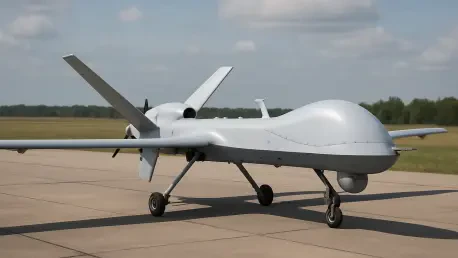

The unmanned aerial vehicle industry is rapidly approaching a critical inflection point where the ambitious demands of enterprise operations are outstripping the capabilities of conventional airframe technology. As UAVs transition from simple line-of-sight tools to autonomous platforms for long-range missions, a persistent “Endurance Gap” has emerged, highlighting the disparity between mission requirements and hardware limitations. The push for extended flight times, heavier and more complex payloads like LiDAR arrays, and the necessity for exceptionally precise sensor data reveals the shortcomings of traditional construction methods. Airframes assembled from carbon fiber tubes with bonded joints or those created from molded plastics, while lightweight, often suffer from structural flexing, material fatigue, and sensor instability. This reality suggests that the next great leap in UAV performance will not come from incremental battery improvements alone, but from a fundamental revolution in structural engineering and manufacturing philosophy.
A New Foundation for Aerospace Optimization
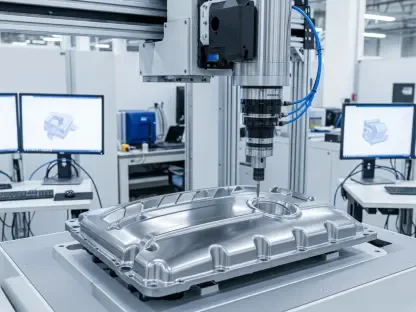
At the heart of modern aerospace engineering lies the principle of SWaP-C, a relentless drive to optimize Size, Weight, and Power, plus Cost. Five-axis CNC machining directly confronts this challenge by employing a subtractive manufacturing process that carves a UAV’s frame from a single, solid billet of high-strength, aerospace-grade material like 7075-T6 aluminum. This technique allows engineers to design incredibly complex internal geometries, such as pockets, ribbing, and hollowed lattice structures, that are simply impossible to create with other methods. The resulting monolithic component eliminates the need for heavy fasteners, joints, and bonding agents, which are traditional points of mechanical failure. This approach yields a unibody structure with the tensile strength of a solid block but with a significantly lower mass and superior resistance to fatigue, creating a foundation that is both remarkably light and exceptionally durable.
Beyond sheer strength-to-weight advantages, the subtractive nature of 5-axis machining unlocks unparalleled aerodynamic efficiency through the creation of what engineers call “organic geometry.” Unlike the limitations of 3-axis machining, which produces more basic, prismatic shapes, the simultaneous five-axis movement of the cutting tool can sculpt complex, continuous, and curved surfaces. This allows for the seamless integration of motor mounts, arms, and fuselage sections into a single, flowing form. By eliminating the sharp angles and abrupt junctions typical of modular carbon-fiber frames, which are notorious for creating turbulence, this process results in a lower drag coefficient. The improved aerodynamics not only enhance stability in challenging crosswind conditions—a critical factor for long-range BVLOS missions—but also reduce the power required from the motors to maintain flight, directly extending battery life and mission endurance.
From Structural Integrity to Data Purity
For professionals in fields like geographic information systems (GIS), where data accuracy is paramount, the phenomenon known as “sensor noise” represents a significant and often underestimated obstacle. This degradation of data quality is a direct result of airframe vibration. The motors and propellers of any multirotor UAV generate constant, high-frequency vibrations that propagate throughout the structure. In frames made from molded plastics, 3D-printed polymers, or even jointed carbon fiber, these vibrations can cause micro-flexing and harmonic resonance. Over the course of a long survey mission, this inherent instability can degrade the precision of LiDAR returns, introduce subtle distortions in photogrammetry outputs, and even reduce the operational lifespan of sensitive sensor components. The core issue is clear: a structurally compromised airframe cannot provide the stable platform necessary for high-fidelity data acquisition, regardless of the quality of the sensor payload itself.
This is where the physical properties of a monolithic, CNC-machined airframe provide a decisive advantage. A structure carved from a single block of aerospace-grade aluminum exhibits a much higher stiffness-to-weight ratio and superior harmonic dampening characteristics compared to assembled or molded alternatives. This inherent rigidity provides a predictable and exceptionally stable platform, ensuring that the sensor’s alignment is maintained with extreme precision throughout the flight. By effectively absorbing and dissipating motor vibrations before they can affect the payload, these advanced frames significantly reduce Inertial Measurement Unit (IMU) drift and other sources of error. This leads directly to cleaner point clouds, more accurate survey data, and greater confidence in the final deliverables. The conclusion is unambiguous: a superior structure directly translates to superior data.
Accelerating Innovation and Production
The profound impact of 5-axis CNC machining extends beyond in-flight performance, fundamentally reshaping the entire UAV development and production lifecycle. In the fast-paced research and development environment of the drone industry, the ability to rapidly test and refine new designs is a critical competitive advantage. Traditional manufacturing methods that rely on composite molds are notoriously time-consuming and expensive to alter; even minor design changes can necessitate the creation of entirely new tooling, leading to significant delays and cost overruns. In contrast, CNC machining allows design modifications to be implemented by simply updating a digital program. This unmatched agility enables engineers to produce a revised, flight-ready prototype in a fraction of the time, fostering a culture of rapid iteration and continuous improvement that is essential for staying at the forefront of the industry.
While the initial capital investment in 5-axis machinery is substantial, the technology delivers significant long-term cost efficiencies and enhances manufacturing quality at scale. The capability for single-setup machining, where a complex part is completed in one clamping without being moved, minimizes the risk of alignment errors that can occur with multiple setups. This streamlined process leads to lower scrap rates, requires fewer manual assembly steps, and dramatically reduces the potential for human error. For enterprise-scale production, this ensures exceptional repeatability and consistency across large batches of aircraft, resulting in higher overall quality and reduced warranty claims. Ultimately, the precision inherent in the process lowers the total lifecycle cost of the UAV, making advanced, high-performance airframes more accessible and reliable for professional operators.
The Architecture of Next-Generation Autonomy
It became clear that the structural foundation of a UAV was just as critical as its software, artificial intelligence, and navigation systems. The industry’s evolution toward standardized Beyond Visual Line of Sight operations established characteristics like endurance, payload capacity, and data integrity as non-negotiable requirements, not optional features. The adoption of 5-axis CNC machining proved to be the enabling technology that addressed these demands, transforming airframe design from an assembly of disparate parts into an integrated, monolithic, high-performance system. This shift confirmed that the future of advanced UAV technology was indeed carved, not molded, built upon hardware as sophisticated as the software it carried.