
The modern industrial landscape is facing unprecedented complexity, where even minor inefficiencies can cascade into significant production delays and financial losses, demanding a fundamental shift beyond traditional automation. In a landmark move poised to redefine industrial processes, Siemens and NVIDIA are expanding their partnership to forge an “Industrial AI Operating System,” a groundbreaking platform designed to infuse artificial intelligence across the entire manufacturing lifecycle. This collaboration aims to create a deeply integrated, AI-accelerated portfolio that merges industrial software, advanced simulation, and physical factory operations. The core objective is to provide companies with the tools to design products faster, validate operational changes in a risk-free virtual environment, and then seamlessly deploy those optimized processes into the physical world, heralding a new age of intelligent, adaptive manufacturing.
A New Era of Active Intelligence
The collaboration is built on a powerful synergy, leveraging the distinct strengths of each technology giant to create a comprehensive industrial ecosystem. NVIDIA is contributing its state-of-the-art AI infrastructure, including its Omniverse platform for creating and operating 3D digital twins, its suite of CUDA-X simulation libraries, advanced AI physics models, and critical foundational frameworks. Complementing this, Siemens is bringing its vast and established hardware and software stack to the table, along with its open digital business platform, the Siemens Xcelerator Marketplace, and the deep industry expertise of hundreds of its industrial AI specialists. This fusion of AI power and industrial domain knowledge creates a seamless bridge between the virtual and physical realms, covering every facet of the industrial value chain—from initial product design and engineering to complex manufacturing, ongoing operations, and sophisticated supply chain management. This integrated approach ensures that AI is not an add-on but a core component of the industrial operating system.
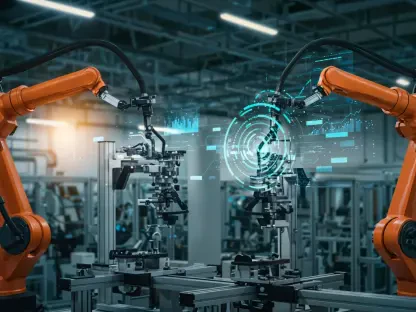
At the heart of this transformative partnership lies the evolution of the digital twin from a static, passive simulation into a source of “active intelligence” for the physical world. Traditionally, digital twins have served as virtual replicas for design and analysis, but this collaboration elevates them into dynamic, continuously learning systems. By feeding real-time data from the factory floor—including information from manufacturing execution systems (MES), programmable logic controllers (PLCs), and industrial IoT sensors—into a high-fidelity virtual model, the system can run countless simulations to test potential process improvements. These virtual experiments, conducted within the photorealistic NVIDIA Omniverse environment, can identify bottlenecks, optimize workflows, and predict maintenance needs without disrupting actual production. The validated insights are then converted into actionable changes that are implemented back on the physical shop floor, creating a closed-loop system of perpetual optimization and intelligence.
The Dawn of the AI-Driven Factory
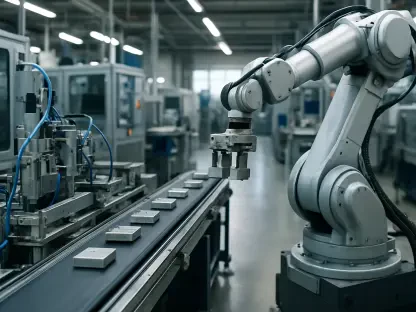
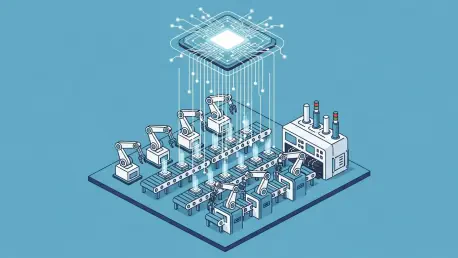
This partnership’s ambition is crystallized in the plan to build fully AI-driven, adaptive manufacturing sites, with the initial blueprint now being implemented at the Siemens Electronics Factory in Germany. These next-generation facilities will be orchestrated by a central “AI Brain,” a sophisticated system powered by NVIDIA’s AI infrastructure and Omniverse libraries. This AI Brain will constantly analyze the factory’s high-fidelity digital twin, running virtual tests to discover more efficient and resilient production methods. Once an improvement is validated in the virtual space, the AI can issue commands to automate and implement the change in the physical factory in real-time. This dynamic capability allows the factory to adapt to changing supply chains, customer demands, or unexpected equipment issues with unprecedented agility. It marks a significant departure from rigid, pre-programmed automation toward a more organic, intelligent, and self-optimizing manufacturing environment that learns and evolves over time.
The practical applications of this technology are already gaining traction across the industry, with leading companies such as Foxconn, HD Hyundai, KION Group, and PepsiCo actively exploring its advanced capabilities. To facilitate broader adoption, a key near-term product emerging from this venture is the Digital Twin Composer software, now launching on the Siemens Xcelerator Marketplace. This powerful tool empowers industrial clients to consolidate disparate data streams into a unified, high-fidelity digital environment. It seamlessly merges 2D and 3D digital-twin data with live information from real-world sources like MES and IoT feeds, rendering it all within a single, photorealistic 3D environment built on NVIDIA Omniverse. This unified view provides unprecedented clarity and control, allowing engineers and operators to visualize, simulate, and manage their operations with a level of detail and accuracy that was previously unattainable, thereby accelerating decision-making and innovation.
Tangible Results and Future Integration
Early adoption of this integrated platform has already yielded remarkable and quantifiable results, demonstrating its immense potential to drive real-world value. PepsiCo, an early adopter, leveraged the technology to create comprehensive digital twins of its U.S. facilities, leading to substantial operational improvements. The company reported a significant 20% increase in throughput, a direct result of optimizing production lines and workflows within the virtual environment before implementation. Furthermore, by achieving nearly 100% design validation in simulation, PepsiCo was able to identify and resolve up to 90% of potential issues before any physical changes were made. This foresight translated into a notable 10% to 15% reduction in capital expenditures, as the company avoided costly rework and suboptimal equipment investments. These figures provide compelling evidence that the fusion of high-fidelity simulation and AI-driven insights can deliver a strong and immediate return on investment for industrial enterprises.
The strategic partnership between Siemens and NVIDIA ultimately set a new standard for industrial digitalization. Siemens’ commitment to integrating NVIDIA’s technology across its entire product portfolio represented a pivotal moment in this transformation. The initiative involved completing GPU acceleration for all of Siemens’ simulation tools, which dramatically reduced the time required for complex analyses. Concurrently, the enhancement of its electronic design automation (EDA) software with NVIDIA CUDA-X libraries delivered targeted speed-ups ranging from 2x to 10x and introduced novel AI-assisted design features. This comprehensive integration ensured that advanced AI and simulation capabilities were not confined to niche applications but became a fundamental component of the industrial engineering and manufacturing toolkit. The collaboration provided a blueprint for how a deep fusion of information technology and operational technology could unlock unprecedented levels of efficiency, innovation, and resilience across the global industrial sector.