
Let me introduce Kwame Zaire, a renowned manufacturing expert with a passion for electronics and equipment. With decades of experience in production management, Kwame has established himself as a thought leader in predictive maintenance, quality assurance, and workplace safety. His insights into balancing human expertise with cutting-edge technology, driving innovation, and standardizing quality across global operations make him a vital voice in today’s rapidly evolving industry. In this interview, we dive into the challenges of integrating automation with human skills, fostering a culture of digital transformation, and aligning innovation with sustainability goals in manufacturing.
Can you share your perspective on how the manufacturing sector is evolving with digitalization, and what key elements are essential for successfully integrating new technologies across global operations?
I’m thrilled to talk about this because digitalization is truly reshaping manufacturing in ways we couldn’t have imagined a couple of decades ago. It’s not just about slapping on a new tool or software; it’s about weaving technology into the very fabric of operations—from the shop floor to the supply chain. For success, you need a clear vision of how tech aligns with your goals, robust infrastructure to support it, and, most importantly, a workforce that’s ready to embrace change. I recall working on a project where we introduced predictive maintenance systems across multiple plants. We didn’t just install sensors; we spent months training teams to interpret data and act on it, which cut downtime by nearly 20% in the first year. It’s that blend of tech and human insight—getting everyone on board emotionally and practically—that makes the difference. Without cultural buy-in, even the best tools gather dust. The smell of machine oil and the hum of a revitalized production line after such a rollout? That’s the sensory reward of getting it right.
How do you approach balancing human skills with automation in manufacturing, and can you walk us through a specific experience that highlights this integration?
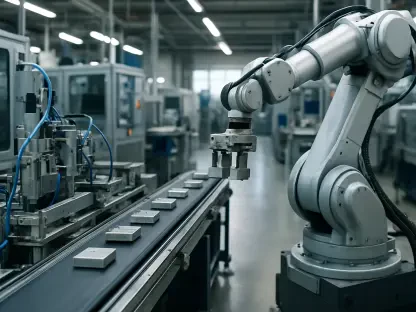
Balancing human skills with automation is like conducting an orchestra—you’ve got to ensure every instrument plays in harmony. Automation can handle repetitive tasks with precision, but human judgment, creativity, and adaptability are irreplaceable for problem-solving and innovation. The key is to position automation as a partner, not a replacement, and to upskill your workforce to interact with these systems. I remember a project in an electronics plant where we introduced robotic assembly lines for circuit boards. There was initial pushback from the team—fear of job loss was palpable, and you could feel the tension in the air during those early meetings. We tackled this head-on by involving operators in the design phase, training them to program and maintain the robots, and showing how their roles would evolve into more strategic ones. Over six months, error rates dropped by 15%, and the team took pride in mastering the tech—there’s nothing like seeing a skeptical technician light up when they realize they’re now a tech wizard. It’s about creating that synergy where machines handle the grind, and humans bring the soul.
What strategies have you found most effective in driving quality and innovation while managing large-scale manufacturing transformations?
Driving quality and innovation during transformations comes down to standardization and a relentless focus on data. You’ve got to establish clear benchmarks for quality that every facility, regardless of location, adheres to, while fostering an environment where experimentation is encouraged. One strategy I’ve leaned on is creating cross-functional innovation hubs—teams of engineers, operators, and data analysts working together to solve specific pain points. In one instance, while revamping a production line for industrial equipment, we used this approach to tackle a recurring defect issue. By analyzing data and brainstorming over countless cups of coffee in a cramped meeting room, we pinpointed a flaw in material handling and redesigned the process, reducing defects by 18% over three months. That gritty, collaborative spirit, paired with hard metrics, keeps quality high. You also need leadership that’s visible—walking the floor, feeling the pulse of the operation, and reinforcing that innovation isn’t a buzzword but a daily practice. It’s exhausting, but when you see those numbers improve, it’s like a shot of adrenaline.
How do you ensure that innovation in manufacturing aligns with sustainability goals, and can you share a particular initiative that brought this balance to life?
Aligning innovation with sustainability is non-negotiable today—it’s about creating value that doesn’t come at the planet’s expense. I focus on integrating technologies that optimize resource use while pushing for processes that reduce waste and energy consumption. It starts with a mindset shift: every innovation must be evaluated not just for efficiency but for its environmental footprint. I worked on an initiative in a mid-sized plant where we adopted energy-efficient motors and IoT systems to monitor power usage in real time. We cut energy consumption by 12% in the first year, which was a huge win, but the real victory was seeing the team rally around this cause—there was a palpable pride in knowing we were doing our part. I remember walking through the facility and noticing the quieter hum of the new motors; it was a small sensory cue of progress. Challenges came up, like initial costs and retraining, but by tying sustainability to tangible savings and team morale, we made it stick. It’s about weaving green thinking into every decision, from design to delivery.
What challenges have you faced in standardizing processes across diverse global operations, and how did you overcome them in a specific case?
Standardizing processes across global operations is a beast of a challenge because you’re dealing with different cultures, regulations, and infrastructure levels. The biggest hurdle is often resistance to change—local teams can feel like headquarters is imposing rules without understanding their reality. Communication and customization are key; you’ve got to adapt the core standards to fit local contexts while keeping the essence intact. I faced this while rolling out a unified quality control protocol across plants in three continents. One location struggled with outdated equipment, and pushing the same tech-heavy protocol there was like trying to fit a square peg in a round hole—you could sense the frustration in every delayed report. We spent weeks on-site, tweaking the system to use manual checks where tech wasn’t feasible, and set a 6-month transition plan for equipment upgrades. By listening and showing flexibility, we got buy-in, and within a year, compliance rates hit 90% across all sites. It’s messy, and the jet lag is brutal, but seeing a unified operation emerge from chaos is worth every sleepless night.
How do you foster a culture that embraces digital transformation without losing the core skills that define manufacturing excellence?
Fostering a culture for digital transformation while preserving core skills is about building trust and showing relevance. You’ve got to demonstrate that digital tools enhance, not erase, the craftsmanship and expertise that define manufacturing. This means involving teams early in the transformation process, celebrating their traditional skills, and providing hands-on training to bridge the gap to new tech. I led a digital overhaul in a facility where we introduced AI-driven quality checks, and the older workers were visibly anxious—they’d spent decades honing manual inspection skills, and you could see the worry in their eyes during our first town hall. We paired them with younger, tech-savvy colleagues for peer learning, held workshops where they could physically interact with the systems, and highlighted how their experience made the AI outputs more actionable. Over time, they became champions of the tech, with one veteran inspector proudly showing me a dashboard he’d customized. It’s about honoring the sweat and history of the trade while guiding folks into the future—when you hear the chatter of excitement over a new tool, you know you’ve struck the right chord.
What is your forecast for the future of digital transformation in manufacturing, and where do you see the industry heading in the next decade?
I’m incredibly optimistic about where digital transformation is taking manufacturing, but it’s going to be a wild ride. Over the next decade, I foresee an even deeper integration of AI, IoT, and robotics, not just in production but in every facet—think supply chains that predict disruptions before they happen and factories that self-optimize in real time. Sustainability will drive much of this innovation; we’ll see smarter systems slashing energy use and waste at scales we’re only dreaming of now. But the human element will remain central—those who thrive will be the ones who master the art of blending tech with intuition. I’ve seen glimpses of this future in pilot projects, and the potential is staggering, like walking into a sci-fi set with humming machines and focused teams working in sync. My concern is whether we can scale the cultural shifts fast enough—will we train enough people, build enough trust? I believe we’re heading toward a hyper-connected, greener industry, but the journey will test our grit every step of the way.