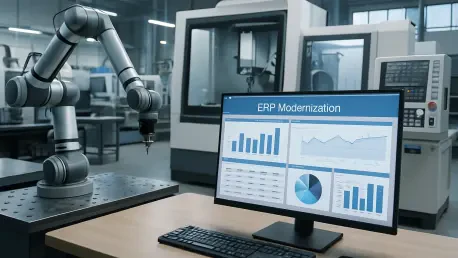

The persistent gap between the sophisticated planning capabilities of enterprise systems and the dynamic, often unpredictable, reality of the factory floor has long been a source of frustration for manufacturers. The strategic partnership between QAD | Redzone and TCS represents a significant advancement in manufacturing operations technology, aiming to bridge this divide. This review will explore the evolution of this modernization approach, its key features, performance model, and the impact it has on mid-market manufacturers. The purpose of this review is to provide a thorough understanding of this new model, its current capabilities, and its potential for future development in addressing traditional ERP challenges.
Understanding the Shift in ERP Strategy
The modernization approach under review is built on core principles of being operationally grounded and outcome-driven. This strategy has emerged as a direct response to the widespread “ERP fatigue” felt by manufacturers tired of lengthy, costly, and disruptive digital transformation projects that often fail to deliver on their promises. It represents a fundamental move away from monolithic system overhauls toward a more agile and pragmatic methodology.
At its heart, this model combines the QAD | Redzone platform—integrating Adaptive ERP, the Redzone Connected Workforce solution, and Champion AI—with the global delivery expertise of TCS. The partnership operates in a technological landscape that demands faster, less disruptive, and more cost-effective solutions. By prioritizing rapid implementation and tangible results on the shop floor, it offers a compelling alternative for companies seeking to modernize without halting their operational momentum.
Key Pillars of the Partnership Model
Engineering at Scale and Augmented Expertise
TCS serves as a strategic engineering partner, providing specialized manufacturing and cloud expertise to augment QAD | Redzone’s product development and implementation capabilities. This collaboration allows for greater innovation and scale, enabling QAD | Redzone to expand its capacity without diverting resources from its core product roadmap to handle custom projects. The result is a more robust and adaptable platform for a wider range of manufacturing environments.
This synergy effectively provides mid-market manufacturers with access to an engineering and implementation scale typically reserved for much larger enterprises. TCS’s deep industry knowledge helps tailor solutions to specific operational challenges, ensuring that the technology not only fits but also enhances existing workflows. This augmented expertise is crucial for driving adoption and maximizing the return on investment.
Industrialized Cloud Migrations via the Migration Factory
A central component of the partnership is the “migration factory,” an industrialized model designed to streamline the transition from legacy systems to QAD | Redzone’s Adaptive ERP. This approach replaces traditional “big-bang” overhauls—which are notoriously risky and resource-intensive—with a standardized, repeatable process. By breaking the migration into manageable phases, it significantly reduces operational disruption and ensures a more predictable timeline.
The performance characteristics of this model offer a lower-risk path to modernization. It is engineered to preserve business continuity, allowing critical operational leaders to remain focused on production rather than getting mired in multi-year system governance programs. This industrialized method ensures that manufacturers can upgrade their core systems efficiently while minimizing the burden on their lean internal teams.
The Execution First Platform and AI Integration
The model’s “execution-first” philosophy is powered by the tight integration of QAD | Redzone’s core solutions. The Redzone Connected Workforce platform captures real-time data from the front line, which then informs the Adaptive ERP and is analyzed by Champion AI. This synergy ensures that modernization begins with tangible improvements in shop-floor productivity, creating immediate value and building momentum for broader transformation.
This integrated platform embeds AI-guided decision-making directly into daily workflows. Champion AI leverages operational data to provide actionable insights and recommendations to frontline teams, helping them optimize processes and address issues proactively. This moves AI from a high-level analytical tool to a practical, on-the-ground assistant that drives continuous improvement and operational excellence.
Emerging Trends in Operational Modernization
The manufacturing industry is witnessing a distinct shift away from prolonged, high-overhead transformation projects toward more agile and results-oriented approaches. The QAD | Redzone and TCS model is at the forefront of this trend, championing an operationally grounded framework that delivers tangible value in shorter timeframes. This is influencing how manufacturers approach modernization, as they increasingly seek solutions that offer quick wins and a clear path to ROI.
This emerging paradigm prioritizes closing the “execution gap”—the frequent disconnect between strategic planning and shop-floor reality. By focusing on frontline empowerment and data-driven insights, this model ensures that technological upgrades translate directly into measurable improvements in productivity, throughput, and efficiency. Consequently, it is setting a new standard for what manufacturers can and should expect from their technology partners.
Application in the Mid Market Manufacturing Sector
This partnership model is particularly well-suited for mid-market manufacturers, who often operate with lean internal teams and limited resources for massive IT projects. One key use case is enabling rapid, multi-plant rollouts without placing an undue burden on operational staff. The standardized delivery of the “migration factory” allows for a predictable and scalable implementation process across different sites.
Furthermore, the model is designed to preserve process continuity, a critical concern for any manufacturer. By avoiding the disruptive nature of traditional ERP overhauls, companies can modernize their systems without diverting key operational leaders from their primary responsibilities. This ensures that the business continues to run smoothly while the technological foundation for future growth is being put in place.
Overcoming the Limitations of Traditional ERP
This new model directly addresses the common pain points that have led to “ERP fatigue.” Traditional ERP programs are often plagued by excessive costs, significant operational disruption, and a slow time-to-value. The partnership’s development efforts have focused on mitigating these limitations by offering a more predictable, cost-effective, and less intrusive path to modernization.
By prioritizing execution on the shop floor, the model ensures that value is generated from the outset of the project, rather than years down the line. The industrialized migration process and augmented engineering support reduce the technical hurdles and market obstacles typically associated with large-scale system changes. This pragmatic approach provides a clear answer to the frustrations that have long defined the ERP implementation experience.
Future Outlook for AI Driven Manufacturing
The modernization approach championed by QAD | Redzone and TCS is poised to accelerate the adoption of AI-guided decision-making on the shop floor. As more manufacturers embrace this integrated platform, the potential for breakthroughs in operational efficiency will grow exponentially. Future developments will likely focus on enhancing the capabilities of Champion AI to provide even more sophisticated and predictive insights.
In the long term, this technology may have a transformative impact on the manufacturing industry as a whole. By making advanced ERP and AI capabilities accessible and practical for mid-market companies, it could level the playing field and foster a new wave of innovation. The continued integration of real-time data and intelligent analytics promises to create smarter, more agile, and more resilient manufacturing operations.
Final Assessment and Key Takeaways
The review of the QAD | Redzone and TCS partnership revealed a well-defined and potent strategy for addressing the persistent challenges of manufacturing ERP modernization. The model’s emphasis on an operationally grounded, execution-first approach provided a compelling alternative to the traditional, high-risk transformation projects that have historically dominated the industry. Its three pillars—engineering at scale, industrialized migrations, and an integrated AI-driven platform—worked in concert to deliver a faster, more predictable, and less disruptive path to value. The overall assessment concluded that this collaboration was well-positioned to meet the needs of mid-market manufacturers, offering them a pragmatic and powerful toolkit for achieving operational excellence in an increasingly competitive landscape.