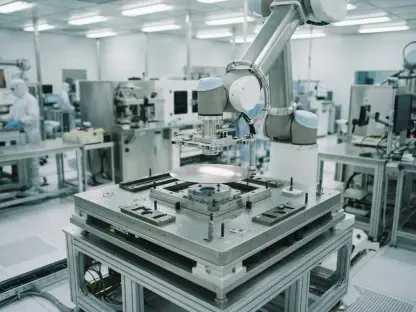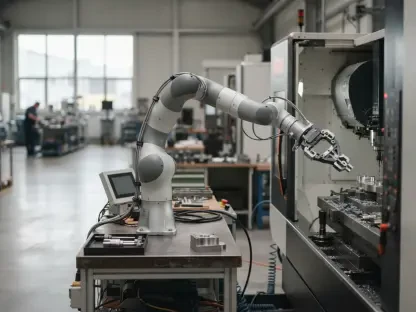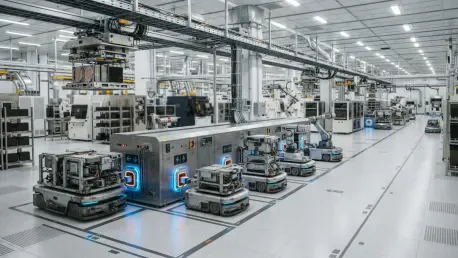

Standardizing how robots interact with a facility’s Manufacturing Execution System allows chipmakers to manage automated fleets with the same precision as human work shifts. This fundamental shift marks a historic collaboration between Samsung Electronics, SK hynix, and Micron Technology, who together control the vast majority of the global memory market. By partnering with SEMI, these giants are dismantling the proprietary barriers that have long hindered the complete automation of older semiconductor fabrication plants. In the current 2026 landscape, the pressure to maximize output from every existing asset has never been higher, making the conversion of legacy facilities into unmanned environments a top priority. Instead of treating robots as isolated tools, this initiative integrates them into a holistic industrial framework. This ensures that even aging campuses achieve the same level of operational excellence as the newest facilities, providing a path forward for an industry that cannot afford any downtime.
Overcoming Legacy Plant Constraints: The Push for Modernization
The architectural layout of older fabrication plants represents a significant obstacle to modern semiconductor manufacturing. Many of these legacy sites were designed during an era when human-led logistics were the only viable option for moving materials between sensitive processing zones. Unlike modern smart fabs that feature ceiling-mounted overhead hoist transport systems, these older facilities often have low clearances and narrow aisles that cannot accommodate traditional automation hardware. Consequently, technicians are frequently required to manually load wafer containers onto carts and navigate them across different floors, a process that introduces both physical strain and a higher risk of contamination. To eliminate these inefficiencies, chipmakers are now deploying a diverse array of mobile robotics designed to navigate these cramped spaces. However, the lack of a standardized interface means each robotic model often requires its own proprietary ecosystem, further complicating the integration process in 2026.
Standardization: A Strategic Solution for Robotics Fragmentation
The current robotics market is characterized by a high degree of fragmentation, with various manufacturers offering autonomous mobile robots and mobile manipulators that use proprietary technologies. This diversity, while fostering innovation, has created a logistical nightmare for fab managers who wish to deploy multi-vendor fleets. Each robot brand typically comes with its own unique charging port, specific voltage requirements, and a specialized communication protocol that does not play well with others. This lack of uniformity forces semiconductor companies to maintain redundant infrastructure, which is both costly and inefficient. By establishing global standards for robot charging and hardware interfaces, the industry is moving toward a plug-and-play model where different robotic platforms can coexist within the same facility. This effort allows for the seamless scaling of automated workforces, ensuring that a robot from one manufacturer can use the same charging station as a robot from another vendor.
Maximizing Cleanroom Efficiency: The Role of Universal Charging Hubs
One of the most pressing challenges addressed by this standardization effort is the severe limitation of floor space within high-precision manufacturing environments. In a semiconductor cleanroom, every square inch of space is exceptionally valuable and is typically allocated to essential production equipment or ventilation systems. Requiring five different types of proprietary charging stations for five different brands of robots is an unsustainable waste of real estate that many legacy fabs simply cannot afford. The new global standards facilitate the implementation of universal charging hubs, which act as a centralized power infrastructure for an entire robotic fleet. This consolidated approach drastically reduces the physical footprint required for maintenance and energy delivery, allowing manufacturers to reclaim space for actual chip production. By unifying the physical connectors and power profiles, the industry is effectively streamlining the facility’s back-end logistics for all autonomous machines.
Factory Intelligence: Synchronizing Robotic Workforces with Central Systems
Beyond the physical hardware, the standardization movement focuses heavily on data compatibility and deep system integration with the Manufacturing Execution System. The central brain of the factory tracks every wafer and coordinates the operation of every piece of equipment on the floor. Under the new guidelines, robotic battery levels, task status, and location data are fed directly into this central brain in a standardized format. This allows factory managers to apply advanced workforce management principles to their robotic fleets, such as scheduling recharging cycles during natural production lulls or assigning high-priority tasks to the robots with the highest battery levels. This level of synchronization ensures that there are no gaps in the production cycle and that the factory maintains peak efficiency throughout its 24-hour operation. By treating robots as a manageable workforce, chipmakers are able to optimize their total output in older, manual lines to match the performance of newer sites.
Global Benchmarks: Establishing the Future of Industrial Automation
The collaboration between traditionally fierce competitors like Samsung, SK hynix, and Micron highlights a collective recognition that the automation of legacy infrastructure is a challenge too large for any single company to solve alone. Because these three entities command over 70% of the international memory market, the standards they establish with SEMI are poised to become the global benchmark for the entire semiconductor industry. This unified front exerts a powerful influence on robot manufacturers, who must now align their designs with these new specifications if they hope to remain competitive in the high-volume semiconductor sector. This shift is not just about convenience; it is about creating a stable, predictable market for industrial robotics that can scale rapidly across different geographies and manufacturing segments. By forcing a move away from proprietary silos, these memory giants are creating a more open ecosystem that benefits the entire electronics supply chain worldwide.
Future Transitions: Steps Toward Fully Unmanned Fabrication Environments
The push for robot charging standardization represented a strategic maneuver that successfully future-proofed the global semiconductor industry against the constraints of aging infrastructure. By creating a unified ecosystem where diverse robotic platforms could coexist, these memory giants laid the groundwork for the next era of manufacturing intelligence. Moving forward, the industry took the next logical step by integrating these standardized robotic fleets with advanced artificial intelligence to create a truly predictive production environment. For manufacturers in other sectors, the primary takeaway was that technical interoperability is the most critical factor in achieving large-scale automation success. The successful implementation of these standards proved that even the most competitive rivals could collaborate effectively to overcome shared logistical hurdles. Organizations should have focused on adopting these universal protocols early to ensure their facilities remained compatible with the evolving landscape of industrial robotics.