
In a bold proposition that seeks to intertwine the nation’s industrial past with its technological future, Nvidia CEO Jensen Huang has articulated a comprehensive vision where the artificial intelligence revolution becomes the primary engine for a great American manufacturing renaissance. This initiative is presented not merely as a corporate strategy but as a national imperative designed to reverse decades of offshoring, address profound economic inequality, and fortify the country against the backdrop of escalating geopolitical tensions. By harnessing the massive capital flows into AI, the plan aims to rebuild a domestic industrial base, creating a new era of shared prosperity that extends far beyond Silicon Valley to the factory floors and workshops across the nation, potentially healing the economic divides that have deepened over a generation. This call to action frames the current moment as a singular opportunity to correct historical policy failures and build a more resilient and inclusive economy powered by next-generation technology.
The Vision: Correcting Past Economic Failures
A Critique of Offshoring
The central argument put forth is a stark critique of offshoring as a historical economic failure, a policy labeled a “great disservice” to the American workforce. This practice is directly linked to the systematic erosion of the middle class, particularly within the manufacturing sector, which has long been the largest segment of the economy. The exodus of production facilities to lower-cost regions hollowed out countless communities, extinguishing the prosperous and stable jobs that had provided a pathway to economic security for generations of Americans without requiring advanced academic degrees. The consequence was not just the loss of employment but the fracturing of local economies and the creation of a significant and persistent wealth gap. This hollowing-out effect weakened the nation’s industrial capacity and left a legacy of economic disparity that continues to challenge policymakers. The vision for an AI-driven revival is thus rooted in the belief that this detrimental trend is not irreversible and that technology can be a force for broad-based economic restoration rather than just concentrated wealth creation.
This critique extends beyond mere job losses to the very structure of the American economy, arguing that the offshoring trend created a fragile and dependent system. By outsourcing critical production, the nation surrendered a degree of control over its own economic destiny, becoming vulnerable to supply chain disruptions and the geopolitical maneuvering of other nations. The policy was predicated on the short-term benefits of lower consumer prices and higher corporate profits, but it overlooked the long-term strategic costs of a diminished industrial base. The resulting economic landscape became increasingly polarized, with a thriving high-tech sector on one side and struggling former industrial heartlands on the other. Huang’s call to action is therefore a call to reconsider these foundational economic assumptions. It posits that true national strength lies not just in innovation but in the capacity to build and manufacture, and that the AI revolution provides the economic impetus to finally realign corporate incentives with the national interest, fostering a more balanced and resilient domestic economy.
AI as a Historic Turning Point
The current explosion in artificial intelligence is positioned as a unique and critical “flashpoint,” a historic moment that presents a singular opportunity to reverse the decades-long decline in domestic manufacturing. Unlike previous technological shifts, the AI industrial revolution is characterized by an unprecedented demand for physical infrastructure, from massive data centers to advanced semiconductor fabrication plants. This voracious need for computational power is driving a wave of capital investment so immense that it has the potential to reshape entire economies. The vision is to deliberately steer this flow of capital toward rebuilding America’s industrial capacity. By harnessing this economic force, the U.S. can create a self-reinforcing cycle of domestic investment, innovation, and job creation. This is not seen as an incremental change but as a fundamental reordering of the global manufacturing landscape, with the U.S. positioned to become the undisputed hub for the entire AI supply chain, from the most sophisticated chips to the vast server farms that power the technology.
This turning point is defined by the sheer scale of the opportunity, with trillions of dollars in potential investment on the horizon. Such a massive influx of capital fundamentally alters the economic calculus that previously favored offshoring. The incentives are becoming substantial enough to outweigh the higher labor costs and regulatory complexities associated with manufacturing in the United States. The argument is that the AI boom is not just another tech trend but a foundational economic shift akin to the industrial revolutions of the past. As such, it demands a proactive industrial policy that can leverage this moment to achieve long-term strategic goals. The initiative aims to move beyond simply reshoring old industries and instead focus on building the high-tech factories of the future. This involves creating an ecosystem that supports every facet of AI production, ensuring that the economic benefits of this technological leap are anchored firmly on American soil and distributed across the workforce.
An Inclusive Economic Model
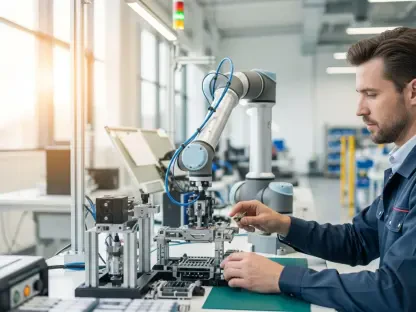
A cornerstone of this manufacturing revival is its deliberately inclusive design, which directly challenges the perception of the tech industry as an elitist domain accessible only to those with advanced degrees. The vision extends economic opportunity far beyond the traditional circle of PhD-level engineers and software developers. The construction, operation, and maintenance of the vast AI infrastructure required will necessitate a diverse and skilled workforce. This creates a high demand for welders, electricians, plumbers, technicians, and assembly line workers—vocations that offer pathways to middle-class stability without a four-year college education. By creating millions of these well-paying, high-demand jobs, the AI-driven manufacturing boom could directly address the skills gap and provide meaningful careers for a broad spectrum of the American population. This approach aims to ensure that the benefits of technological advancement are widely distributed, revitalizing the very communities that were once decimated by offshoring.
This model for inclusive growth is intended to have a transformative societal impact, reaching far beyond the confines of the tech sector itself. By creating accessible career paths in a high-tech economy, it could help revitalize former manufacturing towns and begin to close the pervasive urban-rural economic divide. Targeted education and vocational training programs for AI-related manufacturing roles would become essential, fostering a new generation of skilled labor capable of building and maintaining the infrastructure of the future. This approach represents a fundamental rethinking of how technological progress translates into shared prosperity. Instead of a trickle-down model, it proposes a direct injection of investment and opportunity into the industrial heartland. The ultimate goal is to build a more equitable economy where participation in the high-tech future is not predicated on academic credentials alone, but on skill, dedication, and the willingness to build.
Strategy and Geopolitical Imperatives
Nvidia’s Role and Investment
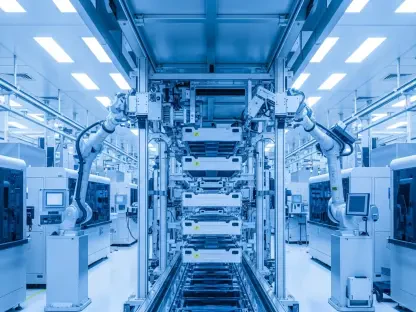
At the forefront of this ambitious initiative, Nvidia is actively leveraging its central position in the AI ecosystem to spearhead the development of at least $500 billion in domestic AI infrastructure during the current presidential term. This substantial commitment is not just a financial investment but a strategic effort to influence its vast network of partners and customers to prioritize the construction of U.S.-based facilities. By doing so, the company aims to catalyze a virtuous cycle where domestic investment spurs further innovation, which in turn attracts more investment and creates a broad base of high-quality jobs. The goal is to establish the United States as the undisputed global center for the entire AI manufacturing supply chain, a self-sufficient ecosystem that encompasses everything from advanced chip fabrication and packaging to the construction and maintenance of the massive data centers that form the backbone of the AI industry.
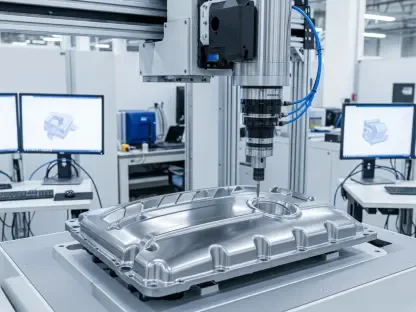
A key component of this strategy involves making U.S.-based production more competitive by fundamentally re-engineering the supply chain. A significant focus is on eliminating the inefficiencies of “margin stacking,” a phenomenon where multiple overseas intermediaries each add their own markup, progressively driving up the final cost of components and systems. By consolidating more of the supply chain domestically, it becomes possible to streamline logistics, reduce transportation costs, and cut out unnecessary middlemen. This not only enhances cost-competitiveness but also improves transparency and resilience. This strategic approach recognizes that for reshoring to be sustainable, it must be economically viable. By leveraging the scale of the AI boom to justify initial investments and then optimizing the supply chain for efficiency, the initiative seeks to build a lasting competitive advantage for American manufacturing that is not solely reliant on subsidies or protectionist measures.
The U.S. China Tech Rivalry
The strategic push for reshoring is inextricably linked to the complex and escalating technological rivalry between the United States and China. This geopolitical reality has had a direct and significant impact on companies like Nvidia, which has seen its once-dominant market share in China, estimated at 95%, plummet to virtually zero as a result of U.S. export restrictions. These policies, aimed at curbing China’s technological advancement in strategic areas, have underscored the vulnerabilities of relying on foreign markets. While the restrictions serve a national security purpose, they also create a powerful incentive for targeted nations to accelerate their own domestic innovation and achieve self-sufficiency. This dynamic highlights the double-edged nature of economic statecraft in the tech sector, where actions designed to contain a rival can also inadvertently fuel their long-term competitive drive.
In this high-stakes environment, Jensen Huang has publicly expressed a nuanced perspective on the efficacy of such restrictive policies, suggesting they may inadvertently strengthen competitors in the long run. This sentiment is echoed by analysts who note that local Chinese firms, backed by strong government support, are rapidly gaining ground and developing their own AI hardware and software ecosystems. This potential erosion of long-term global dominance adds a powerful sense of urgency to the reshoring initiative. It is framed not just as an economic opportunity but as a necessary defensive maneuver. By building a robust and self-reliant domestic AI industry, the U.S. can mitigate the risks associated with geopolitical instability and ensure that it maintains its technological leadership in the face of increasingly capable and determined global competitors. The strategy is to build a foundation so strong that it becomes less susceptible to the shifting tides of international politics.
Reshoring as a National Security Strategy
Against the backdrop of intense global competition, the reshoring of AI infrastructure has evolved into a critical national security imperative. By domiciling the production of essential technologies, particularly advanced semiconductors and the construction of hyperscale data centers, the United States can significantly reduce its dependence on foreign nations for critical components. This strategic shift is vital for safeguarding the nation’s technological sovereignty from geopolitical disruptions, trade disputes, or other external pressures. A domestic supply chain ensures that the foundational elements of the modern digital economy, as well as future defense systems, are not vulnerable to being cut off or compromised by an adversary. This aligns with a broader consensus that technological leadership in the 21st century is synonymous with national security, and that controlling the means of production for key technologies like AI is a non-negotiable strategic asset.
This vision of a secure domestic supply chain extends beyond the factory floor to the fundamental infrastructure required to support it. Nvidia’s ongoing collaborations on massive data center projects within the U.S. highlight the critical need for robust, homegrown power grids capable of meeting the immense energy demands of artificial intelligence. Furthermore, it underscores the necessity of cultivating a skilled domestic labor force to build, operate, and maintain this complex infrastructure. Huang insists that these elements must be developed at home to avoid repeating the strategic mistakes of the past, where offshoring created dependencies that are now recognized as significant national vulnerabilities. Building this resilient foundation is therefore a core objective of the reshoring push, ensuring that the nation’s technological future is built on a secure and self-reliant platform.
Challenges and the Road Ahead
Acknowledging Significant Hurdles
Despite the compelling vision for an AI-driven manufacturing revival, its implementation faces a series of formidable hurdles that cannot be overlooked. Critics and industry observers frequently point to the higher labor costs and more stringent regulatory environments in the United States as major impediments to competitive manufacturing on a global scale. These were the primary factors that drove offshoring in the first place, and they remain potent economic realities. Overcoming this structural cost disadvantage will require more than just a surge in demand; it will necessitate significant advancements in automation, process efficiency, and industrial policy to create a level playing field. Without addressing these fundamental economic challenges, the long-term sustainability of a widespread reshoring movement remains a significant question for both corporations and policymakers.
Furthermore, the immense energy demands of the AI industry present a monumental infrastructure challenge. AI data centers are notoriously power-hungry, and their proliferation on the scale envisioned will place an unprecedented strain on the nation’s electrical grid. Meeting this demand requires not just an expansion of energy production but also the development of sustainable and scalable solutions to avoid exacerbating environmental concerns. This will involve massive investments in grid modernization, renewable energy sources, and potentially new power generation technologies. The success of the reshoring initiative is therefore contingent not only on building factories but also on re-engineering the nation’s energy infrastructure to support a new industrial revolution. This represents a complex, capital-intensive undertaking that will require close coordination between the private sector and government at all levels.
Countering Skepticism
The ambitious narrative of a manufacturing revival has been met with a degree of skepticism, with some commentators suggesting it may be a form of “AI hype.” From this perspective, the reshoring push is viewed as a strategic narrative designed to sustain revenue growth and bolster investor confidence, particularly as Nvidia and other tech firms face softening demand from restricted markets like China. These critics argue that while some level of domestic production may increase, the economic fundamentals that favor globalized supply chains have not disappeared. They question whether the AI boom alone is powerful enough to fundamentally reverse a half-century of economic trends. This viewpoint suggests caution, positing that the vision, while appealing, may overstate the immediate feasibility of a full-scale industrial reshoring and understate the persistent economic advantages of international manufacturing networks.
In response to these concerns, proponents of the vision, led by Huang, have emphasized the unprecedented scale of the AI industry as the key differentiating factor. The argument is that the economic forces at play are simply on a different order of magnitude than in previous technological cycles. With trillions of dollars in potential investment projected to flow into AI infrastructure over the next decade, the economic incentives are seen as substantial enough to outweigh the traditional costs and challenges associated with domestic manufacturing. This is not about simply competing on labor costs but about capturing a colossal new market. The sheer volume of demand for data centers, servers, and specialized components creates an economic gravity that can pull the entire supply chain back to U.S. shores. The counterargument, therefore, rests on the belief that the AI revolution is a unique economic event, a force so powerful that it can rewrite the established rules of global manufacturing.
The Future Roadmap
The strategic roadmap for this industrial vision was expected to be a central theme of Jensen Huang’s keynote address at the Consumer Electronics Show. That event was anticipated to serve as a platform for showcasing the next-generation GPU and AI technologies designed to power the reshoring ecosystem he envisioned. These technological advancements were seen as critical enablers, intended to solidify U.S. leadership in AI and provide the computational foundation upon which a new domestic manufacturing base could be built. The presentation was viewed as an opportunity to move from high-level vision to a more detailed plan, outlining the specific innovations that would make a U.S.-based AI supply chain not only possible but also economically superior. This focus on future technology underscored the belief that sustained innovation was the ultimate key to long-term competitive advantage in the global AI race.
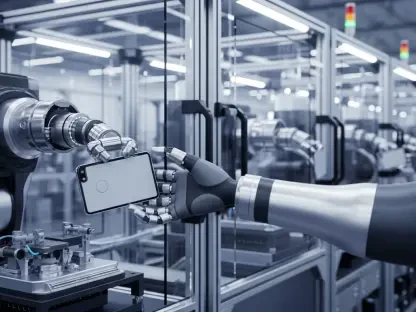
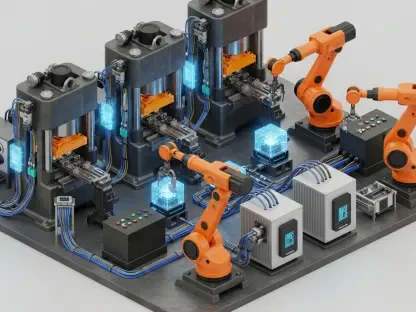
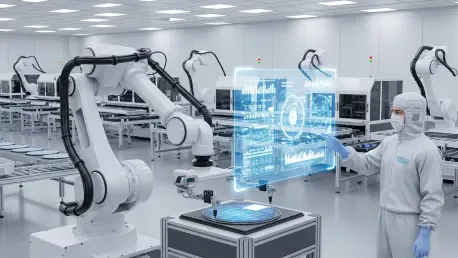
Ultimately, the push for reshoring was framed as both a defensive and an offensive maneuver. In the long term, Nvidia’s broader strategy involved a deep focus on innovation in adjacent fields like robotics and advanced automation, which aligned perfectly with the goal of building the smart factories of the future. By complementing automated processes with a skilled human workforce, the plan aimed to create higher-value jobs and build a more productive and efficient industrial sector. This forward-looking approach was intended to construct a resilient and adaptable supply chain, one capable of withstanding geopolitical shocks and fending off fierce competition from established rivals and emerging players across Asia. The initiative thus represented a comprehensive effort to secure America’s technological and economic future by rebuilding its industrial core from the inside out.