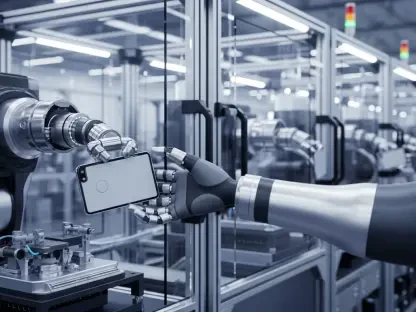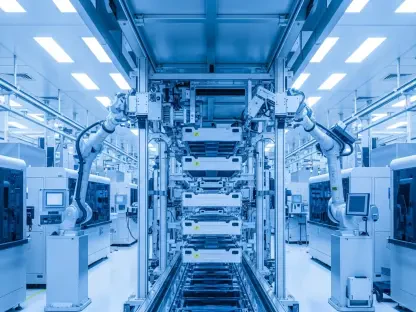

The silent, repetitive dance of the traditional industrial robot, a marvel of precision engineering, is rapidly becoming a relic of a bygone era. For decades, these machines have operated within the rigid confines of pre-programmed instructions, flawlessly executing a single task in a controlled environment, yet remaining utterly blind to the dynamic, unpredictable nature of the real world. A misplaced component or an unexpected human presence could bring an entire production line to a screeching halt. This fundamental limitation is now being overcome by a transformative technology known as Physical AI, which imbues robots with the ability to perceive, reason, and act in real time. By integrating advanced sensor data with sophisticated decision-making models, Physical AI is evolving these single-minded machines into intelligent, autonomous partners capable of navigating the complexities of modern manufacturing, collaborating safely with human workers, and adapting to new challenges on the fly without requiring a single line of new code. This shift marks not just an incremental improvement but a fundamental redefinition of what a robot can be.
The Technological Underpinnings of a New Era
Advanced Learning Models and Intuitive Control
The acceleration of robotic capabilities is largely driven by a new generation of sophisticated learning models that dramatically reduce the time and expertise required to teach a robot new skills. Technologies like one-shot and zero-shot learning are particularly revolutionary, allowing a machine to generalize how to perform a task from a single demonstration or, in some cases, without any direct examples at all. This stands in stark contrast to the painstaking, weeks-long programming efforts previously needed for even minor adjustments. Furthermore, reinforcement and imitation learning are enabling robots to refine their abilities through a process akin to human experience. By observing a human operator or through digital trial-and-error in simulated environments, the robot can autonomously improve its performance, optimizing for speed, precision, and efficiency. This continuous learning cycle empowers robots to acquire complex skills that were once thought to be exclusive to human dexterity and judgment, fundamentally changing the economics of automation.
The barrier between human intent and machine execution is being further dismantled by the integration of Large Language Models (LLMs) into robotic control systems. This development allows operators to issue commands and instructions using simple, conversational language, eliminating the need for specialized programming knowledge. A factory technician can now instruct a robot to “pick up all the red widgets from that bin and place them in the quality control station” without writing any code. This democratization of control makes automation more accessible and flexible. Parallel to this, the rise of agentic robots marks a significant leap toward true autonomy. These advanced systems are not just following commands; they are capable of setting their own sub-goals, learning from their experiences to improve future performance, and independently managing complex, multi-step automation processes. This agentic behavior is the cornerstone of building smarter, more self-sufficient factories where robots can take on a greater degree of responsibility.
The Core Concept of Adaptive Intelligence
At the heart of Physical AI lies the seamless integration of perception, decision-making, and physical action into a continuous, real-time feedback loop. This process begins with the robot’s ability to gather a rich understanding of its environment through a suite of advanced sensors, including high-definition video cameras, lidar for spatial mapping, and sensitive force-torque sensors in its joints and grippers. Unlike traditional robots that follow a blind, pre-determined path, these machines process incoming data on the spot, building a dynamic internal model of the world around them. This allows them to understand object placement, identify human colleagues, and even “feel” the amount of force being applied to a delicate component. The system’s on-board processing power enables it to analyze this stream of information and adapt its physical actions in milliseconds, creating a fluid and intelligent response to an ever-changing environment.
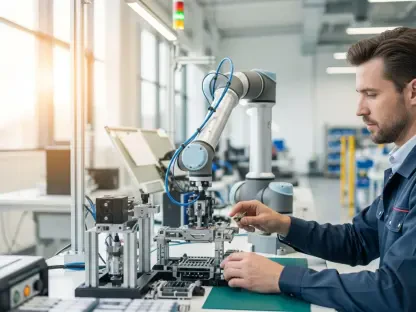
This shift from rigid, rule-based logic to adaptive, context-aware behavior is what truly unlocks the potential of next-generation robotics. In a traditional automated system, an unexpected event like a dropped part or a misaligned component would trigger an error and halt the entire production line, requiring human intervention. A robot powered by Physical AI, however, can handle such anomalies with grace. It can visually identify the dropped item, calculate a new motion path to retrieve it, and resume its primary task without interruption. This same contextual awareness is critical for safe and effective human-robot collaboration. The robot can dynamically adjust its speed and trajectory to avoid contact with a human worker, or it can respond to subtle physical cues when working together on an assembly task. This ability to manage task variations and navigate unstructured settings without the need for constant reprogramming makes automation more resilient, flexible, and ultimately more valuable.
Industrial Impact and Future Trajectory
Transforming the Factory Floor
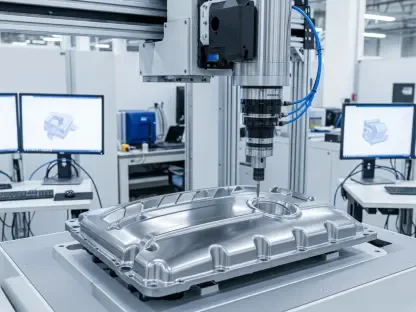
The practical benefits of deploying Physical AI on the factory floor are both immediate and substantial, promising a new level of operational efficiency. Manufacturers are witnessing higher productivity not just from faster cycle times, but from a dramatic reduction in unscheduled downtime caused by unexpected errors. Robots that can self-correct and adapt to minor variations keep the production line moving, maximizing output. Furthermore, the speed of re-tooling for new products or production runs is accelerated exponentially. Instead of weeks of reprogramming, a robot can learn a new assembly sequence in a matter of hours through demonstration. This agility is crucial in markets that demand rapid innovation and product customization. Quality control also becomes more reliable, as robots equipped with advanced vision systems can perform in-line inspections, detecting subtle defects or anomalies in real time. A major consensus viewpoint driving adoption is the technology’s cost-effectiveness. Rather than a complete and costly overhaul of existing infrastructure, manufacturers can retrofit their legacy robotic arms with advanced AI perception and control modules, extending the functional lifespan of their current hardware while unlocking these powerful new capabilities.
Despite the compelling advantages, the path to widespread adoption is not without its challenges. Implementing Physical AI effectively requires the establishment of robust and secure data pipelines capable of handling the massive-volume, low-latency information streaming from sensors across the factory. This data is the lifeblood of the learning models, and its integrity is paramount. Moreover, ensuring the safety of these intelligent, autonomous systems is a critical hurdle. As robots become more independent and work in closer proximity to humans, comprehensive safety certifications and standardized protocols for human-robot interaction must be developed and rigorously enforced. While the availability of open datasets from industry leaders has been instrumental in accelerating research and model training, individual manufacturers must still undertake the painstaking process of validating these generic models against their own specific operational tolerances and stringent regulatory requirements. This validation is essential to guarantee that the robots will perform reliably and safely within the unique context of their intended application.
A Convergent Path Forward
The journey toward smarter industrial automation was marked by a pivotal convergence of disciplines. Hardware manufacturers, once focused solely on mechanical precision, began collaborating closely with AI researchers who specialized in machine learning and computer vision. Simultaneously, international standards organizations worked to establish shared frameworks and safety protocols that could govern the complex interactions between autonomous machines and human operators. This tripartite effort created a fertile ecosystem where innovation could flourish responsibly. The development of more powerful, energy-efficient processors allowed sophisticated AI models to run directly on the robots themselves, eliminating latency and enabling true real-time responsiveness. This technological alignment ensured that the next wave of factory automation arrived far more rapidly than previous industrial revolutions, having built a foundation of shared knowledge and standardized practices that promised a future of more resilient, efficient, and profoundly flexible manufacturing processes for industries worldwide.