
In the unseen world of high-performance technology, components operating under extreme heat, intense corrosive forces, and demanding physical stress are what separate mission success from catastrophic failure. A comprehensive analysis detailed in a recent project report for 2026 has provided an intricate blueprint for establishing a Samarium Cobalt (SMCO) magnet manufacturing plant, a venture positioned at the very heart of this demanding technological frontier. This deep dive into the project’s lifecycle, from initial capital considerations and strategic site selection to operational execution and sophisticated risk mitigation, illuminates the path for creating a facility capable of producing these critical materials. The overarching conclusion is that while the financial and technological barriers to entry are undeniably steep, the relentless and growing demand from high-value sectors such as aerospace, national defense, and advanced medical devices presents a compelling and strategically vital investment opportunity for enterprises prepared to master this complex and capital-intensive field.
The Strategic Imperative for SMCO Magnets
Samarium Cobalt magnet manufacturing stands as a highly specialized discipline within the broader rare earth magnet industry, dedicated to creating permanent magnets with a unique combination of exceptional thermal stability, unparalleled corrosion resistance, and high coercivity. The production process is a masterful application of advanced powder metallurgy, involving a meticulously controlled sequence of sophisticated stages. It begins with the vacuum melting and alloying of high-purity samarium and cobalt, followed by a process known as hydrogen decrepitation, where ingots are broken down into a coarse powder. This material is then subjected to high-energy jet milling within an inert atmosphere to produce an ultra-fine powder. Subsequently, the powder is compacted in presses equipped with powerful magnetic fields to align the crystalline particles, sintered at high temperatures in a vacuum to achieve full density, and put through a multi-stage heat treatment to develop its final, powerful magnetic properties. This complex manufacturing journey underscores why SMCO magnets are the material of choice for applications where other high-performance magnets, particularly Neodymium-Iron-Boron (NdFeB) types, falter under extreme operational conditions.
The market opportunity for SMCO magnets is fundamentally driven by their resilience in environments where competitors fail. A primary engine of demand is the continuous expansion of global aerospace and defense spending, which fuels the need for SMCO magnets in critical systems like actuators, missile guidance hardware, satellite positioning equipment, and other military technologies where unwavering reliability across extreme temperature ranges is non-negotiable. Concurrently, growth in high-temperature industrial applications—including precision servo motors, advanced robotics, and high-performance generators operating above 150°C—requires magnets that retain their full magnetic strength without degradation over their operational lifetime. The market is broadly segmented by two primary compositions: the SMCO5 series, offering a balanced performance profile suitable for temperatures up to 250°C, and the premium Sm2Co17 series, which provides superior magnetic energy and stability up to 350°C, making it essential for the most demanding applications in fields like advanced medical imaging and scientific research instrumentation. This sustained demand is further amplified by a strategic global emphasis on building robust, secure domestic supply chains for critical materials, positioning new SMCO manufacturing ventures as key national assets.
Deconstructing the Capital Investment
The total investment required to establish an SMCO magnet manufacturing plant is substantial, with the largest portion allocated to land acquisition, infrastructure development, and the procurement of highly specialized production equipment. The physical foundation of the plant is far more than a conventional industrial building; it is a meticulously engineered facility designed for advanced materials science. Key infrastructure requirements include the construction of specialized buildings that accommodate ISO Class 7 or 8 cleanroom environments for powder handling, controlled atmosphere zones to prevent material oxidation, and high-temperature furnace rooms equipped with extensive thermal insulation and redundant safety systems. Furthermore, the facility must incorporate specific zones for chemical processing with advanced ventilation, precision machining areas with strict temperature and vibration controls, and magnetically shielded rooms for sensitive measurement equipment. A robust, three-phase electrical power supply with integrated voltage regulation and backup generators is essential to power the energy-intensive processes, alongside extensive infrastructure for inert gas distribution, deionized water systems, and process cooling circuits. The strategic choice of location is paramount, balancing proximity to rare earth material suppliers, access to a skilled workforce in materials science, and connectivity to key customer hubs in the aerospace or medical technology sectors.
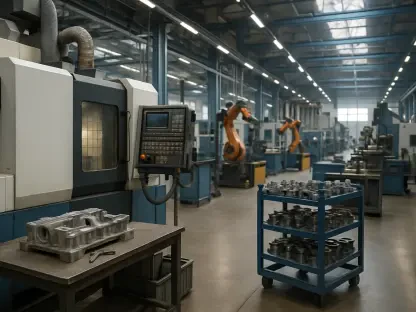
The core technology for magnet production represents the single largest capital investment, encompassing a sophisticated array of machinery tailored for each stage of the manufacturing process. The journey begins with Vacuum Induction Melting (VIM) furnaces, which are central to preparing the base alloy with exceptional purity and compositional homogeneity. Following this, specialized hydrogen furnaces are employed for the decrepitation process, which safely and efficiently breaks down cast ingots into a coarse powder. This material is then fed into high-energy jet mills that operate within an inert gas atmosphere to produce a fine magnetic powder with a particle size of just a few microns. The next critical step involves hydraulic or isostatic presses equipped with powerful electromagnets, which simultaneously compact the powder into “green” bodies while aligning the magnetic domains along a preferred axis. These fragile compacts are then densified in high-temperature vacuum sintering furnaces operating at temperatures exceeding 1100°C. Afterward, they undergo a complex, multi-step aging process in precision heat treatment furnaces to develop their final magnetic properties. Finally, because sintered SMCO is extremely hard and brittle, specialized machining equipment, including CNC grinding machines with diamond wheels and Wire EDM (Electrical Discharge Machining) systems, is required to achieve the final, precise specifications demanded by customers.
The Crucial Role of Quality Control and Support Systems
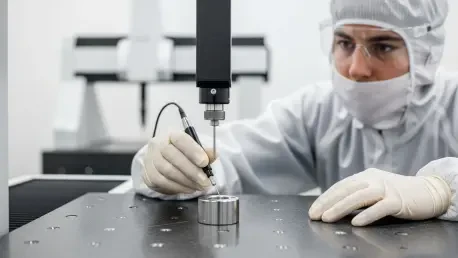
An extensive and uncompromising suite of testing and quality control equipment is an absolute necessity, especially when the end products are destined for mission-critical applications in the aerospace, defense, and medical industries. This investment in quality assurance infrastructure is not merely a cost but a foundational pillar of the business, ensuring product reliability and adherence to the stringent specifications of high-technology customers. The core of the quality control lab consists of advanced magnetic measurement systems, including Hysteresigraphs to precisely measure B-H loops, Permeameters to determine magnetic flux, and highly sensitive Fluxmeters and Gaussmeters to verify surface field strength on every finished part. Beyond these fundamental measurements, the facility must be equipped to test magnet performance under severe environmental stress. This requires sophisticated systems capable of measuring magnetic properties across a wide temperature spectrum, from cryogenic lows to highs exceeding 400°C, as well as equipment for conducting long-term magnetic aging and stability tests to guarantee performance over the product’s entire lifecycle. A comprehensive suite of physical and material analysis tools, including Coordinate Measuring Machines (CMMs) for dimensional metrology, metallurgical microscopes, X-ray diffraction (XRD) for phase identification, and Scanning Electron Microscopy (SEM) for detailed compositional analysis, is also indispensable for process control and failure analysis.
Supporting systems are equally crucial for ensuring efficient, compliant, and competitive operations. A robust information technology backbone, featuring an integrated Manufacturing Execution System (MES), an Enterprise Resource Planning (ERP) platform, and a Quality Management System (QMS), is essential for real-time production tracking, meticulous inventory management, and ensuring unwavering process control and traceability from raw material to finished product. For businesses serving the defense sector, export control compliance software becomes a critical component of this IT infrastructure. Furthermore, establishing an in-house research and development laboratory is a key strategic investment for maintaining a long-term competitive edge. An R&D lab equipped with materials characterization tools, pilot-scale production lines, and computational modeling software empowers the company to develop proprietary magnet grades, optimize processing techniques, and collaborate directly with customers on next-generation applications. Finally, comprehensive safety, security, and compliance systems, including robust physical security, extensive Environmental, Health, and Safety (EHS) management programs, and rigorous procedures for regulatory adherence to standards from OSHA, EPA, and ITAR, are fundamental to sustainable and responsible operation.
Strategic Planning and Financial Outlook
The ultimate scale of the investment and the overarching business strategy are dictated by several pivotal decisions made during the initial planning phase. The target production capacity is a primary consideration, with options ranging from a small-scale facility producing 10-30 tons per year for niche, custom applications in aerospace and research to a large-scale plant with a capacity exceeding 200 tons per year, which would leverage economies of scale and high automation to serve high-volume industrial markets. Equally important is the definition of the product portfolio. A manufacturer can choose to focus on the more cost-effective SMCO5 grades, specialize in the premium-performance Sm2Co17 grades for the most demanding applications, or pursue a diversified portfolio to mitigate market risk and cater to a wider array of customers. The chosen level of vertical integration also significantly influences capital requirements; a plant may focus solely on magnet processing by purchasing pre-alloyed powder, integrate backward to produce its own alloy from raw materials, or achieve full integration by incorporating scrap recycling and material recovery into its operations. Finally, obtaining the right quality certifications is a critical strategic element. While commercial-grade production might only require ISO 9001, penetrating the lucrative aerospace and defense markets necessitates the rigorous AS9100 certification, and serving the medical device industry demands compliance with ISO 13485, with each certification level requiring greater investment but unlocking access to premium pricing.
From a financial perspective, the primary revenue streams are generated from the direct sale of magnets to Original Equipment Manufacturers (OEMs) and Tier-1 suppliers in key industrial sectors. However, additional income can be cultivated through value-added services such as the design and production of custom magnet assemblies, offering technical consulting services, and potentially licensing proprietary magnet grades or providing SMCO scrap recycling services to other companies. The operational cost structure is uniquely dominated by raw material expenses, with the volatile prices of samarium and cobalt typically accounting for a staggering 60-70% of the total manufacturing cost. Other significant operational expenses include the high energy consumption of vacuum sintering and heat treatment furnaces, the cost of a highly skilled technical workforce, and the substantial depreciation and maintenance costs associated with the plant’s specialized equipment. Consequently, long-term profitability hinges on a handful of critical success factors. These include the ability to secure favorable long-term supply agreements for rare earth materials, the achievement of high process yields and consistent quality through manufacturing excellence, and the development of strong technical differentiation through proprietary compositions or processing techniques that command premium pricing and create deep, lasting relationships with key customers.
A Strategic Venture into Advanced Materials
The analysis concluded that establishing a Samarium Cobalt magnet manufacturing plant was a capital-intensive and technologically complex endeavor, defined by significant challenges related to supply chain volatility and stringent quality demands. Nevertheless, the project’s strategic importance within critical, high-growth sectors like aerospace, defense, and medical technology offered a compelling case for investment. The global initiative to secure domestic supply chains for essential materials further strengthened the venture’s long-term attractiveness. Success in this field demanded a forward-looking vision, a profound commitment to metallurgical and manufacturing excellence, and strategic management of the rare earth supply chain. A relentless focus on meeting the exacting standards of high-technology customers was identified as the cornerstone of a sustainable business model. For the investors and entrepreneurs who possessed the necessary expertise and capital, the SMCO magnet manufacturing business represented a significant opportunity to construct a defensible, high-margin enterprise that stood at the forefront of advanced materials technology and national strategic interests.