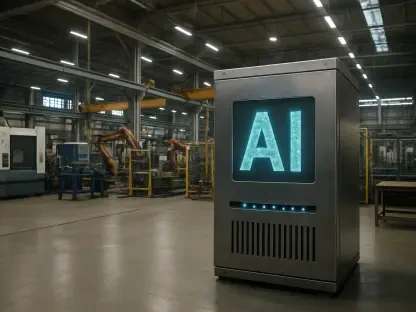

The landscape of industrial automation is undergoing a seismic shift, powered by advancements that allow robots to not only perform repetitive tasks but to learn and adapt within complex manufacturing environments. In a significant validation of this evolution, the artificial intelligence robotics firm RobCo has successfully closed a landmark $100 million Series C funding round, a strategic infusion of capital poised to dramatically accelerate its expansion across the United States. This substantial financial milestone, co-led by the investment powerhouses Lightspeed Venture Partners and Lingotto Innovation, underscores the growing confidence in RobCo’s vision to dominate the AI robotics sector in both American and European markets. With participation from an impressive syndicate including Sequoia Capital, Greenfield Partners, and The Friedkin Group, the company is now armed with the resources to aggressively advance its automation roadmap and scale its enterprise presence. This move comes at a critical time, as U.S. manufacturers increasingly seek to modernize their operations, creating a fertile ground for the deployment of intelligent, adaptable robotic solutions.
Pioneering a New Era of Physical AI
At the heart of RobCo’s innovative approach is its pioneering work in the field of “Physical AI,” a technological convergence that moves beyond the digital realm of algorithms and data processing. This concept involves the deep integration of sophisticated AI software with physical hardware components such as advanced sensors and precision actuators. This fusion empowers RobCo’s robotic systems to perform what are known as “embodied” actions, granting them the ability to perceive, comprehend, and physically interact with their surroundings in real time. Unlike purely software-based AI, these robots can manipulate objects, navigate complex spaces, and perform intricate tasks like operating machinery or executing delicate assembly line functions. This capability is transformative for the industrial sector, as it allows for a level of automation that mirrors the dexterity and situational awareness previously exclusive to human workers, thereby unlocking new efficiencies and possibilities on the factory floor. The technology represents a foundational leap forward, enabling machines to not just compute, but to physically engage with and shape their environment.
A key differentiator setting RobCo’s platform apart from conventional industrial robotics is its revolutionary learning methodology, which sidesteps the laborious and time-consuming process of manual programming. Instead of requiring engineers to write extensive code for every specific action, RobCo’s robots are engineered to acquire task-specific skills through demonstration and autonomous self-learning. An operator can physically guide the robot through a process, and the system’s AI will internalize the movements and objectives, refining its performance through iterative practice. This groundbreaking approach dramatically accelerates deployment timelines from weeks or months to a matter of hours, enabling manufacturers to adapt quickly to changing production demands and workflows. The adaptability inherent in this model is a significant advantage, allowing a single robotic unit to be repurposed for a multitude of industrial processes with minimal downtime. The company unifies this advanced capability through an integrated hardware and software solution, providing customers with a “single pane of glass” for seamless control, monitoring, and optimization of their automated operations.
Strategic Growth and Market Validation
To deliver its advanced technology to a wide range of industries, RobCo has structured its operations around a recurring Robots-as-a-Service (RaaS) business model. This framework lowers the barrier to entry for manufacturers by shifting the financial burden from a large upfront capital expenditure to a more manageable operational expense. Through this subscription-based model, clients gain access to a comprehensive automation solution that includes the hardware, software, and ongoing support necessary to automate a diverse array of essential workflows. The platform has demonstrated its versatility and effectiveness in critical applications such as machine tending, where robots load and unload production machinery; palletizing, which involves stacking goods onto pallets for shipment; and highly skilled tasks like dispensing adhesives and precision welding. This model has already gained significant traction and proven its value with major global manufacturers, with industry leaders including BMW AG and the Rosenberger Group being cited as prominent clients who have successfully integrated RobCo’s solutions into their demanding production environments.
The consensus among the investment community, articulated by Lightspeed partner Alexander Schmitt, was that RobCo had assembled all the essential components to emerge as a global leader in industrial automation. The firm was recognized not only for its forward-looking vision but also for possessing a proven, mature platform that was already delivering tangible value in some of the most challenging industrial settings. This established track record, combined with a foundational technology in Physical AI engineered for broad scalability across diverse use cases and international markets, created a compelling case for the significant capital injection. Founded in Munich in 2020, RobCo had already laid the groundwork for its transatlantic ambitions by establishing a U.S. footprint with offices in San Francisco and Austin. The successful funding round was seen as the critical catalyst that would empower the company to build upon this initial presence, solidifying its position and challenging established players in the highly competitive North American robotics market.