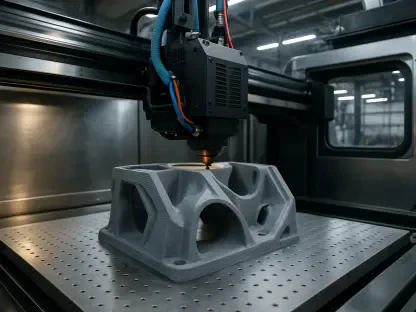

The United Kingdom’s manufacturing and logistics sectors are currently navigating a challenging environment, marked by the dual threats of escalating operational costs and a significant labor shortage that has left over 46,000 vacancies unfilled. In this high-stakes context, the strategic integration of autonomous robotics and artificial intelligence has transitioned from a forward-thinking innovation to an essential strategy for survival and future growth. As the industry advances toward 2026, these advanced technologies offer a direct and powerful solution to these pressing issues. By embracing automation, British companies can unlock new levels of productivity, build formidable resilience against market volatility, and secure a lasting competitive advantage on the global stage. This technological shift is not merely about replacing manual labor but about augmenting human capabilities, optimizing complex processes, and creating a more robust and intelligent industrial ecosystem prepared for the demands of the modern economy.
The Automation Imperative
Navigating a Challenging Industrial Landscape
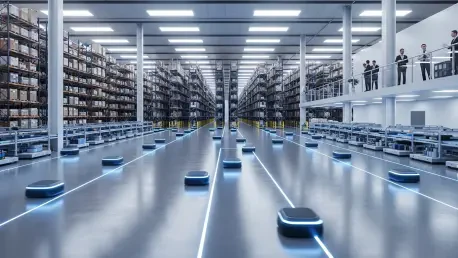
In warehouse and logistics environments, the deployment of autonomous robotics offers a critical productivity lifeline that directly mitigates the most common and costly operational pain points. These intelligent systems are instrumental in reducing process bottlenecks that slow down the entire supply chain, from receiving to shipping. By continuously gathering and analyzing data, they provide a level of visibility that allows for the accurate prediction of potential inventory shortfalls, preventing stockouts and ensuring customer satisfaction. Furthermore, automation dramatically increases operational accuracy, minimizing errors in picking, packing, and sorting that lead to costly returns and damage to a company’s reputation. This enhanced precision and efficiency bolster an organization’s resilience, enabling it to better withstand unpredictable market shifts, sudden demand surges, and disruptive events within the global supply chain, thereby ensuring a more stable and reliable operational foundation.
The Evolution from Rigid Machines to Intelligent Partners
The technological advancements propelling this industrial transformation represent a fundamental departure from the automation of the past. Traditional industrial robots were typically large, stationary behemoths confined to repetitive, pre-programmed tasks within caged-off areas, isolated from the human workforce for safety reasons. In stark contrast, modern Autonomous Mobile Robots (AMRs) are a new breed of intelligent machine. Powered by significant breakthroughs in artificial intelligence and equipped with sophisticated sensor technologies, AMRs can operate without direct human intervention. They possess the remarkable ability to navigate dynamic and constantly changing environments, such as a bustling warehouse floor, using real-time data to make instantaneous decisions. This adaptability allows them to work safely and effectively alongside human employees in a collaborative manner, seamlessly adjust to new tasks on the fly, and handle complex jobs like material transport and intricate product assembly, which were previously beyond the scope of automation.
Democratizing a Technological Revolution
Making Advanced Technology Accessible to All
A pivotal theme in the current wave of automation is the increasing accessibility of technologies that were once the exclusive domain of large corporations. Historically, the high capital costs, the need for specialized programming expertise, and the significant spatial requirements made large-scale robotics prohibitive for the Small and Medium-sized Enterprises (SMEs) that are a crucial engine of growth for the UK manufacturing sector. However, the emergence of newer, smarter systems, particularly collaborative robots or “cobots,” is fundamentally altering this dynamic. These modern robotic solutions are designed to be more compact, significantly more affordable, and relatively easy to deploy and program, often by non-technical staff using intuitive interfaces. This development is effectively “democratizing automation,” broadening its appeal and making it a viable investment for manufacturers of all sizes, allowing them to finally reap the benefits of enhanced productivity, improved efficiency, and greater worker safety.
The Convergence of AI and Robotics
The most transformative development in the field is the deep integration of artificial intelligence with robotics, a convergence that is turning reactive machines that execute commands into truly intelligent and adaptive systems. AI enables robots to learn from their environments through machine learning algorithms, make autonomous decisions in response to unforeseen variables, and adapt their behavior to novel situations without requiring human reprogramming. This expands their potential applications into highly personalized and complex tasks that demand flexibility and problem-solving skills. Furthermore, the synergy between AI and robotics creates a powerful data feedback loop that drives continuous improvement. Robots equipped with an array of sensors can perpetually collect granular operational data from the warehouse or factory floor. This constant stream of information is then fed into AI-driven analytics platforms that can optimize warehouse layouts, determine the most efficient picking routes for both robots and humans, and ensure goods are never misplaced, thereby maximizing overall operational efficiency.
Building a Foundation for Future Competitiveness
The primary finding was that robotics, particularly when enhanced by AI, offered a clear and actionable path for UK manufacturers to achieve success and resilience. The technology was no longer a futuristic concept but was understood as a practical and increasingly accessible tool for overcoming contemporary industry pressures. For businesses of all sizes, accessible and AI-powered robotics led to greater productivity, safer workplaces, and sharper, data-driven decision-making. The evolution of robotics—from rigid automation to an adaptive partnership with humans—was framed as the foundation of a new industrial era defined by intelligence and collaboration. The challenge for British industry involved a full embrace of this technological momentum. To turn innovation into sustained, long-term competitiveness, a concerted effort was required to ensure that the necessary skills development, strategic investment, and forward-thinking vision were firmly put in place. With the right strategy, robotics not only empowered British industry to solve its immediate problems but also positioned it as a global leader.