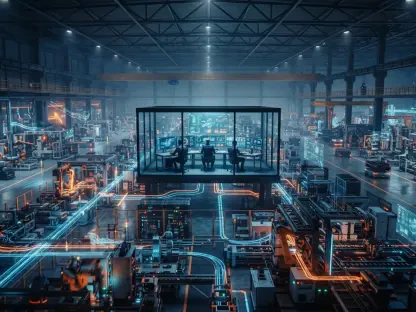

The shift toward simulation-ready assets allows data center developers to test the impact of NVIDIA Rubin GPUs before any physical hardware is installed in the rack. This capability marks a pivotal moment for the SIN01 facility at the SINES Data Campus in Portugal, which serves as a massive 1.2 GW “AI factory.” Global energy leader Schneider Electric and industrial software innovator AVEVA have collaborated with AI cloud provider Nscale and developer Start Campus to pilot an “Immersive Twin” environment. By utilizing the NVIDIA Omniverse DSX Blueprint, the team has created a high-fidelity, physically accurate representation of the entire data center infrastructure. This transition from traditional monitoring to proactive, simulation-driven management allows for a holistic view of the facility, integrating power grids and cooling loops. As high-performance computing needs surge, this project provides a necessary framework for managing the extreme densities required by next-generation artificial intelligence hardware without the inherent risks of physical trial and error.
Strategic Synergy: Accelerating Performance Through Simulation
Enhancing Operational Efficiency: The Path to Rapid Deployment
The primary metric defining success in this pilot is “time to token,” representing how quickly an AI infrastructure provider can deploy hardware and begin processing workloads. By leveraging the immersive twin, Nscale can simulate the deployment of thousands of GPUs in a virtual space, identifying potential bottlenecks in power distribution or thermal management before a single technician enters the room. This predictive capability is essential for managing the volatile heat loads generated by high-density racks, where traditional cooling methods often fail. Engineers can now perform exhaustive “what-if” scenarios, testing the impact of different rack configurations or cooling settings to find the optimal balance between performance and stability. This methodology significantly reduces the window between capital expenditure and operational revenue, ensuring that the transition to new hardware generations is both seamless and predictable. By identifying infrastructure constraints early, the team avoids the costly delays associated with hardware failures.
Beyond simple deployment speed, the initiative prioritizes “token efficiency,” which measures the computational output achieved per megawatt of power consumed. The digital twin environment allows operators to visualize energy flow across the entire facility, from the medium-voltage substation to the liquid-cooled heat exchangers. By fine-tuning these systems in a virtual environment, the partners ensure that every dollar invested in infrastructure results in the maximum possible processing power for AI model training and inference. This level of precision is increasingly critical as power costs and environmental regulations put pressure on data center margins. The simulation helps in predicting how the infrastructure will behave under peak loads, allowing for the preemptive adjustment of cooling loops to prevent thermal throttling. Such granular control ensures that high-cost NVIDIA Rubin GPUs operate at their peak design specifications, maximizing the return on investment for hardware while reducing the risk of premature wear due to heat stress in the SINES facility.
Technical Integration: Merging Operational and Information Technology
The technical sophistication of the pilot is grounded in its ability to synthesize disparate data streams into a unified “single pane of glass” view. Utilizing the OpenUSD (Universal Scene Description) framework, the project achieves seamless interoperability between specialized software tools like ETAP for electrical systems and AVEVA’s industrial software suite. This integration allows for a dynamic exchange of data, where electrical load simulations can directly influence thermal cooling models within the digital twin. Historically, these systems operated in silos, leading to misalignments between power capacity and cooling capabilities. Now, the immersive twin acts as a central repository for asset information, ensuring that every stakeholder works from a single source of truth. The use of the NVIDIA Omniverse DSX Blueprint facilitates the rendering of these complex systems in real-time, providing engineers with a visual representation that is both intuitive and highly technical. This breakthrough in data synthesis enables more informed decision-making.
Central to this digital transformation is the development of “simulation-ready assets,” which are virtual versions of physical components that behave exactly as their real-world counterparts. Whether it is a liquid cooling manifold or a high-capacity circuit breaker, each asset within the twin includes detailed physical properties and behavioral logic. This allows the system to mirror the operational reality of the SIN01 facility under various stress levels, providing a platform for testing unconventional configurations. For example, the team can simulate a sudden surge in computational demand and observe how the liquid cooling loops respond to the resulting thermal spike. This level of behavioral accuracy ensures that the digital twin is not merely a visual model but a functional tool for continuous optimization. By stress-testing these systems in a virtual environment, the partners can push the boundaries of rack density without risking the physical integrity of the equipment. This approach effectively de-risks the integration of bleeding-edge hardware technologies.
Strategic Implementation: Lessons From the SINES Pilot
As the demand for AI workloads continues to escalate, the environmental impact of data centers has become a primary concern for the industry. The SINES Data Campus pilot addressed this challenge by using the immersive twin to optimize energy consumption and minimize waste within the cooling systems. Through precise modeling, operators identified areas where energy was being used inefficiently, such as over-cooled zones or under-utilized power capacity. The digital twin provided the visibility needed to adjust these systems in real-time, ensuring that the facility operated at its peak ecological efficiency. By reducing the overall carbon footprint of the AI factory, the partners demonstrated that high-performance computing and environmental responsibility were not mutually exclusive. The simulation allowed for the testing of renewable energy integration and heat recovery systems, which further enhanced the sustainability of the campus. This focus on green operations was essential for the long-term viability of massive 1.2 GW projects, where small improvements in efficiency led to significant cost savings.
The pilot program at the SINES Data Campus established a clear roadmap for organizations looking to integrate advanced AI hardware into their existing infrastructure. By successfully deploying the immersive twin, the partners demonstrated that virtual validation is no longer optional but a prerequisite for managing 1.2 GW facilities. Stakeholders utilized these simulation tools to bridge the gap between abstract design and physical reality, effectively eliminating the guesswork that previously defined data center scaling. For future implementations, it was recommended that developers prioritize the creation of simulation-ready assets during the earliest phases of procurement to ensure full behavioral mirroring. The project proved that an ecosystem approach, where energy experts and software developers work from a single digital model, significantly reduced the timeline for hardware deployment. Moving forward, the industry should consider adopting OpenUSD as a universal language for data center twins to maintain flexibility across diverse technology stacks. This project provided a tool for optimization.