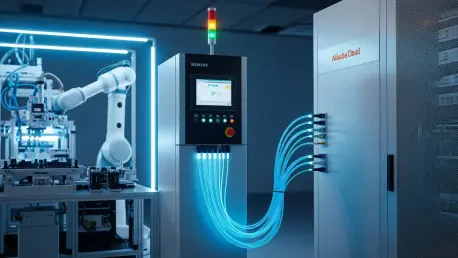

The convergence of global industrial engineering expertise with hyperscale cloud computing marks a definitive shift in how manufacturing facilities operate on a global scale. This transformation is currently being spearheaded by a massive strategic alliance between Siemens and Alibaba, which aims to reshape the industrial landscape through the deployment of twenty-six new automation and control technologies. These tools are specifically designed to facilitate artificial intelligence-driven decision-making within complex manufacturing environments, ensuring that data is no longer just a byproduct of production but a central driver of efficiency. By hosting these advanced capabilities on the Alibaba Cloud, the partnership provides an accessible pathway for enterprises to implement predictive maintenance software, virtual simulation appliances, and high-performance computing clusters. This infrastructure represents a significant leap forward in bridging the gap between digital potential and physical execution. Modern production facilities are increasingly required to handle immense volumes of data, and the availability of these specialized tools allows for a more streamlined approach to scaling operations. The deployment of these technologies ensures that the digital twin of a factory is not just a static model but a dynamic system that learns and evolves alongside the actual machinery. As manufacturers look to optimize their energy consumption and reduce downtime, the integration of these sophisticated platforms provides the necessary analytical depth to achieve sustainable growth.
Technical Architecture: Creating a Cohesive Stack
Central to this evolution is the development of what leadership describes as a comprehensive industrial artificial intelligence operating system. This concept moves beyond the mere implementation of isolated algorithms, focusing instead on a unified technology stack that connects digital data streams directly to heavy physical hardware. To achieve this, Siemens is utilizing its Xcelerator platform to democratize access to industrial intelligence at a previously unattainable scale. The architecture allows for the seamless flow of information from high-level cloud analytics down to the specific mechanical actions performed on the shop floor. This integration is essential for modern factories that require real-time adjustments and autonomous problem-solving capabilities to remain competitive. By establishing this foundational layer, the partnership ensures that the complexity of modern engineering is abstracted into manageable and actionable insights for operators. This approach naturally leads to a scenario where the physical and digital realms are no longer distinct silos but a singular, integrated environment. Such a framework is vital for maintaining the agility needed to respond to sudden market fluctuations or supply chain disruptions.
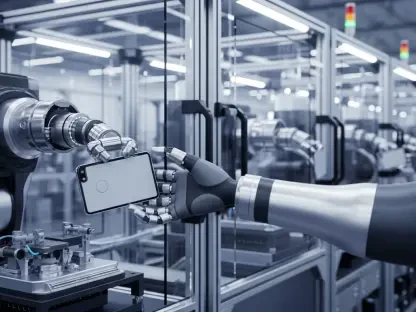
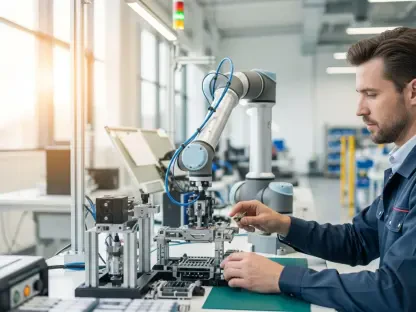
Hardware innovations play an equally vital role in this digital ecosystem, specifically through the introduction of next-generation programmable logic controllers and advanced servo systems. These components function as the central nervous system of any production line, translating digital commands from the cloud into precise mechanical motions with microsecond accuracy. In this collaborative framework, the hardware is no longer a static piece of equipment but an intelligent node capable of processing local data while remaining synchronized with broader cloud-based intelligence. This synergy allows for a level of precision in manufacturing that was historically impossible to maintain across large-scale operations. As these systems are deployed, they provide the necessary physical infrastructure to support heavy-duty AI applications, such as real-time quality assurance and adaptive robotics. This hardware-software harmony is the cornerstone of the high-performance computing clusters that now define modern industrial environments. Furthermore, the reliability of these controllers ensures that even as the level of automation increases, the safety and integrity of the manufacturing process remain uncompromised. This technical foundation allows for a transition toward more resilient and adaptable production methods.
Generative Intelligence: From Design to Production
A significant breakthrough in this partnership involves the integration of Alibaba’s Qwen large language models into existing product lifecycle management software. This integration signals a broader trend toward the use of generative and agentic artificial intelligence to streamline some of the most complex tasks in the industrial sector, including concept design and production planning. These models allow engineers to interact with production systems using natural language, significantly reducing the time required to program or reconfigure assembly lines. Furthermore, the ability of generative AI to analyze vast datasets means that quality assurance protocols can become more predictive rather than reactive. By embedding these capabilities directly into the software used for designing products, the collaboration ensures that manufacturing considerations are addressed long before a single component is produced. This shift toward agentic systems represents a move from automated tasks to truly autonomous industrial processes. Building on this intelligence, the software can now suggest design modifications that optimize for both material cost and manufacturing feasibility, creating a more efficient lifecycle.
While the current adoption rate of sophisticated artificial intelligence within the global manufacturing sector remains relatively low at approximately six percent, industry forecasts indicate a rapid acceleration. Projections suggest that nearly a quarter of all major manufacturers will have implemented these advanced technologies within the next two years, spanning from 2026 to 2028. This expected surge is driven by the increasing availability of ready-to-use industrial applications that minimize the need for specialized in-house data science teams. The collaboration between these two giants addresses this demand by providing infrastructure as a service, allowing smaller firms to access the same high-quality computational power as industry leaders. As the barrier to entry continues to lower, the focus shifts toward how quickly organizations can integrate these tools into their daily workflows. The transition from experimental pilots to full-scale industrial deployment is now the primary metric for success in the competitive global market. Consequently, the rapid evolution of these regional ecosystems provides a blueprint for how global engineering expertise can be localized to drive high-speed innovation across various industrial sectors.
Strategic Modernization: Paving the Way for Autonomous Growth
The strategic alliance between these two technological powerhouses focused on modernizing the shop floor by providing the computer-aided engineering capabilities necessary for high-quality growth. To capitalize on these advancements, industrial leaders prioritized the integration of regional ecosystems with global engineering standards to overcome traditional barriers to digital transformation. Engineers successfully combined massive industrial scale with a rapid pace of innovation to unlock the full potential of artificial intelligence within the physical realm of production. Organizations that adopted these unified platforms early secured a distinct advantage in operational efficiency and predictive accuracy. Looking ahead, the focus shifted toward expanding these intelligent frameworks to encompass entire supply chains, ensuring that every link in the production process operated with the same level of cognitive precision. Future efforts emphasized the importance of developing robust, integrated ecosystems that could withstand the pressures of an increasingly volatile global economy. By aligning digital infrastructure with mechanical execution, the industry established a new benchmark for what was possible in the era of autonomous manufacturing. This unified approach ultimately ensured that high-performance computing became a standard utility for manufacturers of all sizes.