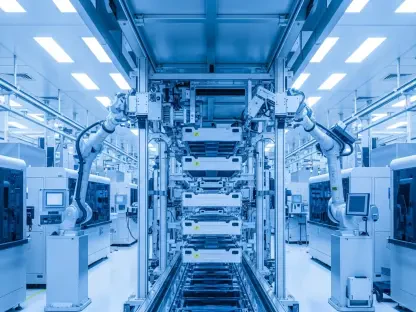
The city-state of Singapore is currently orchestrating a profound industrial metamorphosis that seeks to redefine the very essence of its manufacturing sector by pivoting away from traditional labor-intensive models toward an intelligent, data-driven ecosystem. This transformation is not merely a response to global economic shifts but a calculated effort to maintain a competitive edge in an increasingly volatile international landscape. At the heart of this evolution lies the Agency for Science, Technology and Research, known as A*STAR, which serves as the essential conduit between high-level laboratory research and the practical, scalable applications required by modern industry. By weaving artificial intelligence, robotics, and advanced digital frameworks into the fabric of production, the nation is successfully positioning itself as a premier global hub for advanced manufacturing. This shift ensures that the domestic economy remains resilient against supply chain disruptions while simultaneously fostering a culture of innovation that attracts both multinational corporations and specialized local enterprises.
The Strategic Framework: Manufacturing 2030 and Beyond
The nation’s industrial trajectory is guided by the comprehensive Manufacturing 2030 vision, a strategic decade-long initiative designed to increase the sector’s value-add by 50 percent while bolstering productivity and sustainability. This framework acknowledges that the future of manufacturing lies in high-value production rather than high-volume, low-cost operations, which is a necessity given the geographic and demographic constraints of the region. By focusing on deep-tech integration, the government is ensuring that Singapore remains a critical node in the global supply chain, offering a unique blend of reliability, advanced infrastructure, and technological sophistication. This approach creates a fertile environment where small-to-medium enterprises and global giants can collaborate on smart manufacturing solutions, effectively modernizing the entire industrial landscape through shared digital resources and a unified national strategy that emphasizes long-term economic stability and agility.
The implementation of this vision relies heavily on the “lab-to-factory” pipeline, which streamlines the transition of emerging technologies from the research phase to commercial deployment. A*STAR plays a pivotal role here by providing the technical expertise and infrastructure needed for companies to experiment with high-risk, high-reward innovations without bearing the full burden of development costs. This collaborative model has cultivated a trusted digital capability that is increasingly rare in the global market, making the city-state an attractive destination for capital-intensive projects. By bridging the gap between theoretical science and industrial reality, the nation is not only upgrading its existing manufacturing base but also paving the way for the emergence of entirely new industries rooted in additive manufacturing and autonomous systems. This systematic uplift of the industrial ecosystem ensures that the local workforce is exposed to cutting-edge methodologies, thereby securing the country’s status as a leader in the Fourth Industrial Revolution.
Digital Excellence: Transforming the Consumer Goods Sector
The modernization of the consumer goods industry provides a compelling look at how digital tools can revolutionize established production environments, as seen in the recent overhaul of major regional facilities. A prime example is the Coca-Cola Singapore Commercial Product Supply plant, which transitioned from manual, labor-heavy planning processes to a sophisticated digital operation capable of serving two dozen markets across the Asia-Pacific. Before this digital shift, scheduling the complex production cycles for hundreds of regional orders required days of manual effort by specialized teams. However, through a partnership with A*STAR and local technology integrators, the facility implemented an AI-powered dynamic scheduler. This tool uses customized algorithms to process massive datasets in real-time, reducing the planning window from several days to less than one hour, which drastically improves the facility’s ability to respond to sudden market fluctuations or logistics challenges.
Beyond administrative efficiency, the integration of smart robotics has significantly improved the physical safety and productivity of the manufacturing floor. In tasks involving the handling of various powdered ingredients, the facility introduced robotic arms equipped with advanced vision detection systems that can differentiate between various bag sizes and textures. These systems, developed through collaborative engineering efforts, address challenges that were previously difficult for conventional machines to handle, allowing human workers to step away from repetitive, physically demanding tasks. The results of these technological interventions have been measurable and substantial, with reports indicating a 28 percent increase in throughput and a 70 percent surge in labor productivity over the last few years. Such achievements led to the facility’s recognition in the World Economic Forum’s Global Lighthouse Network, signaling to the world that the nation’s manufacturing sector is a breeding ground for scalable, world-class innovation.
Modernizing Heavy Engineering: The Marine Revolution
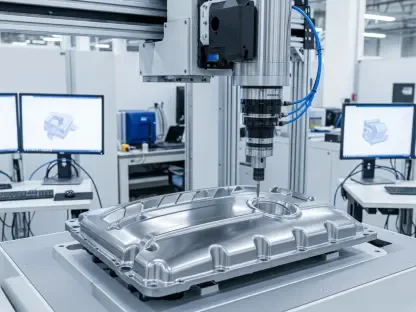
While consumer goods focus on high-speed efficiency, the maritime and heavy engineering sectors are undergoing a similarly radical transformation, moving away from century-old methods toward digital fabrication. For decades, the production of massive ship propellers relied on traditional sandcasting, a process that is both labor-intensive and environmentally demanding. Today, companies like Mencast Marine are leading the charge by adopting Wire Arc Additive Manufacturing, a specialized 3D-printing technique that utilizes robotic arms to build complex components layer by layer from bronze alloys. This transition from “carbon to silicon” represents a fundamental shift in how heavy industry operates, allowing for the creation of high-strength parts with far less material waste. By digitizing the fabrication process, the industry has managed to reduce the physical strain on its workforce while simultaneously increasing the precision and durability of critical marine components.
The design phase of these engineering projects has been equally revolutionized by the application of generative AI, which allows engineers to explore design possibilities that were previously unimaginable. Instead of manually drafting a few variations of a propeller, AI-driven algorithms can now generate and test over 10,000 design iterations in just a few days, optimizing each one for fuel efficiency and hydrodynamic performance. This level of customization enables the production of propellers tailored to the specific needs of individual vessels, leading to significant fuel savings and reduced emissions for the global shipping fleet. Furthermore, by securing world-first certifications for these additively manufactured parts from international bodies like Lloyd’s Register, the nation is establishing the regulatory trust necessary for widespread adoption. This combination of advanced design, robotic fabrication, and rigorous certification ensures that the local maritime sector remains at the forefront of the global industry’s shift toward sustainable, high-tech engineering.
Human-Machine Synergy: The Rise of Agentic AI
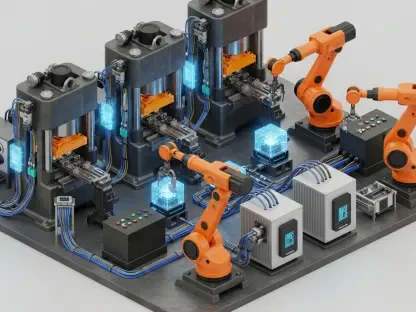
A defining feature of the current industrial era in the region is the move toward “Agentic AI,” a philosophy where artificial intelligence acts as a collaborative partner rather than a simple replacement for human labor. This is best exemplified by frameworks like AIMie, which are designed to analyze complex factory data, reason through changing operational conditions, and coordinate actions across various machines. Unlike traditional automation, which follows rigid scripts, these agentic systems are flexible and adaptive, allowing them to manage the intricacies of a modern production line with minimal human intervention for routine tasks. This transition allows human employees to move up the value chain, transitioning from manual operators to roles as supervisors, analysts, and system designers. By focusing on this human-centric approach to automation, the industrial sector is ensuring that its workforce remains relevant and empowered in an increasingly autonomous world.
The drive toward intelligent manufacturing is also deeply intertwined with the nation’s broader environmental and sustainability goals. Advanced technologies like additive manufacturing and AI-optimized scheduling are inherently more resource-efficient, leading to significant reductions in material waste and energy consumption. For instance, the shift to 3D-printing propellers has been shown to reduce the carbon footprint of production by over 30 percent compared to traditional casting methods. Similarly, AI-driven energy management systems in large factories are helping to lower Scope 2 emissions by optimizing machinery usage and reducing idle time. By positioning sustainability as a core component of its technological strategy, the nation is creating a competitive advantage that appeals to the growing number of eco-conscious global investors and clients. This synergy between digital innovation and environmental responsibility ensures that the manufacturing sector is not only profitable but also sustainable for the long term.
Strengthening the Ecosystem: Collaboration and Scaling
The success of the manufacturing sector was rooted in a unique public-private synergy that fostered a robust environment for rapid prototyping and technological deployment. By creating a landscape where multinational corporations and local small-to-medium enterprises shared access to advanced research facilities, the nation ensured that technological gains were distributed across the entire economy. This collaborative approach allowed local integrators to gain world-class expertise by working alongside global leaders, which in turn strengthened the domestic supply chain and provided smaller firms with the tools needed to compete on an international level. The “rising tide” effect created by these partnerships solidified the country’s reputation as a reliable and innovative partner for high-tech investment. This foundation proved vital as the industrial sector began expanding these advanced techniques into other high-growth areas, such as aerospace maintenance and defense manufacturing, where precision and digital traceability were paramount.
Moving forward, the focus shifted toward the continuous evolution of the workforce and the scaling of localized innovations to regional markets. Government initiatives provided the necessary funding for extensive reskilling programs, ensuring that workers at all levels were proficient in robotics, data analytics, and AI management. As these digital capabilities matured, the nation transitioned from being a consumer of technology to a provider of sophisticated industrial solutions, exporting its “smart factory” blueprints to neighboring countries. The integration of the Sectoral AI Centre of Excellence for Manufacturing further streamlined this process, providing a centralized hub for cross-industry learning and the development of standardized digital protocols. By maintaining a clear focus on the integration of intelligence and flexibility, the manufacturing sector successfully navigated the complexities of the late 2020s, ensuring that the economy remained a beacon of high-tech excellence and a model for industrial resilience in the digital age.