
The global market for inspection analysis devices, long a cornerstone of industrial quality assurance, is currently undergoing a profound and rapid transformation driven by the powerful convergence of automation, advanced digital technologies, and ever-stricter quality standards. These systems are evolving from simple measurement instruments into intelligent, strategic assets that are central to the efficiency, compliance, and competitiveness of modern manufacturing operations worldwide. As industries increasingly embrace data-driven decision-making, the role of these devices has shifted from a final-gate check to an integrated source of real-time intelligence that optimizes entire production ecosystems. This evolution is not merely an upgrade of existing tools but a fundamental rethinking of how quality is defined, monitored, and maintained, setting a new benchmark for operational excellence across a diverse range of sectors from aerospace to pharmaceuticals.
Market at a Glance a Financial Snapshot
A comprehensive analysis of the inspection analysis device market reveals a clear and robust financial trajectory, signaling a period of significant and sustained expansion. The market, which was valued at a substantial USD 15.44 billion in 2023, is on a path to nearly double in size, with projections forecasting a value of USD 26.78 billion by 2032. This impressive growth corresponds to a steady Compound Annual Growth Rate (CAGR) of 6.31% over the forecast period. Such consistent upward momentum is not the result of a single isolated trend but rather reflects the powerful synergy of interconnected forces that are fundamentally reshaping industrial processes. The increasing demand is a direct consequence of global manufacturing’s push towards greater precision, higher efficiency, and unwavering compliance, making advanced inspection technology an indispensable investment for companies aiming to compete on a global scale.
The Core Drivers Reshaping the Industry
Technological Innovation as the Primary Catalyst
The integration of cutting-edge technology, particularly artificial intelligence (AI) and machine learning (ML), stands as the most significant force propelling the inspection device market forward. These cognitive technologies are being deeply embedded into inspection platforms, moving them far beyond simple pass-fail assessments. AI-powered systems can analyze images and sensor data with a level of speed and nuance that surpasses human capabilities, identifying microscopic flaws, subtle pattern deviations, and other anomalies that would be imperceptible to even the most trained operator. By learning from vast datasets, these systems continuously refine their accuracy, leading to a dramatic reduction in false positives and ensuring that only products meeting the highest quality standards proceed through the production line. This analytical power transforms quality control from a reactive measure into a proactive, data-driven process that enhances product reliability and brand reputation.
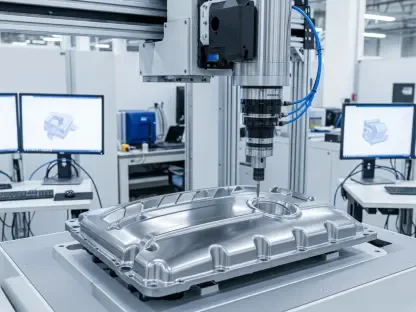
Further amplifying this technological revolution is the widespread adoption of advanced imaging systems and cloud-based data analytics. Technologies such as Automated Optical Inspection (AOI), Non-Destructive Testing (NDT), and high-resolution 3D scanning have become indispensable tools in high-stakes industries. AOI provides rapid, automated verification for electronics manufacturing, while NDT ensures the structural integrity of critical components in aerospace and automotive sectors without causing damage. The data generated by these sophisticated systems is increasingly channeled to secure cloud platforms, creating a centralized repository for quality metrics. This connectivity allows for the aggregation and analysis of information from multiple production lines or facilities around the world, enabling manufacturers to benchmark performance, identify systemic issues, and deploy predictive analytics to anticipate quality deviations before they occur, thus optimizing processes on a global scale.
The Impact of Industry 4.0 and Automation
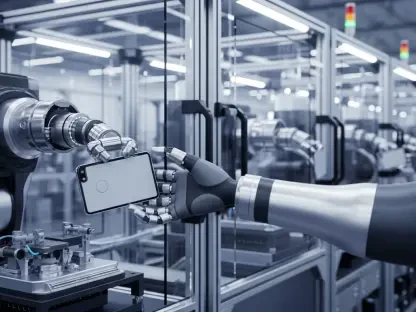
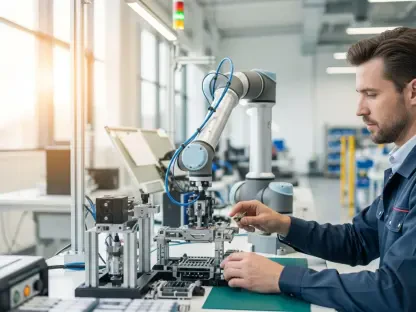
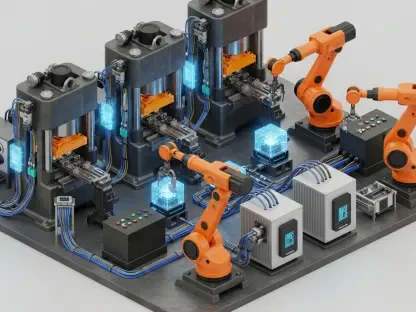
The global shift toward Industry 4.0 and the creation of interconnected “smart factories” serves as a major catalyst for the growth of the inspection device market. Within these highly automated environments, inspection is no longer a siloed, end-of-line activity but a fully integrated component of the production process itself. Machine vision systems and AI-driven sensors are seamlessly integrated with robotics and the Industrial Internet of Things (IIoT), providing real-time monitoring and feedback. This constant stream of data allows for immediate adjustments to be made to production parameters, ensuring that quality is maintained consistently and dynamically. By embedding inspection directly into the manufacturing workflow, companies can drastically reduce production errors, minimize material waste, and enhance overall operational accuracy, thereby improving both product reliability and profitability in a highly competitive landscape.
Beyond immediate quality control, intelligent inspection systems have become a crucial enabler of predictive maintenance strategies, a core tenet of Industry 4.0. By continuously analyzing data from the production line, these systems can detect subtle variations in product dimensions or surface finishes that may indicate wear and tear on manufacturing equipment. This proactive approach allows maintenance teams to anticipate potential equipment malfunctions before they lead to significant downtime or a batch of defective products. The seamless connectivity of these smart inspection solutions with broader manufacturing execution systems (MES) and enterprise resource planning (ERP) platforms creates a powerful, automated feedback loop. This ecosystem-wide integration ensures that insights from quality control are used to optimize not just a single machine, but the entire production cycle, leading to shorter lead times and increased profitability.
Responding to Modern Manufacturing Demands
A powerful external force compelling investment in advanced inspection technology is the ever-increasing stringency of global regulations and quality mandates. In critical sectors like pharmaceuticals, aerospace, food and beverages, and automotive, adherence to rigorous standards set by bodies like the FDA and FAA is not optional but a prerequisite for market access. These regulations demand meticulous verification, complete traceability, and comprehensive documentation for every component and final product. Manual, error-prone inspection methods are no longer sufficient to meet these demands. Consequently, organizations are compelled to adopt automated inspection systems that provide the high degree of accuracy, repeatability, and automated data logging required to prove compliance. These systems generate an immutable audit trail, providing the verifiable documentation needed to navigate complex regulatory landscapes and mitigate the significant financial and reputational risks associated with product recalls.
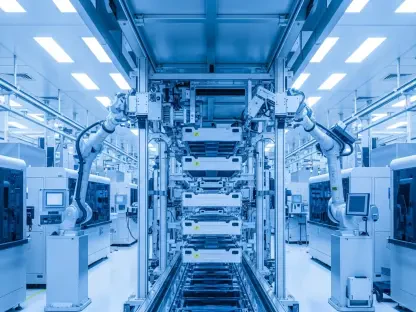
Simultaneously, the relentless trend toward product miniaturization and increased complexity, especially in the electronics, semiconductor, and medical device sectors, necessitates an unprecedented level of inspection precision. As components like microchips and surgical implants shrink to microscopic sizes, the task of identifying defects and ensuring dimensional accuracy falls far beyond the limits of human vision. This reality has fueled a surge in demand for specialized inspection systems equipped with high-resolution imaging, sub-millimeter 3D measurement capabilities, and rapid scanning speeds. These advanced devices are essential for keeping pace with high-volume production lines where even the smallest irregularity can lead to catastrophic failure. The ability to verify the integrity of these intricate components is no longer just a quality-control measure but a fundamental enabler of innovation in some of the world’s most advanced industries.
A New Paradigm in Quality Assurance
The trajectory of the inspection analysis device market was decisively shaped by a convergence of technological maturity and industrial necessity. The rise of smart manufacturing, coupled with the unyielding demands for regulatory compliance and microscopic precision, created an environment where advanced inspection was no longer a peripheral function but a core strategic asset. Companies that successfully integrated AI-driven analytics, automated imaging, and cloud connectivity into their quality control processes established a new standard for operational excellence. This transition from reactive defect detection to proactive, data-driven quality assurance marked a fundamental shift in the industrial landscape. The foundation laid by these innovations ensured that inspection technology became an indispensable pillar for ensuring safety, enhancing efficiency, and securing a competitive edge in the global economy.