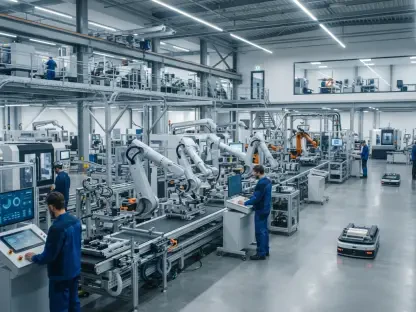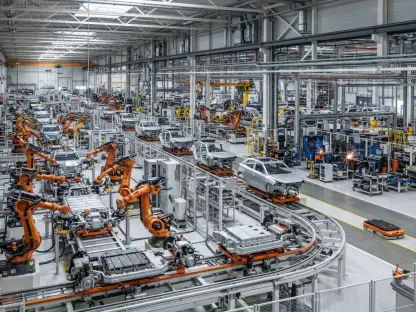

Modern industrial machines function as the physical limbs of automation, yet the embedded hardware and software serving as the nervous system often lack the necessary complexity to succeed. As 2026 unfolds, manufacturers find themselves at a crossroads where the theoretical promise of smart factories clashes with the gritty reality of technical implementation. While headlines are dominated by the transformative potential of large language models and autonomous mobile robots, the actual integration of these technologies into a cohesive production environment remains a daunting task for many organizations. The industry currently faces an automation paradox: nearly all manufacturing executives identify smart technology as a non-negotiable competitive advantage, yet a significant majority of production facilities in the United States still operate with minimal to no automated systems. This disconnect persists because the foundational layer of embedded engineering is often treated as a secondary consideration rather than the core enabler of digital transformation. Without a robust and reliable nervous system, even the most sophisticated robotic hardware remains inert and incapable of performing complex tasks within a high-stakes environment.
Bridging the Expertise Gap in Modern Industry
Overcoming Talent Shortages: The Human Factor
The shortage of specialized engineering talent has become the most persistent obstacle to achieving widespread industrial automation in 2026. Embedded engineering is not a singular discipline but a rare convergence of hardware design, software development, and systems integration. Finding professionals who can navigate the intricacies of real-time operating systems, low-level device drivers, and cybersecurity protocols simultaneously is becoming increasingly difficult for traditional manufacturing firms. Statistics from the current year suggest that over sixty-five percent of companies involved in industrial IoT projects struggle to fill critical roles related to microcontroller programming and edge computing. This talent vacuum often forces organizations to rely on generalist software developers who may lack the deep understanding of physical hardware constraints necessary for industrial-grade reliability. Consequently, projects are frequently delayed as teams grapple with technical debt that only becomes apparent during the late stages.
Transitioning From Prototyping: From Lab to Floor
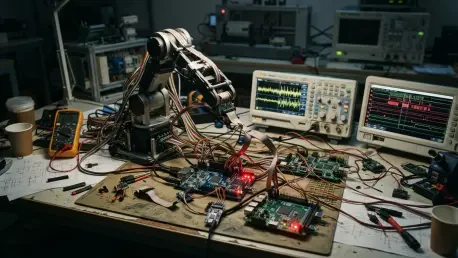
The journey from a laboratory proof of concept to a fully operational system on the factory floor is often where the most ambitious automation initiatives meet their demise. In the initial phases, it is relatively straightforward to assemble a demonstration unit using off-the-shelf development boards and community-supported software libraries. These early prototypes serve to validate a specific use case or demonstrate the feasibility of a robotic movement, but they are rarely equipped to survive the rigors of a 24/7 industrial environment. The transition to a production-ready system requires a process known as industrial hardening, where every component must be vetted for long-term reliability, thermal management, and electromagnetic compatibility. Many companies find themselves trapped in a cycle of endless redesigns because their initial prototypes were built on foundations that cannot be easily scaled or maintained, which inflates development costs and allows competitors to gain a foothold in the market.
Accelerating Deployment Through Modular Solutions
Leveraging Systems on Modules: A New Standard
To address the persistent bottlenecks in hardware development, forward-thinking manufacturers are increasingly adopting modular platforms such as Systems on Modules (SOMs). A SOM is a compact, production-ready computing unit that integrates a processor, memory, and essential peripherals onto a single board, which is then mounted onto a custom carrier board tailored to specific industrial needs. This approach allows engineering teams to bypass the incredibly complex and time-consuming process of designing a high-speed digital circuit from scratch. By starting with a pre-validated hardware foundation, companies can significantly reduce their time to market and minimize the technical risks associated with custom board design. Instead of spending months troubleshooting signal integrity issues or power management circuits, engineers can focus their efforts on the software applications and unique features that differentiate their products, prioritizing speed and reliability over bespoke hardware.
Prioritizing Long-Term Reliability: Strategic Planning
Successful automation initiatives in 2026 are those that treat embedded architecture as a primary strategic pillar from the very inception of the project. One of the most critical challenges is ensuring interoperability between new edge-computing devices and the legacy machinery that still forms the backbone of most manufacturing facilities. These older systems often use proprietary communication protocols and lack the connectivity features required for modern data analytics. Strategic planning involves designing bridge technologies and gateway solutions that can translate data between disparate systems in real time. Moreover, engineers must account for the physical constraints of the factory environment, such as extreme temperatures, vibration, and electrical noise, which can interfere with sensitive electronic components. By addressing these factors early in the design cycle, companies can avoid costly retrofits and ensure that their automated systems provide consistent performance across the entire production line.
Strategic Integration: Ensuring Future Resilience
The industry transition toward fully automated production environments reached a critical turning point as manufacturers finally recognized the limitations of their embedded systems. Organizations that succeeded in this shift moved beyond the hype of high-level software and focused on the technical realities of the hardware-software interface. By adopting modular platforms and prioritizing industrial hardening, these companies avoided the common pitfalls of the prototype-to-production stall. The most effective strategies involved a shift in focus from building every component in-house to integrating specialized, pre-validated solutions that allowed teams to concentrate on proprietary innovations. Decision-makers learned that the long-term reliability of a smart factory was contingent upon the security and maintainability of its embedded nervous system. Moving forward, the most practical step for any manufacturer was to conduct a comprehensive audit of their technical capabilities and identify where modular hardware could bridge the skill gap to ensure future resilience.