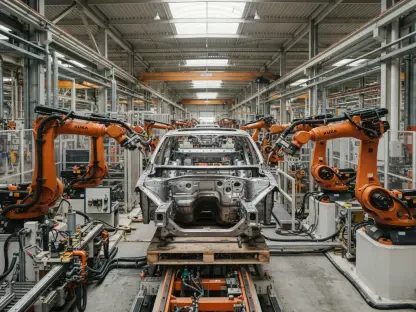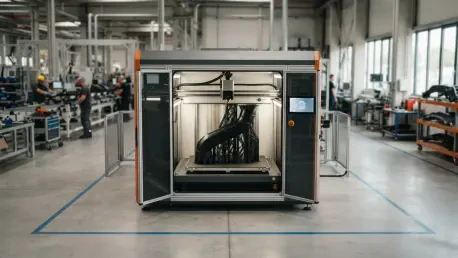

General Motors has achieved annual cost savings of $10 million by integrating Stratasys 3D printing technology into its production tooling operations. This significant milestone serves as a powerful indicator of the broader transformation occurring within the global manufacturing sector throughout 2026. Stratasys has positioned itself at the vanguard of this evolution, successfully doubling its non-GAAP earnings per share in the third quarter. While many industry participants are currently grappling with stagnant hardware sales and shifting market sentiment, this organization has managed to maintain a robust trajectory by aligning its product portfolio with the practical, high-volume requirements of major industrial clients. The financial stability demonstrated in these latest results suggests that additive manufacturing has matured well beyond its initial novelty phase. By focusing on production-ready solutions rather than just rapid prototyping, the company has secured a unique and resilient position in a highly fragmented market. This strategic shift indicates that global manufacturers are no longer waiting for a future revolution but are actively implementing additive solutions to solve immediate fiscal and operational challenges.
Divergent Trends in the Additive Manufacturing Market
The current landscape of the additive manufacturing industry reveals a significant divergence between different types of market participants as the quarter draws to a close. Original equipment manufacturers have faced a mixed environment where hardware sales often fluctuate based on broader economic cycles and capital expenditure constraints. However, companies that have focused heavily on part production and manufacturing services are reporting much more consistent success. This fragmentation highlights a critical realization for the sector: while the appetite for purchasing expensive machinery may occasionally waver, the demand for high-quality, 3D-printed end-use parts remains exceptionally strong. This trend indicates that manufacturers are increasingly comfortable outsourcing their production needs to specialized service bureaus to maintain agility. This approach allows them to benefit from the speed and customization of additive manufacturing without the immediate burden of maintaining complex hardware in-house, creating a healthy ecosystem for service-based revenue models that persist even during periods of cautious capital spending.
Service-based revenue has become a reliable pillar for the industry, providing a necessary buffer against the inherent volatility of the machinery market. Even when established players report losses in their hardware divisions, their parts manufacturing segments frequently show remarkable resilience and growth. This persistent demand for printed components suggests that the value proposition of 3D printing is now firmly established among senior engineers and procurement officers. They are no longer simply testing the technology for aesthetics or basic form-fit checks but are integrating these components into functional assemblies across various sectors. As a result, the industry is seeing a shift where the output of the machines is becoming more valuable than the machines themselves in the short term. This development is forcing equipment manufacturers to rethink their business strategies, emphasizing long-term service contracts and material sales. By diversifying their income streams, these organizations can better withstand the periodic lulls in capital investment that characterize the heavy machinery and industrial equipment markets today.
Financial Resilience and Hardware Revenue Dynamics
Stratasys recorded a 4% increase in overall revenue during the third quarter, a figure that masks deeper and more significant shifts in its business composition. A particularly notable highlight was the 12% jump in hardware systems sales, which demonstrates that certain segments of the market are still eager to expand their internal production capabilities. However, leadership has been careful to categorize these hardware gains as somewhat inconsistent, often resulting from the fulfillment of extensive backlogs rather than a perfectly linear growth trend. This distinction is crucial for investors and industry analysts to understand, as it reflects the complex nature of high-end industrial sales cycles. Despite the volatility, the company’s services division also saw steady 6% growth, reinforcing the idea that a balanced approach between hardware and services is the most sustainable path forward. This multifaceted growth strategy has allowed the firm to outperform many of its peers during a period of significant transition and general economic uncertainty, proving that versatility is a key competitive advantage.
Reflecting the move toward larger and more complex production-focused orders, the company slightly adjusted its year-end revenue guidance to a range of $556 million to $561 million. This modest revision is not a sign of slowing demand but rather a recognition of the longer sales cycles associated with high-value industrial contracts. When customers transition from buying single printers for prototyping to investing in entire fleets for the factory floor, the negotiation and implementation phases become considerably more extensive. These large-scale deals involve rigorous validation processes and multi-departmental approvals, which can lead to timing variability in revenue recognition. By prioritizing these production-focused investments, Stratasys is positioning itself for more significant and recurring material revenue in the coming years. The focus is shifting away from the total volume of machines sold and toward the scale of the applications those machines support. This strategic patience is expected to yield more stable financial performance as additive manufacturing becomes a core component of the industrial supply chain.
Aerospace and Defense Fueling Industrial Expansion
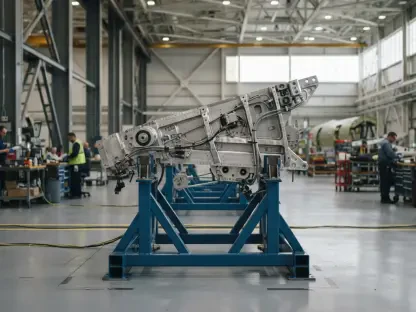
The aerospace and defense sector has proven to be the most potent engine of growth for the organization, exhibiting a remarkable 35% year-over-year increase. This surge is largely driven by the mission-critical nature of the components required in these industries, where weight reduction and part consolidation are of paramount importance. Stratasys Direct Manufacturing has played a pivotal role in this success by acting as a high-capacity production partner for major defense contractors. These clients often require rapid turnaround times for specialized components that traditional manufacturing methods simply cannot deliver. By leveraging the expertise of its internal service bureau, the company has managed to capture a larger share of the defense market, providing everything from flight-ready interior components to complex tooling for experimental aircraft. The ability to meet the stringent quality standards of the aerospace industry has created a significant competitive barrier, as few other players can match the rigorous certification and validation processes that Stratasys has successfully navigated.
A symbiotic relationship has developed between the company’s service offerings and its hardware sales within the aerospace and defense landscape. Many customers began their journey by ordering high-quality parts through Stratasys Direct Manufacturing to validate specific applications and material performance. Once the technology was proven and the return on investment was clear, these organizations often transitioned to purchasing their own dedicated hardware to bring production capabilities in-house. This bridge between service and ownership ensured a steady pipeline of new hardware leads while maintaining a baseline of service revenue. Conversely, even those customers who owned their own machines frequently returned to the service bureau for surge capacity when their internal production lines were fully utilized. This flexible model was particularly attractive to defense contractors who had to respond to fluctuating military procurement schedules. By providing both the machines and the capacity to supplement them, Stratasys established itself as an indispensable partner in the modern defense industrial base.