
The remarkable story of Printerior, a trailblazing 3D printing startup, compellingly demonstrates how a modest seed of support within an academic environment can cultivate a dominant force in the American manufacturing landscape. This company’s rapid ascent from a university-sponsored competition to a multi-million-dollar enterprise serves as a powerful and timely case study on the immense value of public innovation ecosystems. It illuminates the synergistic relationship that can exist between higher education, student ingenuity, and national economic development, offering definitive proof that strategic investments in the next generation of creators and problem-solvers can yield truly extraordinary returns. Printerior’s journey is not just a tale of entrepreneurial success; it is a blueprint for how foundational support can unlock potential and reshape an entire industry, challenging conventional wisdom about the pathways to innovation and the role of our most vital institutions in fostering it.
From Dorm Room Dream to Factory Floor
The Genesis of Printerior
The narrative of Printerior began not in a corporate boardroom but within the competitive and nurturing environment of academia. In 2020, two ambitious University of Missouri undergraduates, Trent Esser and Hayden Seidel, entered the Entrepreneur Quest competition, a “Shark Tank”-style event designed to foster student innovation. Their forward-thinking proposal to establish a business that would create additive manufacturing feedstock from recycled plastic captured the judges’ attention, earning them a modest but crucial $5,000 in seed funding. This initial grant acted as the essential catalyst, transforming a promising idea into a tangible project. The momentum continued to build, and in 2021, the nascent company secured a more substantial $50,000 grant from the St. Louis Arch Grants program. This infusion of capital was a pivotal moment, enabling the founders to move beyond the conceptual phase and establish their first physical feedstock production facility, marking the official launch of a business poised for significant growth.
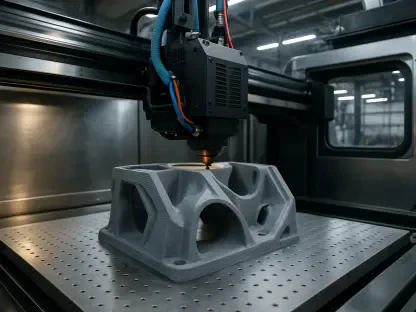
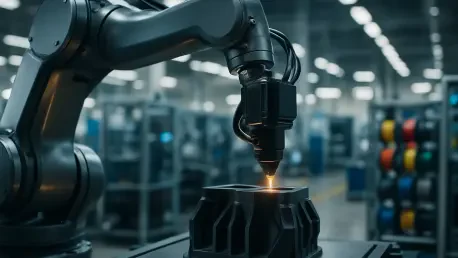
This transition from a university project to an operational reality was underpinned by a shrewd strategic evolution. Instead of confining their business model to that of a materials supplier, the founders chose to vertically integrate their operations. This meant not only producing recycled feedstock but also establishing their own large-scale print farm to utilize it, creating a closed-loop system that granted them greater control over quality and cost. Today, Printerior operates from an expansive 25,000-square-foot facility in St. Louis, where a dedicated team of 13 employees oversees a highly sophisticated manufacturing process. Leveraging a diverse range of 3D printing technologies, including Fused Deposition Modeling (FDM), Selective Laser Sintering (SLS), and Stereolithography (SLA), the company produces an astonishing 3 to 5 million parts per month. Demonstrating a clear commitment to future-proofing its technology, Printerior is also actively developing large-format robotic arm systems to further enhance and scale its advanced manufacturing capabilities.
Scaling for the Future
Printerior’s financial trajectory is as remarkable as its operational expansion, with current projections forecasting nearly $4 million in revenue in 2025 and a strategic goal to more than double that figure to over $10 million in 2026. This exponential growth is not accidental but is supported by two core pillars of the company’s strategy: a comprehensive commitment to the automation of its manufacturing processes and a concrete plan to double its current warehouse space to accommodate increased demand and production. Co-founder Trent Esser attributes the company’s significant competitive advantage to the years spent developing a proprietary technology stack. This unique, digitally integrated system coordinates every facet of the business, seamlessly connecting robotic operations and quality control protocols with overarching product management systems. This technological backbone allows for unparalleled efficiency and scalability, setting Printerior apart in a competitive market.
The vision for Printerior extends far beyond its current impressive output. Esser and his team are not content with their present success; they aim to fundamentally redefine the scale of additive manufacturing. The company’s long-term goal is to increase its production capacity to “hundreds of millions” of parts within the next few years. Achieving such an audacious target will necessitate major expansions in both physical infrastructure and process refinement, requiring continuous innovation and significant capital investment. This ambitious objective underscores the founders’ belief in their technology and their strategic approach to growth. It signals a move from being a successful startup to becoming a dominant player in the manufacturing industry, capable of handling mass production on a scale that few in the 3D printing space have ever attempted, let alone achieved. This forward-looking strategy is what positions Printerior not just for growth, but for industry leadership.
Broader Implications for American Innovation
The University as an Innovation Engine
Beyond the impressive statistics and growth charts, the Printerior story serves as a powerful and timely argument for the revitalization of publicly funded manufacturing research and development at American universities. These academic programs fill a critical gap that the private sector, driven by short-term financial incentives, often neglects. Foundational, long-term research is essential for disruptive innovation but rarely offers the immediate return on investment that private industry demands. As Printerior’s journey illustrates, startups that spin out of university-backed R&D initiatives tend to exhibit a significantly higher success rate than their competitors. While the company’s funding path and explosive return on investment make it an “unconventional, extreme example,” it nonetheless powerfully validates the principle that public support for academic innovation can yield profound and lasting economic dividends for the nation.
Furthermore, Printerior’s success provides a compelling defense for the contemporary value of higher education, particularly at a time when the necessity and cost of a college degree are increasingly subject to public scrutiny. The university environment provided Esser and Seidel with more than just a formal education; it offered an indispensable ecosystem of resources, expert mentorship, and the initial seed funding that was crucial to the company’s launch. This narrative showcases the modern university’s role as a critical incubator for entrepreneurship and a catalyst for economic development. It is a reassuring and vital sign of institutional adaptation, where universities are evolving to create innovative solutions and pathways that not only prepare students for the future but also actively contribute to building that future through tangible economic growth and technological advancement.
A Replicable Model of Success
The inspiring journey of Printerior should not be viewed as an isolated lightning-in-a-bottle event but as a potential blueprint for future growth that can be replicated and scaled across the country. The model of providing seed funding and mentorship within an academic setting can be made more inclusive and widespread. For instance, universities could form strategic partnerships with technical and vocational schools to sponsor similar startup competitions. Such collaborations would extend these invaluable opportunities to a broader range of talented individuals, including those who may not be on a traditional four-year college path. By democratizing access to entrepreneurial resources, these programs could unlock a new wave of innovation from a more diverse talent pool, thereby strengthening the entire national innovation ecosystem and ensuring that great ideas have a chance to flourish regardless of their origin.
Ultimately, the company’s successful evolution from a student concept to a manufacturing powerhouse offered a hopeful perspective on institutional adaptation. It showcased how vital societal institutions, such as universities, had effectively responded to a rapidly changing world. By creating novel programs and fostering an environment of innovation, they had provided a platform that not only prepared young people for the future of work but also actively stimulated economic growth. This successful synergy between education, private ambition, and public support provided a powerful model for how to cultivate the next generation of industry leaders and build a more resilient and innovative economy. The principles that guided Printerior’s rise had laid a clear and promising path for others to follow.