
The rapid transition from manual control to autonomous operation in ground combat platforms represents the most significant shift in armored warfare since the internal combustion engine first replaced the horse. The recently introduced CoreMotion technology acts as a universal translator that converts digital commands into physical steering and braking actions. This modular kit addresses a critical bottleneck in military robotics: the gap between sophisticated artificial intelligence and the heavy metal of a vehicle’s chassis. By providing a standardized execution layer, the system enables various uncrewed ground vehicles to process high-level navigational data and manifest it as precise mechanical movement. This approach fundamentally changes how defense contractors and military planners view the lifecycle of a vehicle, shifting the focus from fixed hardware designs to adaptable, software-driven capabilities. Instead of building specialized robots for every niche mission, the military can now look toward a unified control architecture that brings consistency to diverse fleets.
Engineering a Modular Architecture for Autonomy
Seamless Integration Across Diverse Platforms
CoreMotion was designed with an agnostic philosophy, allowing it to function as a bridge between various autonomy software stacks and different vehicle hardware configurations. This flexibility is essential in a landscape where software evolves significantly faster than the physical platforms it controls. By decoupling the “brain” from the “body,” the system ensures that when a new artificial intelligence update is released, it can be immediately applied to the vehicle without requiring a total overhaul of the mechanical control systems. This plug-and-play capability is facilitated by a suite of ruggedized computers and actuators that are built to withstand the extreme vibrations and thermal loads common in theater.
Furthermore, the modularity of this system extends to the power distribution and wiring harnesses, which are engineered to simplify the installation process on both new and existing platforms. Defense engineers can integrate these kits into established vehicle lines with minimal modifications to the original design, significantly reducing the engineering man-hours required for conversion. This streamlined process is a departure from traditional robotic development, which often involves bespoke, one-off solutions that are difficult to scale. The standardized nature of the components also simplifies logistics, as repair crews can utilize a common set of spare parts across an entire fleet of different robotic vehicles.
Robust Performance and Field Validation
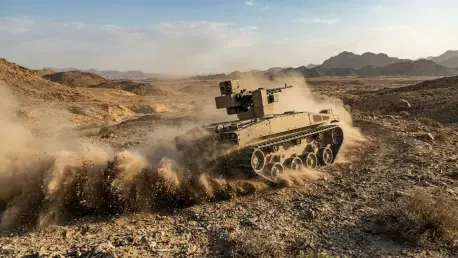
Reliability in autonomous systems is often measured by the distance traveled without human intervention, and this new technology has already demonstrated exceptional durability. Textron reported that the system has logged over 8,000 operational miles while integrated into the RIPSAW family of uncrewed ground vehicles, proving its worth across varied terrains. These miles represent more than just distance; they encompass a wide range of stresses, from high-speed transit on paved roads to low-speed, high-torque navigation through thick mud and steep inclines. The system’s ability to maintain precise control under these conditions is a testament to the sophistication of its internal algorithms.
Beyond basic mobility, the system serves as a central hub for coordinating complex onboard subsystems, including advanced navigation sensors and mission-specific payloads. It manages the data flow from LiDAR, radar, and optical sensors, ensuring that the physical movements of the vehicle are perfectly synchronized with the environmental awareness provided by the perception suite. This holistic control allows for more sophisticated maneuvers, such as autonomous obstacle avoidance and path planning in GPS-denied environments. By managing the power and signal distribution for these sensors, the kit ensures that the entire vehicle functions as a cohesive unit rather than a collection of independent parts.
Strategic Implications for Modern Fleet Management
Bridging the Gap Between Legacy and Innovation
One of the most compelling aspects of this modular approach is its ability to breathe new life into legacy vehicle fleets that would otherwise be considered obsolete. Instead of investing billions in the development of entirely new robotic chassis, military organizations can choose to retrofit their existing inventory with autonomous capabilities. This strategy offers a low-risk path to modernization, as it leverages proven vehicle platforms that already have established supply chains and maintenance procedures. By installing the control kit, an older transport truck or a retired scout vehicle can be transformed into a functional robotic asset capable of performing high-risk missions.
This bridge between old and new also facilitates a more gradual transition to autonomous doctrine, allowing commanders to experiment with robotic tactics using familiar hardware. Soldiers who are already trained on a specific vehicle platform can easily adapt to its robotic version, as the underlying mechanical characteristics remain the same. This familiarity reduces the training burden and helps to overcome the cultural resistance that often accompanies the introduction of radically new technology. Furthermore, the ability to switch between manual and autonomous control provides a layer of operational flexibility that is highly valued in the field during unpredictable combat scenarios.
Future Considerations for Autonomous Doctrine
The introduction of this universal control layer has profound implications for how military forces will be organized and deployed in the coming years. As the barriers to vehicle automation continue to fall, there will likely be a shift toward smaller, more distributed combat formations that rely heavily on robotic scouts and wingmen. These uncrewed platforms can take on the most dangerous tasks, such as clearing minefields or drawing enemy fire, thereby increasing the survivability of manned platforms. The standardized nature of the kit also allows for better interoperability between different branches of the military, as they can all utilize the same underlying control architecture.
In the years following the initial rollout, stakeholders prioritized the creation of common interfaces and protocols to ensure that robotic fleets remained flexible in the face of evolving threats. Strategic investment was directed toward the refinement of edge computing capabilities, which allowed vehicles to process data locally and significantly reduced their reliance on vulnerable communication links. It was essential for military leaders to recognize that the transition toward autonomy was not just a technological upgrade but a fundamental change in operational philosophy. By embracing this modular evolution, the military established a resilient foundation for the future, ensuring that every legacy vehicle could function as a smart asset.