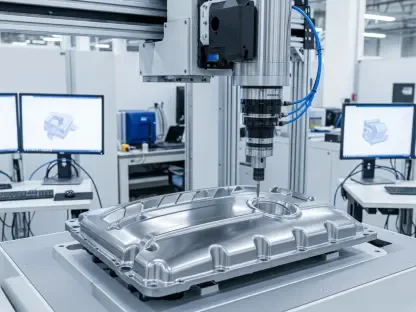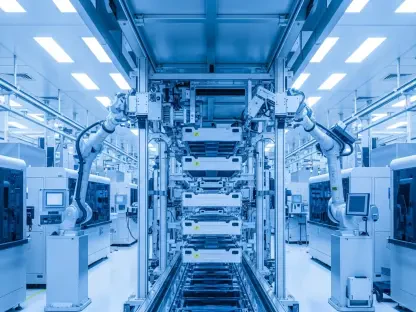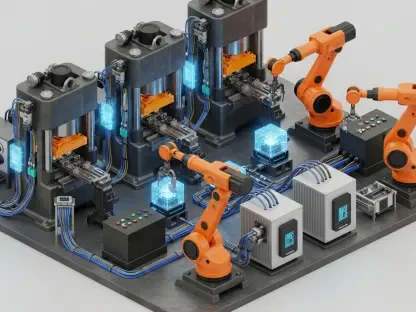

A profound transformation is underway in the world of artificial intelligence, moving beyond the digital playgrounds of marketing optimization and customer support to confront the unforgiving complexities of physical reality. This evolution, highlighted by ambitious endeavors like Jeff Bezos’ Project Prometheus, signals a pivot from general-purpose AI to a specialized, robust discipline best described as “engineered intelligence.” The core of this shift lies in recognizing that the requirements for an AI system designed to operate in industrial and engineering environments—where products must be rigorously manufactured, certified, and operated safely—are fundamentally different from those of its digital-first counterparts. In sectors governed by strict regulations and the high cost of failure, AI is no longer just a tool for convenience but a critical component that must be built with the same precision and accountability as the physical systems it helps create.
The Industrial Imperative for a New AI
From Digital Convenience to Physical Reality
For years, the adoption of artificial intelligence in heavy industry and advanced engineering has been characterized by cautious optimism tempered with significant reservations. Unlike the digital domain where a flawed algorithm might lead to an irrelevant ad or a frustrating chatbot interaction, an error in an industrial context can have catastrophic consequences, involving immense financial loss and, more importantly, risks to human safety. This reality has historically positioned stringent safety standards, comprehensive regulatory oversight, and the immense cost of failure as perceived barriers to widespread AI integration. These sectors operate under a paradigm where every component, process, and decision is subject to verification and validation against established criteria. As a result, the rapid, often opaque, and iterative nature of conventional AI development has been largely incompatible with the methodical, risk-averse culture of industries like aerospace, automotive, and medical device manufacturing, where predictability and reliability are paramount.
However, this landscape is changing as these very constraints are being reframed not as obstacles but as the primary drivers shaping a new class of artificial intelligence. Industrial AI must be engineered from the ground up to prioritize reliability, explainability, and traceability above all else. In these high-stakes environments, the value of an AI-driven insight is completely negated if its origins cannot be traced, its logic cannot be defended, or its conclusions cannot be verified against established engineering principles and regulatory requirements. The focus shifts from the sheer speed of generating an answer to the integrity and defensibility of that answer. This means that AI models must be designed to show their work, providing a clear and auditable trail that links their output directly back to the source data and the specific rules they followed, ensuring that every recommendation can withstand the intense scrutiny inherent in safety-critical applications.
The Critical Role of Authoritative Data
The successful integration of AI into complex engineering workflows exposes a critical dependency: the absolute necessity of high-quality, authoritative data. An AI model, no matter how sophisticated, is only as valuable and reliable as the data it is anchored to. In an industrial context, this data extends far beyond simple operational metrics; it encompasses a vast and intricate web of information, including national and international standards, government regulations, detailed technical specifications, and rigorous certification criteria. This foundational knowledge represents the established truth within which any product must exist. Without being deeply and continuously grounded in this trusted information ecosystem, AI systems are prone to generating outputs that, while appearing compelling or innovative on the surface, are ultimately non-compliant, unsafe, or simply impractical to implement. Such failures result in costly rework, significant project delays, and potentially severe legal and financial liabilities.
This dependency underscores a fundamental challenge: ensuring that AI operates within the non-negotiable boundaries of the real world. A generative AI might design a lighter, more efficient aircraft component, but if that design fails to meet material-specific fatigue standards or violates FAA regulations, it is worse than useless—it is a liability. Therefore, the challenge is not merely to feed AI more data but to curate and structure the right data, creating an environment where the AI learns and operates exclusively from a single source of truth. This involves building a robust data infrastructure that can version-control requirements, manage complex dependencies between standards, and ensure that every piece of information used by the AI is current, verified, and relevant to the specific engineering problem at hand, thereby preventing the generation of elegant but fatally flawed solutions.
Engineering Discipline as an Innovation Accelerator
Weaving the Digital Thread
To address the challenge of data integrity and context, leading organizations are turning to the concept of the “digital thread” as an essential enabler for industrial AI. The digital thread is a connected, dynamic data framework that creates an unbroken, authoritative link across every stage of a product’s lifecycle. It begins with the initial customer requirements and design intent, flows through simulation and analysis, extends into manufacturing and validation, and continues into operational and maintenance data from the field. By integrating artificial intelligence directly into this continuous data stream, the AI gains the crucial context it needs to function effectively. It can understand not just what can be created based on physical principles but, more importantly, what must be created to satisfy all safety, quality, and compliance mandates. This creates a consistent and shared understanding that is accessible to all human teams and AI models involved in the project.
This integration transforms AI from a potential disruptor or a siloed analytical tool into a powerful force multiplier that can be scaled safely and effectively across the enterprise. When an AI model is part of the digital thread, its recommendations are automatically grounded in the latest, version-controlled requirements. For instance, if a regulation concerning material sourcing changes, any AI-assisted design process is immediately informed, preventing the use of non-compliant materials. Similarly, if operational data from a product in service reveals an unexpected wear pattern, that insight can be fed back through the thread to inform the AI models working on the next generation of designs. This creates a virtuous cycle of continuous improvement, where AI enhances engineering decisions with data-driven insights while the digital thread ensures those decisions remain fully compliant, traceable, and aligned with the overarching project goals.
The New Competitive Landscape
The path forward for organizations in the next decade was defined by their ability to successfully merge relentless innovation with unwavering engineering discipline. The era of treating these two forces as opposing priorities has passed; instead, the most successful enterprises demonstrated that rigorous, structured engineering practices were the most effective accelerator for meaningful AI-driven innovation. This involved grounding every AI output in version-controlled requirements, ensuring that no suggestion or design could proceed without first being validated against the project’s core constraints. They preserved a clear and unbroken lineage from AI-generated insights back to their source data, enabling rapid iteration without ever sacrificing auditability. This meant that teams could experiment and explore new possibilities with AI, confident that a complete and defensible record of their process was being maintained automatically.
Ultimately, embedding compliance and verification directly into workflows from their inception became the standard. In this model, engineering discipline was not a final checkpoint or a bureaucratic hurdle but an integral part of the creative process itself. This strategic fusion allowed organizations to de-risk innovation, making it possible to deploy powerful AI capabilities in the most critical and regulated environments. The most valuable intelligence was, in the end, the intelligence that had been meticulously engineered—purpose-built to be grounded, traceable, and perfectly fit for real-world industrial applications where failure was never an option. This disciplined approach separated the leaders from the laggards, proving that the future belonged to those who built their AI on a foundation of trust.