
The global appetite for specialized silicon has reached a fever pitch, signaling a fundamental reconstruction of the digital world as Nvidia faces a staggering $1 trillion backlog in chip orders. This massive queue for hardware serves as a definitive marker of an industry-wide overhaul, where traditional server architectures are being discarded in favor of accelerated computing. Leaders in the space describe this transition as a platform shift equivalent to the birth of the internet, suggesting that the current momentum is not a mere spike but the establishment of a new standard for global productivity.
As the industry matures, the primary focus is migrating from the initial labor-intensive training of massive models toward the practical application of these tools. This evolution marks a strategic roadmap where custom silicon and localized compute power define competitive advantages. Geopolitical factors also weigh heavily on this transition, forcing a redistribution of supply chains and a reevaluation of how sovereignty over computational resources will dictate the economic hierarchy of the coming decade.
The Rapid Expansion of the AI Chip Market
Market Growth: Financial Benchmarks and Demand Statistics
The financial metrics defining this sector have shifted from impressive to nearly incomprehensible as annual revenues across the chip industry climbed from $27 billion to a projected $216 billion. This growth trajectory reflects a desperate hunger for compute power that has pushed the sector toward a combined multi-trillion dollar market capitalization. Investors are no longer looking at these firms as simple component vendors but as the essential utility providers for the modern age, where chips are the new oil powering every digital interaction.
This $1 trillion backlog reveals that the demand for high-end processing remains far ahead of manufacturing capacity. While the market has seen periods of cooling, the underlying trend suggests a sustained buildup. The valuation trends indicate that while short-term volatility persists, the long-term ceiling for the hardware sector remains uncapped, as every major enterprise on the planet attempts to secure its own slice of the available processing power.
Real-World Applications: The Inference Inflection
We are currently witnessing a critical transition known as the “inference inflection,” where the focus moves from teaching AI to letting AI perform active tasks. During the training phase, companies invested billions in massive clusters to build models; now, the priority is deploying those models to generate text, images, and code for billions of end-users. This shift requires a different type of hardware efficiency, leading to strategic partnerships with specialized startups like Groq to optimize the speed at which AI responds to human prompts.
Hyper-scalers such as Google and Meta are already utilizing bespoke hardware to manage generative features at a global scale. By integrating specialized inference chips, these tech giants can reduce the latency of their AI services, making the technology feel more like a natural extension of human thought rather than a distant server process. This movement ensures that AI moves from an experimental novelty into a ubiquitous background layer of the global digital experience.
Industry Expert Insights and Analyst Perspectives
Jensen Huang, the chief architect behind much of this shift, envisions a future where his organization moves beyond selling parts to designing the entire blueprint of the modern data center. He argues that we are no longer building computers but rather “AI factories” that turn raw data into valuable intelligence. This vision emphasizes that the hardware layer is the primary bottleneck for all software innovation, placing the providers of this infrastructure in a position of unprecedented influence over the direction of global technology.
From the perspective of financial analysts like Dan Ives, the current market represents a “white-knuckle period” where the industry must prove that these massive capital expenditures will result in tangible returns. While there is skepticism regarding the immediate profitability of every AI venture, the consensus remains that the first-mover advantage creates a formidable moat. The “catbird seat” occupied by leading hardware firms allows them to dictate industry standards and lock in long-term contracts before competitors can even finalize their designs.
Future Outlook: Challenges and the Evolution of Infrastructure
The Rise of In-House Processors: Custom Silicon Trends
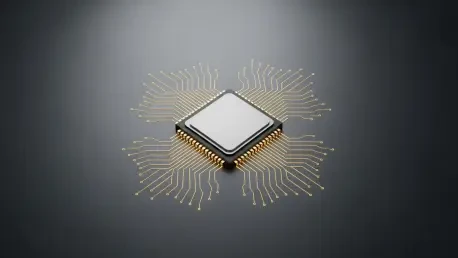
A significant challenge to the current hierarchy is the aggressive move by major technology firms to develop their own in-house processors. By designing custom silicon, these entities aim to reduce their reliance on external vendors and tailor their hardware specifically to their proprietary software stacks. This trend represents both a threat to established chipmakers and an opportunity for the industry to diversify, potentially leading to a more fragmented but highly specialized hardware ecosystem.
Geopolitical and Regulatory Hurdles: Global Supply Chains
Geopolitical tensions continue to complicate the roadmap for hardware distribution, especially as trade barriers limit access to critical international markets. These regulations have forced a restructuring of global supply chains, with companies seeking to build more resilient and localized manufacturing hubs. The future of global compute will likely be defined by a delicate balance between national security interests and the borderless nature of technological progress, creating a complex environment for firms trying to scale.
Sustainability and Efficiency: The Shift Toward Green Compute
As AI moves from experimental labs to every household and office, the focus is inevitably shifting toward energy efficiency and cost-effectiveness. The massive power requirements of current data centers are unsustainable in the long term, prompting a surge in innovation for hardware that delivers higher performance per watt. This evolution is expected to stabilize the industry, transforming AI hardware into a permanent foundation for every sector of the economy, from healthcare to high-frequency trading.
The Structural Transformation of Global Compute
The transition from traditional data centers to specialized AI factories was a fundamental shift that redefined the physical limits of software capability. This evolution was not a temporary reaction to market hype but a permanent restructuring of how information is processed and delivered. The underlying demand for specialized hardware became an irreversible force that forced every major industry to adapt or risk obsolescence.
To remain competitive in this new environment, organizations had to prioritize hardware agility and invest in sovereign compute resources. The lesson learned was that software innovation could only advance as far as the underlying silicon allowed. This realization prompted a global race to secure supply chains and optimize energy consumption, ensuring that the infrastructure supporting the digital age was both robust and scalable for the challenges of the next decade.