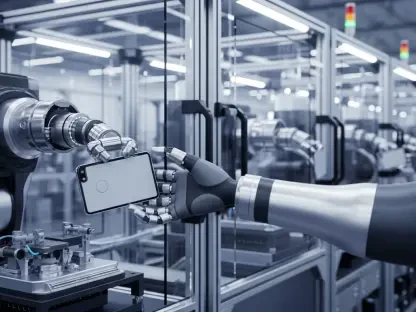
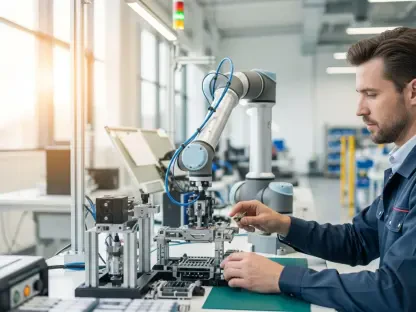
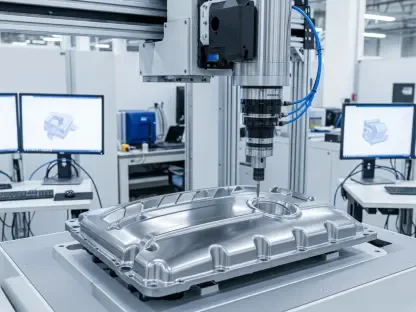
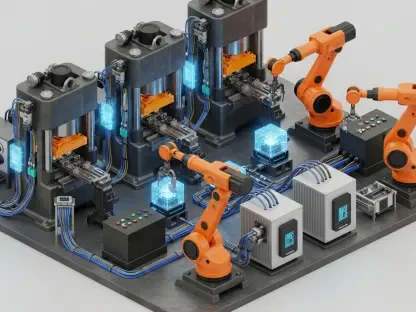
Imagine a world where airplane parts are lighter yet stronger, electronic components flex with ease, and machine parts boast multifunctionality that seems straight out of science fiction. This isn’t a distant dream but a tangible reality being forged at Virginia Tech, thanks to a transformative $3.5 million, three-year grant from the National Science Foundation (NSF) under its Future Manufacturing Research program. A dedicated team of engineers and innovators is redefining the boundaries of additive manufacturing by harnessing robotic arms for a groundbreaking 3D printing technique. Unlike traditional methods that stack flat layers in a linear fashion, this approach weaves composite materials in multiple directions, creating products that mirror the resilience of natural structures like wood grain. The potential is staggering—materials nearly ten times stronger than conventional 3D-printed items. This initiative isn’t just about technology; it’s about reshaping the future of industry with smarter, more sustainable solutions that could touch every corner of modern life.
Revolutionizing Additive Manufacturing with Robotics
At the heart of this project lies a radical shift in how 3D printing is approached. Traditional additive manufacturing builds objects layer by layer in a predictable, flat pattern, often limiting the strength and adaptability of the final product. The Virginia Tech team, however, is turning that concept on its head by employing robotic arms to print composite materials in dynamic, multidirectional paths. This method allows the materials to bend and curve, anticipating stresses in ways that mimic nature’s own designs. The result is a leap in durability and functionality, paving the way for components that can withstand greater forces while maintaining a lighter profile. It’s a game-changer for industries like aerospace, where weight reduction without sacrificing strength is a constant pursuit. Beyond raw power, the technique promises versatility, opening doors to innovations that could redefine product design across multiple sectors with efficiency at the forefront.
Moreover, the implications of this technology extend far beyond a single application. Consider the possibility of flexible electronics that conform to unique shapes or machine parts that integrate multiple functions into a single, seamless unit. This isn’t merely an incremental improvement but a bold reimagining of what manufactured goods can be. The robotic 3D printing method enhances material properties to such an extent that it challenges long-standing constraints in engineering. Supported by the substantial NSF grant, this research positions Virginia Tech as a leader in the race to modernize manufacturing. The early results are already generating buzz among industry experts, hinting at a future where limitations of strength and form are relics of the past. As this technology matures, it could inspire entirely new categories of products, fundamentally altering how designers and engineers approach their craft with newfound freedom.
A Collaborative Powerhouse Driving Innovation
What makes this endeavor truly remarkable is the collaborative spirit fueling it. Within Virginia Tech’s Department of Mechanical Engineering, a diverse team of experts has come together, each bringing specialized knowledge to the table. From Pinar Acar’s work in data-driven modeling and machine learning to optimize material properties, to Michael Bartlett’s expertise in engineered materials, the project thrives on interdisciplinary synergy. Erik Komendera, with a background at NASA, pushes the boundaries of robotic innovation, while Christopher Williams, director of the Design, Research, and Education for Additive Manufacturing (DREAMS) Lab, anchors the team with years of experience in 3D printing advancements. This fusion of skills underscores a critical truth: no single mind or discipline can tackle the complexities of next-generation manufacturing alone. Together, they’re building a foundation for progress that’s as robust as the materials they’re creating.
Equally vital to this effort is the emphasis on human connection and shared goals. Beyond the technical prowess, the team recognizes that innovation must be a collective journey. Lisa McNair, for instance, focuses on workforce training and educational outreach, ensuring that the skills needed to implement these advancements are cultivated early. This holistic approach sets the project apart, blending cutting-edge research with a commitment to real-world impact. The NSF’s decision to award this grant—one of only seven under its Future Manufacturing Research program—signals national recognition of the team’s potential to redefine industrial capabilities. By pooling expertise in robotics, materials science, and design optimization, the group is not just solving today’s challenges but anticipating tomorrow’s needs. Their united vision is a powerful reminder of what can be achieved when brilliant minds work in harmony toward a transformative goal.
Building the Workforce of Tomorrow
Innovation in technology means little without the people to bring it to life, and this project places equal weight on preparing the next generation of manufacturers. Lisa McNair’s role is pivotal in weaving a “manufacturing spine” into the College of Engineering’s curriculum at Virginia Tech. This initiative isn’t just about tweaking existing courses but fundamentally reshaping how students engage with the field, embedding the latest advancements in robotic 3D printing into their learning. Beyond the university, outreach programs targeting K-12 students aim to spark early interest in these cutting-edge methods. The goal is clear: create a pipeline of talent equipped to handle the tools and concepts that will dominate future industries. By addressing workforce readiness head-on, the project ensures that technological leaps don’t outpace the human capacity to implement them, striking a balance between progress and practicality.
Furthermore, the focus on education extends to assessing how these new manufacturing techniques influence job roles and skill requirements. It’s not enough to develop stronger, smarter materials if the workforce isn’t prepared to integrate them into everyday production. Through careful evaluation and targeted training, the team is laying the groundwork for a seamless transition into a new era of industry. This forward-thinking approach mitigates the risk of a skills gap, which often hampers the adoption of emerging technologies. Partnerships with educational institutions and community programs amplify the reach of these efforts, ensuring broad access to knowledge. As industries begin to adopt robotic 3D printing on a larger scale, having a ready and capable workforce will be the linchpin of success. This dual focus on innovation and education paints a comprehensive picture of sustainable progress, where technology and talent evolve hand in hand.
Shaping the Future of Industrial Evolution
Looking back, the strides made by Virginia Tech with the backing of the NSF grant marked a turning point in additive manufacturing. The integration of robotic arms to craft composite materials with unprecedented strength and flexibility set a new benchmark for what was possible. Industries once bound by the limitations of traditional 3D printing found inspiration in products that were not only tougher but also more adaptable to complex demands. Reflecting on the collaborative efforts of a multidisciplinary team, it became evident that their combined expertise was the catalyst for this breakthrough. Their work underscored the value of uniting diverse perspectives to solve intricate challenges, leaving a lasting imprint on the field.
Moving forward, the path was clear: continued investment in both technology and education would be essential to sustain momentum. Stakeholders across sectors were encouraged to explore partnerships that could scale these innovations, while educational institutions needed to prioritize curricula that embraced such advancements. The potential for lighter aircraft, more dynamic electronics, and versatile machinery awaited those ready to adopt this technology. As the manufacturing landscape evolved, the lessons from this initiative—collaboration, foresight, and skill-building—offered a roadmap for others to follow, ensuring that the legacy of this pioneering effort endured in shaping a smarter, stronger industrial future.