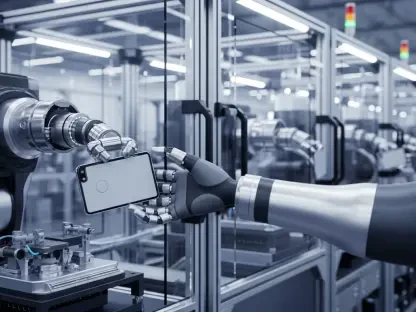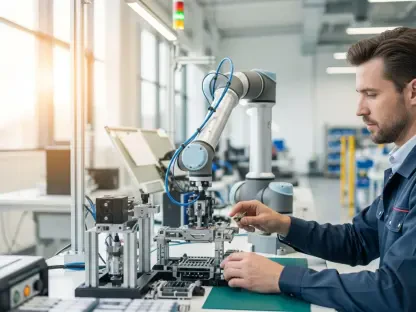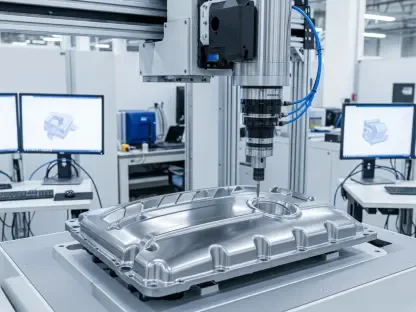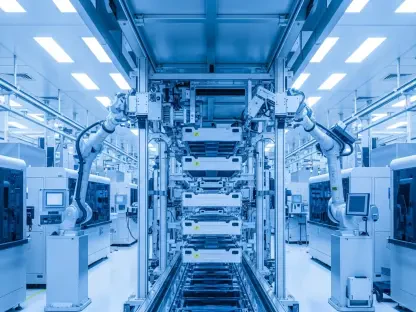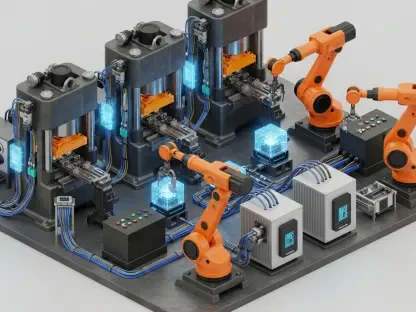

The very foundation of industrial production is undergoing a profound and irreversible transformation, shifting from the traditional, siloed factory floor to a hyper-connected, intelligent ecosystem where digital and physical worlds converge. This evolution, widely known as Industry 4.0 or smart manufacturing, represents a paradigm shift where advanced technologies like the Internet of Things (IoT), artificial intelligence (AI), and real-time analytics are deeply embedded into every facet of the manufacturing process. The goal is to create a seamless flow of information that connects machines, robots, and assembly lines through sophisticated industrial networks and cloud platforms. By bridging the gap between physical production and digital intelligence, manufacturers are gaining unprecedented control over their operations. This new model allows for real-time monitoring, predictive capabilities, and automated adjustments, enabling companies to enhance operational efficiency, minimize waste, and respond with remarkable agility to the volatile demands of the modern global market and unforeseen disruptions in the supply chain.
The Scale of the Market Expansion
The global smart manufacturing market is not just growing; it is undergoing an explosive expansion that underscores a fundamental industry-wide shift, with projections indicating a surge from a valuation of USD 292.7 billion in 2023 to an astonishing USD 1,021.5 billion by 2032. This remarkable ascent, advancing at a compound annual growth rate (CAGR) of 14.9%, reflects the accelerating and widespread adoption of intelligent factory solutions. A detailed analysis of this burgeoning market reveals that the software component stands as the undisputed leader, commanding a substantial 48.2% share. This dominance highlights the indispensable role of software as the central nervous system of the smart factory, orchestrating everything from complex data analytics and IoT platform integration to process simulation and real-time operational optimization. Without this powerful software backbone, the hardware and machinery of Industry 4.0 would lack the intelligence and connectivity needed to function as a cohesive system, making it the most critical investment area for enterprises.
Further dissection of the market structure reveals distinct leadership across different segments, painting a clear picture of where innovation is being most aggressively pursued. Within the technology domain, discrete control systems maintain a foundational position with a 21.8% market share, proving essential for the precise automation required in environments producing individual products. In terms of end-use, the automotive sector is the preeminent adopter, accounting for 23.6% of the market. This leadership is directly fueled by the industry’s complex challenges, such as the intricate manufacturing processes for electric vehicles (EVs), the stringent need for high-precision components, and the management of vast, globally distributed supply chains. Geographically, the Asia Pacific region commands the largest market share at 35.8%. This dominance is driven by the region’s status as a global manufacturing powerhouse, where industrial hubs in China, Japan, and South Korea are making substantial investments in smart technologies to secure their competitive advantage on the world stage.
Core Drivers and Shifting Demand Dynamics
The relentless momentum behind the smart manufacturing boom is propelled by a convergence of powerful economic pressures and operational imperatives. A primary catalyst is the persistent and urgent need for manufacturers to elevate productivity and operational efficiency, a challenge exacerbated by the dual pressures of rising labor costs and a deepening shortage of skilled workers. Smart technologies provide a direct and effective solution by automating repetitive, labor-intensive tasks and intelligently optimizing complex workflows, thereby freeing human workers to focus on higher-value activities. Concurrently, there is an escalating demand for companies to operate with greater environmental responsibility. This includes minimizing energy consumption, reducing material waste, and lowering production errors. Advanced systems offering real-time monitoring and automated quality control are instrumental in achieving these critical sustainability and cost-saving objectives, making them not just a competitive advantage but a corporate necessity in an increasingly eco-conscious world.
The demand for these transformative solutions is particularly acute among large and mid-sized manufacturing enterprises that operate complex, multi-stage production lines where the stakes are highest. For these organizations, the staggering costs associated with unplanned equipment downtime, quality-related defects, and systemic operational inefficiencies make the return on investment in smart technologies not just attractive but compelling. They are aggressively investing in a suite of technologies, including connected equipment, Manufacturing Execution Systems (MES), industrial IoT platforms, and advanced analytics, to achieve comprehensive, real-time visibility and granular control over their entire operational landscape. At the same time, demand is surging among smaller manufacturers. This segment is capitalizing on the growing availability of modular, scalable, and often cloud-based solutions, which democratize access to smart technology. This allows for a more accessible, phased adoption approach, where smaller players can start with foundational monitoring and gradually scale up to more sophisticated automation and intelligence.
Impactful Technologies and Their Quantifiable Benefits
The abstract promise of smart manufacturing is firmly grounded in tangible, quantifiable benefits demonstrated across a spectrum of advanced technologies. The integration of the Internet of Things (IoT) for real-time monitoring, for instance, is set to become ubiquitous, with an expected adoption rate of 70% among manufacturers by 2025. This pervasive connectivity provides an unprecedented level of insight into production processes. One of its most impactful applications, predictive maintenance, leverages data from IoT sensors to anticipate equipment failures before they occur, a capability that can slash equipment downtime by as much as 50% while simultaneously reducing associated maintenance costs by 40%. In parallel, artificial intelligence (AI) is revolutionizing quality assurance. AI-driven visual inspection systems can identify microscopic defects with a precision far exceeding human capabilities, resulting in a reduction of product defect rates by approximately 30% and leading to significant improvements in both product quality and customer satisfaction.
The benefits extend well beyond maintenance and quality control, touching every aspect of the modern factory. Automation and robotics continue to be a cornerstone of this transformation, with around 60% of manufacturers already deploying them to automate key processes, leading to a direct productivity increase of about 25%. Another game-changing technology, the digital twin, is also gaining significant traction. These virtual replicas of physical assets and processes are projected to be adopted by 70% of manufacturers by 2030. By enabling risk-free simulation and optimization in a virtual environment, digital twins help reduce product development costs by an estimated 15%. Furthermore, smart manufacturing inherently promotes sustainability. By meticulously optimizing the use of resources and energy, these initiatives can lower overall operational costs by a significant 20%. This focus on efficiency is also shaping business strategies, with approximately 70% of manufacturers now citing sustainability as a critical factor in their outsourcing and supply chain decisions.
Practical Applications and Competitive Moves
On the factory floor, the principles of smart manufacturing are being translated into a host of practical applications that solve long-standing industrial challenges. Predictive maintenance systems, for example, continuously monitor equipment health by analyzing data from sensors that track vibration, temperature, and other key operational parameters. This allows maintenance to be scheduled based on actual need rather than a rigid calendar, effectively preventing costly unplanned downtime and extending the lifespan of critical assets. Similarly, real-time data analytics are deployed to scrutinize production line performance, identifying bottlenecks, idle periods, and other hidden inefficiencies. This enables process parameters to be adjusted dynamically—sometimes automatically—to maximize throughput, reduce material waste, and ensure unwavering product quality. Digital twin implementations are also becoming increasingly common, where manufacturers create precise virtual models of machines or entire production lines to test changes and upgrades without disrupting physical operations.
This rapidly evolving landscape is shaped by a competitive field of established industrial automation giants and leading technology corporations. Key players such as ABB Ltd., Siemens AG, General Electric, Rockwell Automation Inc., and Schneider Electric are at the forefront, continually refining their portfolios to solidify their market leadership. These companies are not just selling products; they are providing integrated ecosystems of hardware, software, and services that enable digital transformation. Recent strategic moves underscore this trend. For example, in March 2025, Siemens AG expanded its global footprint by opening a new, state-of-the-art production facility dedicated to digital factory technologies and industrial AI. Similarly, in October 2025, ABB Ltd. sharpened its smart manufacturing strategy by heavily investing in the enhancement of its automation software and digital control systems, demonstrating a clear focus on the intelligent core of the modern factory and its commitment to driving the next wave of industrial innovation.
The Reshaped Future of Production
The ascent of smart manufacturing has fundamentally reshaped industrial production, establishing a new benchmark for efficiency, agility, and quality. By integrating intelligent, connected technologies into the factory ecosystem, manufacturers unlocked significant improvements in operational performance, achieving greater cost-effectiveness and superior product consistency. The market’s expansion was overwhelmingly driven by advancements in software and the rigorous demands of the automotive industry, while the Asia Pacific region solidified its position as the central hub for technological adoption and innovation. Although challenges related to high initial implementation costs and workforce adaptation were significant hurdles, the undeniable long-term advantages—including enhanced competitiveness, greater supply chain resilience, and the ability to adapt to market volatility—ensured that the move toward smart manufacturing systems continued its powerful upward trajectory. This evolution has met the escalating global demand for faster, more sustainable, and superior production methods.