
Beyond the Assembly Line: Hyundai’s Vision for a Robotic Future
Hyundai Motor Group is embarking on one of the most ambitious industrial transformations of our time, moving far beyond its identity as a traditional automaker. The company is laying the groundwork for a future where advanced, AI-powered humanoid robots work alongside humans, not just on the factory floor but across its entire operational ecosystem. This initiative, centered on the sophisticated Atlas robot developed by its subsidiary Boston Dynamics, represents a fundamental reimagining of manufacturing, logistics, and safety. This article explores Hyundai’s multi-faceted strategy, examining the technological pillars, strategic partnerships, and innovative business models designed to position the company as a leader in the next generation of industrial automation and redefine the very nature of work.
From Carmaker to Robotics Pioneer: The Strategic Shift
Hyundai’s pivot toward robotics is not a sudden development but the culmination of a long-term strategic evolution. For years, the company has been transitioning from a pure car manufacturer to a “smart mobility solutions provider,” a vision that encompasses everything from electric vehicles to urban air mobility. The watershed moment in this journey was its 2021 acquisition of a majority stake in Boston Dynamics, the world-renowned robotics firm. This move signaled a clear intention to integrate cutting-edge robotics into its core business. In the broader context of Industry 4.0, where automation, data exchange, and AI are paramount, Hyundai’s investment is a strategic response to the need for more flexible, resilient, and efficient global supply chains, ensuring its competitiveness in a rapidly changing industrial landscape.
Executing the Vision: The Pillars of Hyundai’s Robotics Strategy
The Atlas Rollout: A Cautious Yet Ambitious Timeline
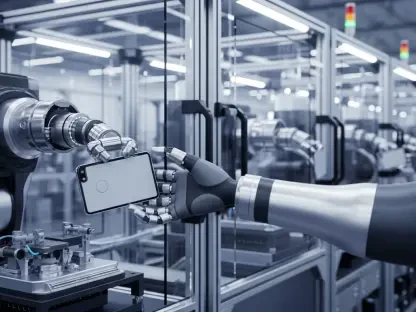
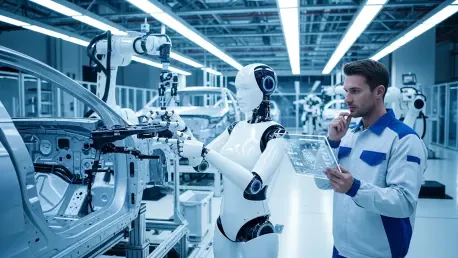
Hyundai’s integration plan for its humanoid workforce is methodical and phased, prioritizing safety and proven performance. The rollout is set to begin in 2028, with the Atlas robot initially assigned tasks like parts sequencing—a critical but manageable function where its precision can deliver immediate quality and efficiency benefits. By 2030, the company plans to expand Atlas’s role to more complex and physically demanding functions, including component assembly and tasks involving repetitive motions or heavy loads that pose ergonomic risks to human workers. The robot is uniquely suited for this work, boasting 56 degrees of freedom, human-scale hands with advanced tactile sensing, and the strength to lift objects up to 50 kg (110 lbs), making it a versatile and powerful addition to the factory floor.
Building the Ecosystem: Strategic Partnerships and Internal Synergy
A standalone robot, no matter how advanced, is not enough. Hyundai’s strategy rests on building a comprehensive “AI Robotics Value Chain” that combines internal expertise with world-class partnerships. A cornerstone of this ecosystem is the collaboration between Boston Dynamics and Google DeepMind, a partnership designed to fuse sophisticated hardware with cutting-edge AI models, accelerating the robot’s learning and problem-solving capabilities. Furthermore, the entire Hyundai Motor Group, including Kia and Hyundai Mobis, will leverage NVIDIA’s powerful AI infrastructure and simulation platforms for virtual robot training and development. This external support is matched by internal synergy, with Hyundai Mobis developing high-performance components and Hyundai Glovis optimizing logistics, creating a self-reinforcing system to drive innovation.
Beyond Selling Robots: Embracing the Service Model
Hyundai is looking beyond the traditional model of one-time hardware sales and toward a more flexible and scalable Robotics-as-a-Service (RaaS) business model. This approach offers robotics solutions through ongoing subscription plans, lowering the barrier to entry for businesses and making advanced automation more accessible. Hyundai plans to leverage its formidable manufacturing expertise to mass-produce AI-powered robots, aiming for a production system capable of delivering 30,000 units annually by 2028. This model has already been validated by Boston Dynamics’ existing product lines. Its quadruped robot, Spot, is actively used for safety monitoring and data collection in over 40 countries, while its warehouse robot, Stretch, has already moved over 20 million boxes for logistics giants like DHL, Nestlé, and Maersk, proving the market’s appetite for service-based robotics.
Redefining the Factory Floor: What’s Next for Industrial Automation?
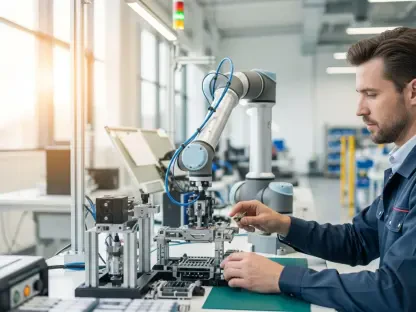
Hyundai’s initiative is poised to send ripples across the entire manufacturing sector, accelerating the shift toward truly intelligent automation. This move signals a new era where human-robot collaboration goes beyond simple “cobots” to a more integrated partnership, with humanoid robots handling strenuous or hazardous tasks, freeing human workers to focus on higher-value problem-solving and oversight. As Hyundai proves the viability of this model, competitors will face increasing pressure to adopt similar technologies to maintain efficiency and safety standards. This could trigger a global race to develop and deploy humanoid robots, fundamentally altering the economics of manufacturing and setting a new benchmark for the “factory of the future.”
Lessons from the Blueprint: Actionable Insights for a Robotic Age
The strategy unfolding at Hyundai offers several major takeaways for businesses and professionals. First, it underscores that successful automation is not just about technology but about building a holistic ecosystem of partnerships, internal capabilities, and innovative business models. Second, the phased, safety-first approach to integration provides a practical blueprint for deploying disruptive technology in high-stakes environments. For business leaders, this serves as a case study in long-term strategic investment, while for professionals, it highlights the urgent need to develop skills in robotics, AI, and data science. The key recommendation for any organization is to begin exploring how flexible, AI-driven automation can solve core challenges, starting with small, measurable pilot programs.
The Dawn of a New Industrial Era
Hyundai Motor Group’s plan for its robotic workforce is more than an operational upgrade; it is a bold declaration of intent to lead a new industrial revolution. By methodically integrating Atlas, forging powerful strategic alliances, and embracing a service-oriented business model, the company is not just enhancing its own production lines but also creating the blueprint for the next generation of manufacturing. This convergence of advanced robotics and artificial intelligence marks a pivotal moment, promising a future where human ingenuity is amplified by machine strength and precision. In the long term, this initiative remains significant because it challenges us to rethink the relationship between humans and technology in the workplace, heralding an era where collaboration, not replacement, drives progress.