The global manufacturing landscape is undergoing a monumental transformation, with the Industry 5.0 market projected to skyrocket from its current valuation of $71.74 billion to an astonishing $310.9 billion by 2029, fueled by an aggressive compound annual growth rate of nearly 34%. This seismic shift represents more than a simple technological upgrade; it signals a fundamental reimagining of the industrial paradigm. Moving beyond the pure automation focus of Industry 4.0, this new era champions a deeply integrated, human-centric approach where the ingenuity of people is augmented, not replaced, by the precision and power of machines. The core of this revolution lies in creating manufacturing environments that are not only hyper-efficient but also profoundly sustainable and resilient. This rapid expansion is not the result of a single innovation but rather a powerful confluence of advanced technologies, evolving consumer demands, and strategic business imperatives aimed at fostering a more collaborative and intelligent industrial ecosystem for the future.
The Technological Vanguard
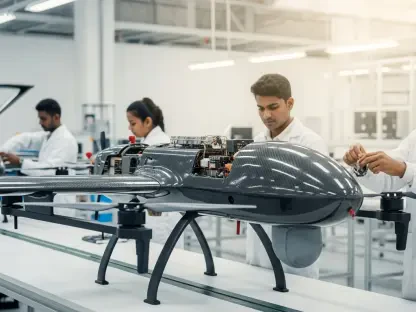
At the heart of the Industry 5.0 surge is the sophisticated integration of artificial intelligence, advanced robotics, and a new generation of collaborative robots, or “cobots.” These technologies are fundamentally altering the factory floor by creating a symbiotic relationship between human workers and automated systems. Cobots are designed to work alongside employees, taking over repetitive, strenuous, or dangerous tasks, thereby freeing up human capital to focus on more complex, value-added activities like problem-solving, quality control, and innovation. This collaboration enhances both productivity and precision while significantly reducing operational costs and workplace injuries. The tangible impact of this trend is already evident, with industrial robot installations within U.S. manufacturing facilities seeing a notable 12% increase last year alone. This is not a push toward a human-less factory but a strategic move to empower the human workforce with intelligent tools, leading to more efficient and dynamic production cycles.
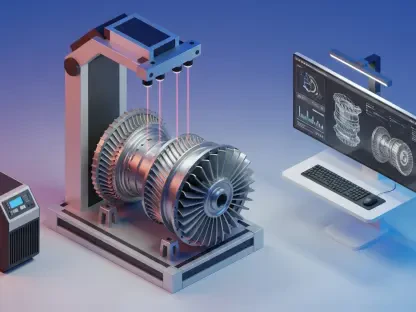
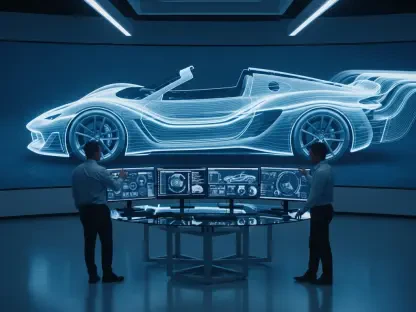
The rise of smart manufacturing, underpinned by a suite of enabling digital technologies, serves as another critical pillar supporting the Industry 5.0 boom. The Internet of Things (IoT) has become the central nervous system of the modern factory, with interconnected sensors gathering vast amounts of real-time data from every point in the production process. This data feeds into sophisticated digital twin models—virtual replicas of physical assets and systems—that allow companies to simulate, analyze, and predict performance without disrupting live operations. The acquisition by Clockworks Analytics to bolster its digital twin visualization capabilities highlights the immense value firms now place on this technology. Furthermore, companies like UnifyTwin are launching comprehensive app suites focused on leveraging this data for enhanced sustainability and operational intelligence. By harnessing real-time analytics, manufacturers can optimize supply chains, implement predictive maintenance, and make data-driven decisions that dramatically improve efficiency and agility.
Strategic Imperatives and Market Forces
Beyond technological advancements, a powerful push towards sustainable and responsible manufacturing practices is accelerating the adoption of Industry 5.0 principles. As global pressure mounts from consumers, investors, and regulators, companies are increasingly prioritizing environmental, social, and governance (ESG) goals. The human-centric and resource-efficient nature of Industry 5.0 provides a clear roadmap for achieving these objectives. By optimizing energy consumption, reducing material waste, and creating safer working conditions, intelligent industrial systems directly contribute to a more sustainable operational footprint. Favorable government policies and incentives aimed at promoting green manufacturing further encourage businesses to invest in these next-generation technologies. This strategic alignment ensures that the pursuit of operational excellence is intrinsically linked with corporate responsibility, making the transition not just a competitive advantage but a business necessity in the modern economy.
Simultaneously, a significant shift in consumer behavior is creating a powerful market-pull for the capabilities that Industry 5.0 delivers. The era of one-size-fits-all mass production is giving way to a demand for personalized and customized products, requiring a level of manufacturing flexibility that traditional systems cannot provide. Industry 5.0’s agile and data-driven production lines are perfectly suited to handle high-mix, low-volume orders efficiently, allowing companies to meet unique customer specifications without sacrificing speed or cost-effectiveness. This trend is not confined to a single geographic area; it is a global phenomenon. The Asia-Pacific region, in particular, has emerged as a major hub of growth and adoption, driven by its massive manufacturing base and strong governmental support for technological innovation. This widespread, international embrace underscores that the move toward human-machine collaboration is a universal strategy for staying competitive in a rapidly evolving global marketplace.
Forging a Collaborative Future
The meteoric rise of the Industry 5.0 paradigm was ultimately propelled by a decisive shift from viewing technology as a replacement for human labor to seeing it as a powerful collaborator. The convergence of intelligent automation, data-driven insights, and a renewed focus on sustainability and human well-being created a compelling business case that manufacturers could not ignore. This evolution was not merely an upgrade of factory hardware; it was a fundamental redefinition of value creation itself. The integration of cobots, IoT, and digital twins fostered an environment where human creativity and critical thinking were amplified by machine precision and analytical power. This symbiotic relationship led to unprecedented gains in efficiency, resilience, and adaptability, allowing industries to meet the complex demands of a new era. The true legacy of this boom was the creation of a more sustainable and human-centric industrial model that promised not just economic growth, but a more resilient and collaborative future.