
The global manufacturing landscape is undergoing a profound transformation that is rapidly moving far beyond the traditional image of noisy, grease-stained machine shops. At the very heart of this high-tech evolution is Computer Numerical Control (CNC) manufacturing, which is no longer just about cutting metal but about creating a highly integrated, data-driven, and automated ecosystem. This paradigm shift represents a fundamental rethinking of how precision components are conceived, produced, and delivered to a world that demands ever-increasing complexity and quality. Propelled by relentless industrial demand for automation and a wave of rapid technological progress, the sector is experiencing a period of robust growth that is actively reshaping global production lines, reconfiguring international supply chains, and setting new benchmarks for industrial efficiency and innovation. This is not merely an upgrade of existing tools; it is the dawn of a new industrial era defined by intelligent machinery and interconnected systems.
The Global Market Surge and Production Pivot
The engine of this revolution is a powerful and consistently expanding global market that shows no signs of slowing down. Valued at $78.4 billion in 2024 and with strong forecasts for continued expansion through 2030, the CNC machine sector is fueled by an insatiable appetite for high-precision components from critical industries such as automotive, aerospace, and electronics. This immense demand is accelerating a worldwide strategic shift toward automated manufacturing, as steadily rising labor costs and the uncompromising need for consistent quality make automation less of a luxury and more of an operational necessity. As a direct result, manufacturing facilities, especially across key production hubs in Asia, have reported substantial output increases of 15-20% over the last year alone, a clear and tangible indicator of the sector’s incredible vitality and its central role in modern industrial production.
This unprecedented boom has also triggered a decisive geographic pivot in the landscape of CNC machine production. Over the last decade, China has firmly cemented its position as the world’s undisputed leader, now accounting for approximately 35% of global output, with traditional industrial mainstays Japan and Germany following at 18% and 12% respectively. This concentration is not merely a function of manufacturing scale but also a significant strategic advantage, as production centers in regions like the Pearl River Delta benefit from close proximity to essential raw material and critical component supply chains. However, this surge in demand has placed considerable strain on the system, significantly extending the average lead times for acquiring new equipment from a manageable 8-10 weeks just a few years ago to a more challenging 14-16 weeks today. In response, manufacturers have been forced to adopt proactive risk mitigation strategies, such as increasing inventory levels and diversifying supplier relationships to safeguard production continuity.
Advanced Machinery and Tooling Innovation
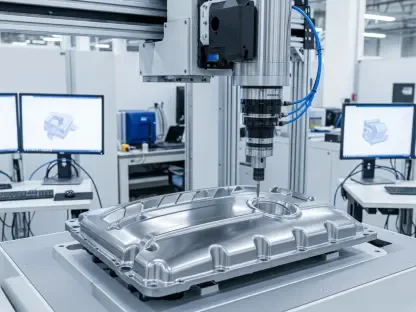
At the technological core of this manufacturing revolution is the rapidly increasing sophistication of the machines and tooling themselves. In order to meet escalating customer demands for ever-more intricate and complex part geometries, the industry has widely embraced and integrated five-axis machining centers. Once considered highly specialized equipment reserved for niche applications, these remarkably versatile machines now constitute a significant 28% of all new CNC installations. This mainstream adoption directly empowers manufacturers in precision-critical sectors like medical device fabrication and aerospace engineering to produce complex, multi-faceted components with a level of accuracy and efficiency that was previously unimaginable. This trend reflects a broader and more fundamental move toward higher capability, greater operational flexibility, and unwavering precision across the entire manufacturing floor.
This remarkable evolution in machine capability is being matched by equally impressive and parallel innovation in the field of CNC tooling and consumables. The market for essential components, such as Carbide End Mill products, has grown into a multi-billion-dollar industry in its own right, with estimated annual global sales of $3.2 billion, sustained by the constant need for tool replacement and performance upgrades. Owing to significant advances in carbide formulations and the development of cutting-edge coating technologies, the average service life of modern cutting tools has seen a remarkable improvement of 30-40% compared to those available just five years prior. This leap in longevity directly translates into reduced operational costs and minimized machine downtime. Furthermore, manufacturer specifications for these tools have become exceptionally precise, with tolerances now routinely measured in micrometers and runout specifications held to within an exacting 0.005mm, enabling the flawless surface finishes required by today’s most demanding applications.
The Rise of Smart Connected Factories
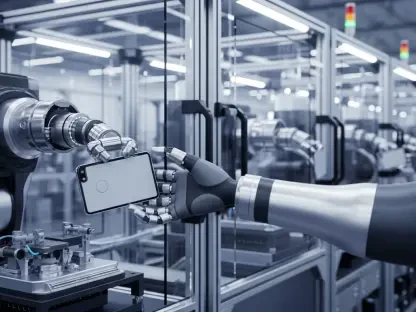
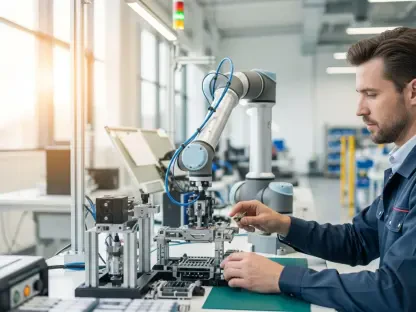
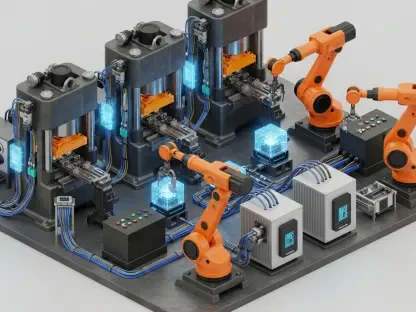
A defining characteristic of the modern CNC landscape is the deep and pervasive integration of automation systems with advanced software, a combination that has transitioned from a niche feature to a standard practice in contemporary manufacturing. Today, it is estimated that approximately 45% of new CNC machine installations valued over $100,000 are delivered with sophisticated, built-in automation systems. These systems range from tireless robotic arms that load and unload parts around the clock to automated tool changers that dramatically slash setup times and in-process measurement probes that provide critical real-time quality feedback. This automation extends even to highly specialized processes, such as the high-precision application of adhesives using Glue Dispenser systems, which are seamlessly coordinated with CNC positioning platforms to achieve an accuracy of within 0.1mm, a critical capability in the fast-growing electronics assembly market.
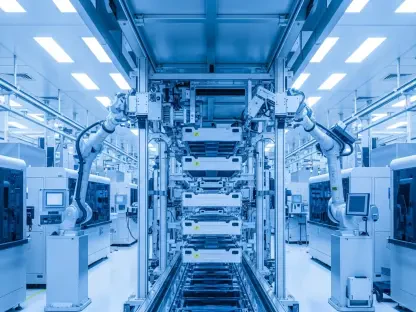
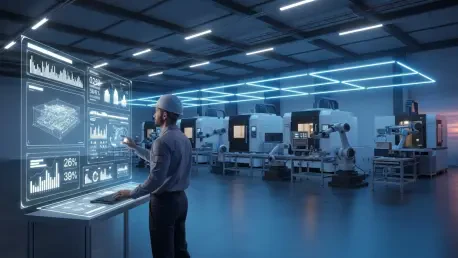
This powerful hardware automation, however, is only made possible by equally significant and critical advancements in software integration. Modern CNC control systems are no longer the isolated, standalone units of the past; they are now fully networked and communicate directly with enterprise resource planning (ERP) systems. This vital connectivity creates an unprecedented level of operational transparency and control, enabling real-time production monitoring, fully automated scheduling, and the dynamic allocation of resources across the factory floor. The tangible benefit of this smart integration is a dramatic improvement in overall efficiency. While the industry average for machine utilization currently hovers around 68%, well-managed and digitally connected facilities are consistently achieving utilization rates of 85% or higher, thereby maximizing their return on substantial capital investments and gaining a significant competitive edge.
Redefining Operational Excellence
As the CNC manufacturing industry has matured, its core priorities have evolved far beyond simple production speed and volume. Quality control, for instance, has advanced in lockstep with machining capabilities, with high-precision Coordinate Measuring Machines (CMMs) and non-contact optical measurement systems becoming standard equipment for verifying parts with close tolerances. By deeply embedding Statistical Process Control (SPC) into daily operations, manufacturers can now collect and analyze vast amounts of data on hundreds of machine parameters, from cutting forces to spindle temperatures. This data enables sophisticated predictive maintenance programs and robust quality assurance protocols that can reduce scrap rates to below 1%, facilitating a crucial shift from sample-based inspection to 100% automated inspection for many critical components.
Simultaneously, the human element remains absolutely central to this revolution, although the roles and required skills are changing rapidly. The industry is currently grappling with a significant skilled labor shortage, as industry surveys indicate that 67% of machine shops report persistent difficulty in finding qualified CNC operators and programmers. This challenge has paradoxically become a powerful catalyst for technological innovation, accelerating the development of more user-friendly control interfaces and automated programming systems designed to lower the barrier to entry. In response, training programs have evolved dramatically, with immersive virtual reality (VR) simulation systems now being used to train new operators, a method that reduces initial training time by approximately 30% while significantly improving the retention of critical safety protocols. As a result, industry-wide certification programs have become more prevalent, providing a standardized and reliable benchmark for the highly skilled workforce of the future.
Forging the Future of Production
The technological transformation sweeping through the industry was supported by a robust economic framework. Global capital equipment spending in the sector was a testament to this, reaching $94 billion in 2024, with investments strategically allocated between expanding production capacity and replacing aging equipment. This commitment to modernization successfully lowered the average age of machines in use from 11.2 years in 2019 to 8.7 years today, ensuring the industry remained on the cutting edge of technology. Investment decisions were no longer driven solely by production speed; instead, a more holistic assessment that included energy efficiency, automation compatibility, and data integration capabilities heavily influenced purchasing, with advanced machines commanding price premiums of 15-25%. Financing models also adapted to this dynamic environment, with lease arrangements growing in popularity as companies sought to preserve capital while keeping pace with the rapid advancement of technology. This economic and technological momentum ultimately fostered the growth of powerful regional manufacturing ecosystems, which became critical hubs for innovation and supply chain efficiency.