
The year 2025 has unequivocally emerged as a landmark period for American manufacturing, defined not by a dramatic surge in hiring but by a profound and forward-looking commitment to capital investment that signals a collective, multi-billion-dollar bet on the future of domestic production. Across the nation, a confluence of stabilizing factors has created exceptionally fertile ground for this resurgence, as a newly settled political and labor landscape, the strategic necessity of bringing supply chains home, and the accelerating adoption of advanced technology have converged to unlock an unprecedented wave of expansion plans. The scale of this movement is breathtaking; from automotive giants and aerospace leaders to electronics titans and energy pioneers, companies are announcing multi-year investment strategies that will fundamentally reshape the country’s industrial capacity for years to come. This industrial renaissance is more than just a collection of corporate announcements; it represents a strategic realignment of American industry, driven by a clear-eyed assessment of global risks and a renewed confidence in the nation’s ability to innovate, build, and compete on the world stage.
The Macroeconomic Tailwinds: A Foundation of Stability
Political and Labor Certainty
With the conclusion of the presidential election cycle, a significant layer of uncertainty has been lifted from the economic landscape, providing manufacturers with a clearer outlook on future policies and interest rate trajectories. This newfound predictability is fostering a renewed willingness to commit to long-term, capital-intensive projects that were previously on hold. Companies can now engage in more confident strategic planning, knowing the broad strokes of the regulatory and economic environment they will be operating in for the next several years. This stability is a critical catalyst, transforming cautious optimism into actionable, multi-billion-dollar investment announcements. The ripple effect of this confidence is palpable, as it encourages not only large original equipment manufacturers (OEMs) but also their vast networks of suppliers to move forward with their own expansion and modernization plans, creating a self-reinforcing cycle of growth and investment across the entire industrial ecosystem.
The labor environment, which was characterized by high-profile strife and disruptive headlines in 2024, has calmed considerably, adding another crucial layer of stability. The successful negotiation of new, multi-year contracts has resolved major strikes at key industrial players, including aerospace supplier Pratt & Whitney and the Boeing Defense factory in St. Louis. This restoration of tranquility in labor relations provides the operational continuity essential for companies to green-light massive expansion plans, secure in the knowledge that production timelines will not be derailed by disputes. Reinforcing this theme, Bureau of Labor Statistics data shows that manufacturing employment held steady at approximately 12.7 million workers. This flat employment figure underscores a critical point: the 2025 boom is primarily a story of investment in productivity, advanced technology, and increased capacity, rather than a simple expansion of the workforce, signaling a strategic shift toward a more efficient and resilient industrial base.
The Strategic Imperative of Reshoring
The strategic shift toward domestic production, commonly known as “reshoring,” has decisively moved from a theoretical boardroom concept to a primary driver of tangible investment. The stark vulnerabilities in global supply chains, which were painfully exposed during the recent pandemic, have created a powerful and lasting incentive for companies to build more resilient and responsive operations closer to their end markets. This trend is explicitly cited by companies like Orbic Electronics, which is investing $110 million to move the production of its connected devices to New York. For countless other manufacturers, reshoring is the implicit logic behind their expansion plans, which are fundamentally aimed at mitigating the risks of international disruption, from geopolitical tensions to logistical bottlenecks. This is not merely a patriotic trend but a calculated business decision to de-risk operations and ensure a more secure and predictable supply of critical goods, justifying the significant upfront cost of building or expanding domestic facilities.
Beyond the push for supply chain resilience, the ongoing complexities and costs associated with international tariffs continue to propel manufacturers toward domestic alternatives. Building and sourcing within the United States has become an increasingly attractive and strategically sound way to navigate an unpredictable global trade environment. The ability to avoid volatile import duties and streamline logistics provides a significant competitive advantage. This financial and operational calculus is a powerful motivator behind the current wave of investment, as companies recognize that the long-term benefits of a stable, domestic manufacturing footprint can outweigh the initial capital expenditure. By investing in U.S. production, businesses are not only insulating themselves from trade policy whiplash but are also gaining greater control over their production costs, quality standards, and delivery times, making them more agile and competitive in a rapidly changing global market.
The Investment Titans: A Sector-by-Sector Breakdown
The Automotive Industry’s Electric Charge
The automotive sector is unequivocally at the forefront of the investment wave, with virtually every major OEM making monumental commitments to its U.S. manufacturing footprint. General Motors is investing a sweeping $4 billion over two years to upgrade facilities, Stellantis has unveiled a historic $13 billion expansion plan aimed at boosting production by 50%, Hyundai Motor Group has committed a staggering $21 billion from 2025 to 2028, and Toyota is adding nearly $1 billion to enhance its powertrain and hybrid-electric vehicle operations. This spending is heavily focused on navigating the industry’s seismic transition to electrification. While strategic investments are still being made to support next-generation gasoline engines, such as GM’s $888 million commitment to its Buffalo, New York, plant, the lion’s share of capital is directed at retooling plants and building new facilities for the production of Electric Vehicles (EVs) to meet surging consumer demand, which was further amplified by federal tax credits.
This electric charge is not limited to established industry giants. The EV startup scene remains a powerful force, contributing significantly to the expansion of the domestic manufacturing landscape and creating new industrial hubs. Rivian has begun construction on its massive $5 billion plant in Georgia, a project poised to become a cornerstone of the state’s burgeoning EV ecosystem. Meanwhile, Scout Motors is adding $300 million to its project in South Carolina, and Isuzu is building a new $280 million truck plant in the same state. This dual surge of investment—from legacy automakers retooling for the future and from agile newcomers building from the ground up—paints a vivid picture of an industry in transformation. Together, they are pouring tens of billions of dollars into creating a robust, vertically integrated, and technologically advanced domestic supply chain for the electric vehicles that will define the future of mobility.
Aerospace Takes Flight
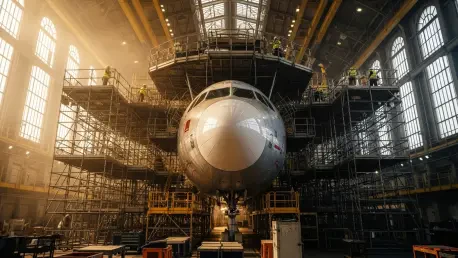
Responding to immense and sustained global demand for new aircraft, the U.S. aerospace industry is also undergoing a major expansion, with its two dominant players making significant investments. Boeing has initiated a $1 billion expansion of its North Charleston, South Carolina, facility to increase production of the 787 Dreamliner, a move that is expected to create 1,000 jobs and solidify the site’s role as a critical hub for wide-body jet manufacturing. In a parallel move, its chief rival, Airbus, has opened a new A320 assembly line at its factory in Mobile, Alabama. This expansion effectively doubles its U.S. production capacity for the popular single-aisle jet and also adds 1,000 jobs, signaling immense confidence in the American manufacturing ecosystem to support high-tech, high-stakes production for the global aviation market. These competing investments underscore a broader trend of localizing production to be closer to key markets and talent pools.
The aerospace supply chain is being fortified in tandem with these final assembly line expansions, reflecting a holistic strengthening of the entire sector. Engine manufacturer GE Aerospace is investing nearly $1 billion to increase capacity for its fuel-efficient CFM LEAP engines, which power many of the world’s most popular commercial jets. Similarly, Pratt & Whitney is expanding its Asheville, North Carolina, plant with a $285 million investment to produce advanced turbine airfoils, a critical component for modern jet engines. These investments ensure that the domestic supply chain can keep pace with the aggressive production ramp-ups planned by Boeing and Airbus. Furthermore, the sector’s growth is not limited to legacy giants; aerospace startups are also making significant moves, with companies like Otto Aviation investing over $430 million in a new factory, demonstrating that the investment boom encompasses both established industry leaders and disruptive innovators.
Electronics and Data Go Big
Investments in the domestic electronics sector are staggering in their scale, signaling a new era for high-tech American manufacturing and a concerted effort to onshore critical technology production. Apple’s announcement of a plan to invest more than $500 billion in the United States over the next four years, a figure that includes a new server factory and a doubling of its Advanced Manufacturing Fund, sets a remarkable precedent. Not to be outdone, IBM Corp. has revealed its own colossal $150 billion investment over five years, a strategic move designed to solidify its leadership in foundational technologies like mainframe and quantum computing. These are not merely factory expansions; they are transformative commitments aimed at creating entire ecosystems of innovation and production on U.S. soil. Adding to this trend, industrial automation leader Rockwell Automation has joined the “billion-dollar club,” planning a new greenfield manufacturing site as part of a larger $2 billion strategy to boost its domestic capacity.
This electronics manufacturing boom is inextricably linked to the explosive growth of the data-driven economy. The insatiable demand for computing power, driven by the expansion of artificial intelligence and cloud services, requires a massive physical infrastructure of servers, networking equipment, and data centers. Companies are investing heavily to build this backbone domestically. Jabil’s $500 million expansion is explicitly designed to support AI data centers, while Wiwynn’s $300 million Texas plant was motivated by a desire to avoid international tariffs and establish a secure supply chain for its server hardware customers. These investments demonstrate how the manufacturing resurgence is not just about traditional goods but is also about constructing the essential physical foundation of the digital world, ensuring that the hardware powering the next wave of technological innovation is built in America.
Powering the Nation: The Electrical Equipment Surge
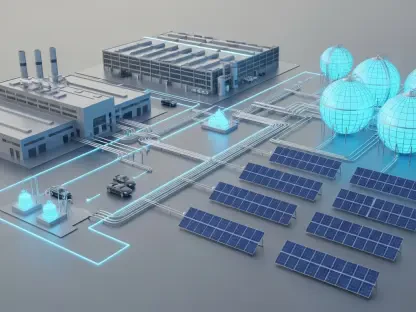
The broader energy transition and the insatiable power demands of data centers are fueling a parallel and equally impressive boom in the electrical equipment industry. Manufacturers are racing to expand their domestic capacity to produce the components needed for a modernized, electrified economy. First Solar Inc. stands out as a flagship example of this movement, opening a new $1.1 billion, 2.4 million-square-foot solar panel factory in Louisiana. This single facility will add 3.5 GW of annual production capacity to its already dominant U.S. footprint, showcasing the immense scale of investment being channeled into renewable energy manufacturing. This project and others like it are critical components of a national strategy to build a secure and resilient domestic supply chain for the clean energy technologies that will power the future.
This surge extends across the entire electrical ecosystem, with companies making major investments to produce everything from grid components to energy storage systems. Schneider Electric is expanding its facilities to produce switchgear specifically for the booming data center market, a critical niche that requires highly reliable power distribution hardware. In the energy storage sector, Eos Energy Enterprises is investing over $350 million to expand its zinc-based battery manufacturing in Pennsylvania, offering an alternative to lithium-ion technology. Meanwhile, industrial giants like ABB and GE Verona are investing hundreds of millions across their U.S. sites to boost production of components for data centers and the electrical grid, including transformers and generators. Together, these investments paint a comprehensive picture of a systemic industrial realignment aimed at building out the domestic capacity needed to support a modern, resilient, and electrified national infrastructure.
Health and Precision in Medical Devices
The medical device sector is also an active participant in the investment boom, with significant projects underway that will enhance the nation’s advanced healthcare manufacturing base. Notably, international life sciences companies are leading the charge, demonstrating the attractiveness of the U.S. market and its manufacturing environment for global leaders in a high-precision, highly regulated industry. The German company B. Braun is investing $20 million to expand its Pennsylvania plant, creating 200 jobs in the process. In an even larger commitment, Swiss manufacturer SHL Medical has opened a new $220 million autoinjector plant in North Charleston, South Carolina. This state-of-the-art facility underscores the trend of global firms establishing major production hubs in the United States to serve the North American market more effectively and mitigate supply chain risks.
Domestic and international players alike are pouring capital into high-tech medical manufacturing. Philips announced a substantial $150 million investment in its Pennsylvania and Minnesota facilities, which produce sophisticated ultrasound and image-guided therapy products. These investments are not just about adding capacity; they are about upgrading facilities with the latest automation and digital technologies to produce cutting-edge medical devices. This capital infusion is critical for enhancing the nation’s healthcare manufacturing infrastructure, ensuring a stable domestic supply of essential medical technologies that are vital for diagnosis and treatment. By expanding their U.S. footprint, these companies are also creating specialized, high-skill jobs and strengthening the country’s position as a global leader in medical innovation and production, ultimately contributing to better patient outcomes and a more resilient national healthcare system.
The Technology Engine: Automation and Advanced Machinery
The Data-Driven Proof
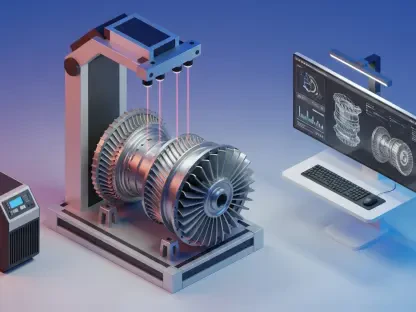
Hard data from leading industry associations provides concrete evidence that this investment boom is flowing directly into the acquisition of advanced manufacturing technology. According to AMT—The Association for Manufacturing Technology, new orders for metalworking machinery, a key indicator of factory retooling and expansion, totaled an impressive $3.93 billion through September 2025. This represents a robust 17.3% increase over the same period in 2024. A significant portion of this growth was driven by the automotive sector, which, after a lull, increased its orders by nearly 15% as OEMs began the complex process of retooling their production lines for new vehicle models, particularly EVs. This surge in machinery orders is a clear, quantifiable sign that manufacturers are not just planning for the future but are actively purchasing the capital equipment necessary to build the modern, efficient, and highly automated factories of tomorrow.
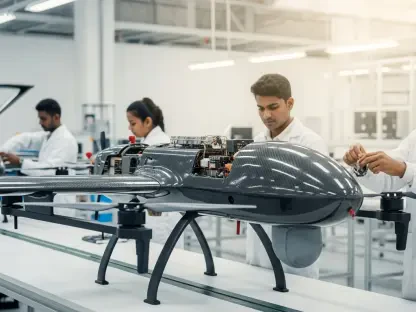
The robotics market shows equally strong growth, confirming the widespread adoption of automation as a core strategic priority. The Association for Advancing Automation (A3) reported that North American companies ordered 8,806 robots valued at $574 million in the third quarter of 2025 alone, an increase of 11.6% in units and 17.2% in revenue year-over-year. A particularly noteworthy trend within this data is the rising adoption of collaborative robots, or “cobots.” A3’s new reporting revealed that 4,259 cobots were ordered in the first three quarters of the year, highlighting a significant shift in automation strategy. Unlike traditional industrial robots that operate in caged-off areas, cobots are designed to work safely alongside human employees. Their growing popularity indicates a push for more flexible and human-centric automation on the factory floor, where technology is used to augment human skills and increase productivity in a more adaptable and scalable manner.
Views from the Factory Floor
For the automation system integrators on the front lines, who are tasked with designing and building the custom machinery for these new factories, 2025 was described as a “mixed bag” that reflects the complexities of these massive industrial projects. This nuanced reality shows that while the overall trend is overwhelmingly positive, the execution is not always linear. Some integrators, particularly those heavily involved in vehicle electrification projects, reported record revenue years as their OEM clients pushed aggressively to launch new EV models. In contrast, other suppliers, like Edgewater Automation, found the year more challenging due to capital spending delays from manufacturing clients who were fine-tuning their program launch timelines and investment schedules. This dichotomy illustrates the real-world friction involved in such a large-scale industrial transformation, where strategic plans meet operational realities.
Despite some of these project delays, the underlying sentiment among technology suppliers is exceptionally positive. Quoting activity, a key leading indicator of future business, is rising sharply across the board, signaling a strong pipeline of projects expected to receive the green light in 2026. Companies that provide a wide range of automation components and systems, from automated fastening and screwdriving systems to adhesive dispensers and leak testing equipment, see the powerful macro trends of reshoring and the launch of new electrical products as potent and durable drivers of demand. This optimism from the technology supply base provides strong validation for the manufacturing boom, indicating that the capital investments announced by large manufacturers are now translating into concrete orders for the machinery and systems that will bring these futuristic factories to life.
Overcoming Persistent Hurdles
This manufacturing boom is not without its challenges, and the industry continues to navigate a complex economic environment. Persistent tariffs on imported components, such as electric motors, sensors, and other sophisticated electronic parts, continue to create significant cost pressures and uncertainty for automation suppliers and their customers. These duties can unpredictably inflate project budgets and complicate cost-benefit analyses for new automation investments. In response, savvy system integrators are being forced to become more agile and resilient in their own operations, actively diversifying their supply chains to find alternative sources for critical components and engaging in proactive, transparent communication with customers about potential cost fluctuations. This demonstrates that while the overarching trend is one of growth, it is happening within a landscape that still requires careful navigation of global trade policies.
On a more positive note, the severe, pandemic-era supply chain disruptions that once crippled production schedules have largely subsided, leading to a much more predictable, if not perfect, operating environment. While lead times for certain highly specialized components, particularly in servo motors and advanced vision systems, can still be long, the situation has become far more manageable and transparent than it was just a few years ago. This increased predictability allows automation suppliers and their manufacturing clients to engage in better long-range project planning and risk management. The ability to forecast component delivery with greater accuracy is a critical factor that contributes to the overall stability fueling investment confidence. It allows complex, multi-stage factory build-outs to proceed with a much lower risk of being derailed by unexpected and prolonged parts shortages, further solidifying the foundation for sustained growth.
A Look Back at a Transformative Year
In retrospect, 2025 stood as a pivotal year for American industry, one that was decisively defined by a massive, sector-spanning commitment to long-term capital investment. This wave of spending, catalyzed by a more stable economic, political, and labor environment, laid a new foundation for domestic production. The strategic trends of reshoring and supply chain fortification matured from abstract concepts into concrete, multi-billion-dollar projects that began reshaping the nation’s industrial map. Throughout the year, the transition toward electrification proved to be a dominant industrial force, driving historic levels of investment not just in automotive assembly but across the entire energy and electrical equipment ecosystem. While the sector successfully navigated persistent challenges, including shifting production timelines and cost pressures from tariffs, the consensus was clear: the U.S. manufacturing sector embarked on a solid growth trajectory. The ambitious plans made in 2025 invested heavily in the capacity, technology, and resilience that have positioned the country for a new era of industrial strength and global competitiveness.