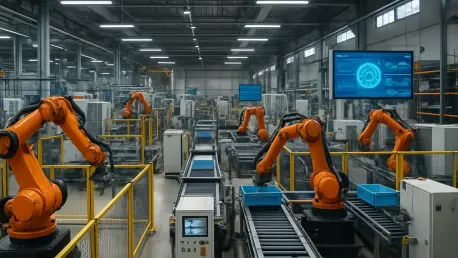

The modern industrial landscape is currently witnessing a tectonic shift as two German corporate giants, Siemens and SAP, vie for absolute dominance over the technological future of the smart factory. This intense competition, which is frequently characterized as a fundamental battle between Operational Technology and Information Technology, represents a pivotal moment in the ongoing evolution of Industry 4.0. At the very core of this multi-billion-dollar conflict lies the question of how advanced artificial intelligence, specifically specialized Industrial Large Language Models and the Industrial Internet of Things, will be integrated into the complex manufacturing processes of the current era. While both corporations remain absolutely essential to the operation of a modern enterprise, their divergent strategies, technological priorities, and visions for the future of production are increasingly at odds. This creates a challenging environment for industrial operators who must decide where to place their long-term trust as the boundary between hardware and software continues to evaporate in real-time.
The Technological Nervous System: Mapping the Smart Factory
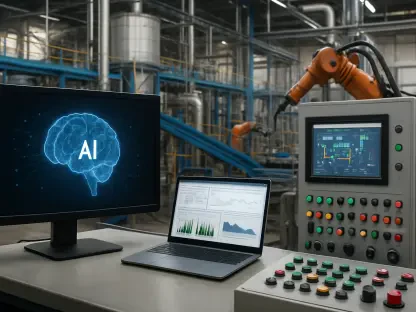
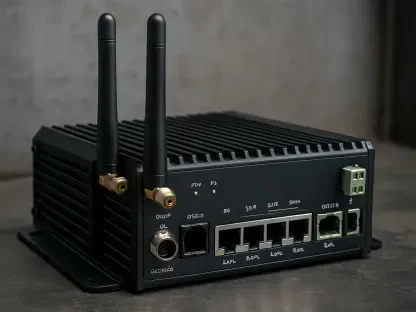
The digital framework of a modern manufacturing facility functions much like a biological nervous system, where the Industrial Internet of Things provides the essential sensory input by connecting every physical machine. This massive network creates a continuous, high-speed stream of data that must be managed with extreme precision to ensure operational efficiency. To handle this volume without the latency or security vulnerabilities associated with external data transmission, edge computing has become the standard for processing information directly at the machine level. By analyzing data at the source, factories can maintain strict control over their intellectual property while ensuring that critical adjustments occur in milliseconds. This foundational layer is no longer just about connectivity; it is about establishing a resilient and secure base that allows the physical shop floor to communicate its status to higher-level management systems without any interruption or external interference.
Once the physical data is processed at the edge, the evolutionary spearhead of the smart factory emerges in the form of Agentic AI. This advanced layer involves autonomous software agents that can identify complex patterns, predict potential mechanical failures before they happen, and optimize production workflows in real-time. Unlike traditional automated systems that follow rigid programming, these agents possess the capability to take independent actions, such as ordering necessary spare parts or recalibrating production schedules to account for supply chain disruptions. This transition toward a self-organizing environment reduces the need for constant human intervention and allows for a level of flexibility that was previously impossible. As these autonomous systems become more deeply integrated into the production cycle, the distinction between the software managing the business and the hardware executing the tasks becomes almost impossible to define, marking a new era of industrial autonomy.
Siemens and the Architecture of the Industrial Metaverse
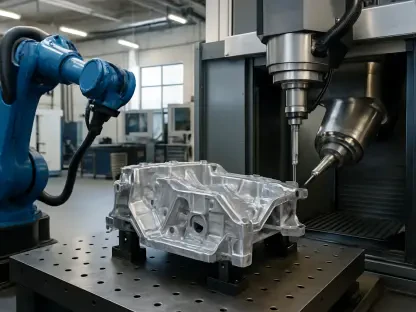
Siemens has established itself as a pioneer in the industrial sector by merging the physical and digital worlds through its comprehensive vision of the Industrial Metaverse. This strategy goes far beyond the traditional role of a hardware provider, as the company is now focusing on creating a digital twin for every aspect of the manufacturing process. By leveraging its deep roots in factory automation, Siemens is developing an ecosystem where physical operations are mirrored and managed within a highly immersive and data-rich digital environment. This approach allows for the simulation of entire production lines before a single piece of equipment is installed, significantly reducing the risks and costs associated with modern industrial scaling. The company is effectively repositioning itself as a software-first entity that uses its massive hardware footprint as a springboard for advanced digital services, ensuring that it remains the primary architect of the actual production site.
To solidify its lead in the field of industrial intelligence, Siemens is investing hundreds of millions of dollars into the development of specialized Industrial Large Language Models. Unlike consumer-grade AI models, these systems are engineered to function with an uncompromising level of precision to minimize hallucinations that could lead to catastrophic equipment failure or life-threatening accidents. Through a high-profile strategic partnership with NVIDIA, Siemens is integrating high-performance computing directly into its automation portfolio, allowing AI to act as the primary controller for physical operations on the shop floor. This focus on industrial-grade reliability provides a significant advantage over generic IT solutions, as it addresses the specific safety and regulatory requirements of the manufacturing world. By placing intelligence deep within the machine layer, Siemens is successfully encroaching on the territory once held by administrative software firms, offering a more direct path to factory optimization.
SAP and the Challenges of Administrative Logic
SAP continues to hold a dominant position as the master of the administrative superstructure, providing the Enterprise Resource Planning systems that serve as the brain for global corporate operations. Its strength lies in its ability to orchestrate end-to-end business processes, ranging from procurement and supply chain management to complex financial accounting through its S/4 HANA platform. For many industrial giants, SAP is the indispensable framework that links the factory’s output to the company’s financial health and market strategy. However, the company is currently navigating a dramatic turning point as it attempts to extend its reach from the boardroom down to the production floor. This move is driven by the realization that business logic must be more closely coupled with real-time manufacturing data to maintain relevance in an era where speed and transparency are the primary drivers of competitive advantage in the global market.
Despite its administrative prowess, SAP is facing significant resistance due to its aggressive strategy of pushing customers toward cloud-based environments through initiatives like Rise with SAP. Many traditional factory operators remain deeply concerned about data sovereignty and the potential security risks of moving sensitive production data outside of their private, on-premise data centers. This conflict is further complicated by SAP’s decision to link its latest AI innovations almost exclusively to cloud contracts, which some long-term customers view as an innovation blockade. While the company’s digital manufacturing solutions offer seamless integration with high-level business logic, the reliance on external cloud infrastructure and third-party AI partnerships creates a perception of dependency. SAP must now prove that its platform-centric approach can provide the same level of reliability and security as the localized systems that have defined the manufacturing industry for decades.
The Converging Battle for Industrial Dominance
The boundaries between Operational Technology and Information Technology are blurring at an unprecedented rate as both companies expand their capabilities into each other’s traditional domains. Siemens is moving upward from the machine level into the software layer, while SAP is attempting to reach downward from the administrative layer to the shop floor. This convergence has created a high-stakes environment where the winner will be the one capable of providing a truly unified data model that spans from a single sensor on a machine to a high-level strategic decision in the boardroom. Currently, market trends indicate that Siemens is gaining ground by focusing on the immediate, tangible needs of the production environment, such as safety and real-time optimization. In contrast, SAP is finding itself in a more defensive posture, struggling to reconcile its cloud-first ambitions with the practical, security-focused realities of heavy industrial operations.
The struggle for dominance is also a battle of corporate philosophies regarding the implementation of AI and platform ecosystems. SAP is attempting to enforce a platform economy through its Business Technology Platform, aiming to be the central hub where all industrial data is eventually analyzed and monetized. However, the success of this strategy remains heavily dependent on the operational expertise of companies like Siemens, which actually control the hardware generating the data. This dependency creates a complex power dynamic where partnerships are often tinged with competitive friction. As the industry moves toward a future defined by Agentic AI and autonomous operations, the company that can offer the most seamless and secure integration of these technologies will likely emerge as the standard-setter. For now, the industrial sector is caught between these two giants, forced to navigate a landscape where the choice of a technology partner will determine their competitive viability for years to come.
Strategic Implementation: Navigating the Future of Manufacturing
Industrial operators must prioritize the establishment of a robust data sovereignty framework before committing to a singular digital ecosystem for their manufacturing facilities. The current rivalry between Siemens and SAP highlights a critical need for systems that maintain interoperability between the shop floor and the administrative office without sacrificing security or control. Manufacturers should focus on implementing edge-based AI solutions that offer immediate operational benefits, such as predictive maintenance and real-time energy optimization, while ensuring that these systems can eventually integrate with higher-level ERP platforms. By adopting a modular approach to technology adoption, companies can avoid vendor lock-in and maintain the flexibility needed to pivot as new industrial standards emerge. Long-term success will depend on the ability to balance the precision of operational hardware with the strategic insights provided by administrative software.
The historical division between the factory floor and the corporate office was effectively dismantled by the rapid advancement of integrated AI and cloud-native industrial platforms. Decision-makers evaluated their partnerships based on the reliability of localized intelligence versus the expansive power of centralized business logic. It became clear that the most successful enterprises were those that managed to bridge the gap between OT and IT through a hybrid approach that valued both physical precision and administrative transparency. As the battle for the smart factory reached its peak, the industry moved toward a more decentralized model where intelligence was distributed across the entire value chain. Ultimately, the focus shifted from which company would win the market to how manufacturers could leverage these competing innovations to create a more resilient, efficient, and autonomous production environment.