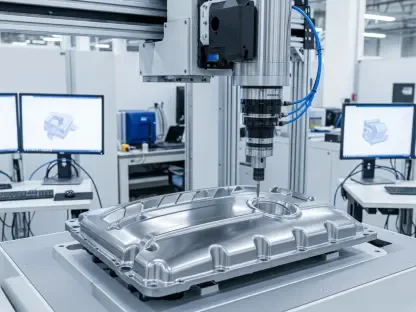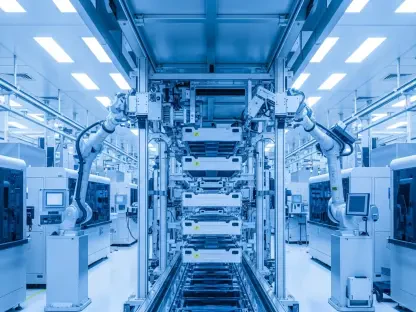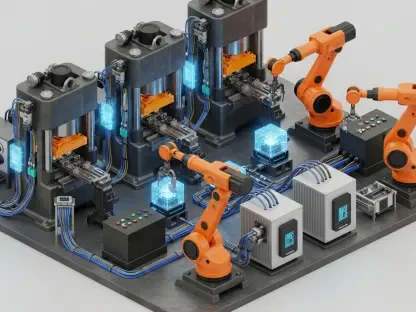

As robotics technology continues its relentless march forward, creating machines with unprecedented intelligence and complexity, their ultimate effectiveness in the real world is increasingly dictated not by their software but by the precision of their physical hardware. The most advanced control algorithms and sophisticated artificial intelligence are rendered impotent if the underlying mechanical structure cannot execute commands with unwavering accuracy and reliability. This is where Computer Numerical Control (CNC) machining establishes its indispensable role, serving as the critical bridge that transforms intricate digital designs into high-fidelity, functional components. It provides the stable, predictable foundation that modern robotic systems require to perform their tasks, moving from the theoretical world of code to the practical challenges of physical interaction. By ensuring every component conforms to exact specifications, CNC machining underpins the very possibility of stable and predictable motion, a non-negotiable requirement from the earliest prototype to the final production unit.
The Foundational Role of Mechanical Integrity
The central tenet of high-performance robotics is that a machine’s operational success is inextricably linked to its mechanical integrity. While innovations in software, perception, and control systems drive robotic intelligence, a robot’s capacity to interact with and manipulate its environment is fundamentally constrained by its physical construction. For the ambitious goals of custom robotic projects, achieving success is less about algorithmic breakthroughs and more about a meticulous focus on mechanical details. Factors such as a well-defined datum strategy, the careful management of tolerance stack-up, and the geometric precision of every interface become paramount. CNC machining emerges as the most direct and effective manufacturing process for mastering these details. It allows engineers to translate the perfect geometry of a digital model into a tangible part with a degree of fidelity that other methods cannot match, thereby ensuring the robot’s physical form is a true representation of its intended design. This precision is not an aesthetic choice but a functional necessity that dictates performance.
This demand for precision is magnified by a critical principle known as error amplification in kinematic chains. Each joint, axis, or connection within a robot introduces a set of mechanical interfaces where minute geometric imperfections can arise. A bore that is slightly misaligned, a mounting surface that is not perfectly flat, or an incorrect bearing fit might seem insignificant in isolation. However, these small deviations do not exist in a vacuum. Instead, they compound progressively along the robot’s entire structure, culminating in substantial positioning errors, erratic trajectories, and pronounced instability at the end-effector. This cascade of inaccuracies makes control system tuning exceptionally difficult and undermines the robot’s reliability. CNC machining directly counters this problem by creating a stable and true geometric foundation. By producing components with controlled tolerances and accurate datums, it ensures the robot’s physical structure remains consistent with its digital counterpart, effectively preventing the accumulation of errors that would otherwise cripple its performance.
Enhancing Precision Across Core Robotic Subsystems
A robot’s kinematic structure, particularly in advanced systems featuring a high number of Degrees of Freedom (DOF), is exceptionally sensitive to manufacturing accuracy. Each additional joint acts as a multiplier for potential mechanical errors, making precision a non-negotiable requirement. CNC machining is fundamentally critical for producing components with the extremely tight tolerances necessary for features like bearing seats, housing bores, and mounting planes. These features collectively define the robot’s fundamental geometry, and their accuracy ensures that its movements are smooth, free of binding, and highly predictable. The ability to hold tolerances on features that dictate the relationship between joints is what separates a high-performance robot from one that is sluggish and unreliable. For the increasingly complex and densely packed joints found in modern collaborative and industrial robots—where motors, reducers, sensors, and structural elements are integrated into compact spaces—multi-axis CNC machining is a key enabling technology. This process allows for the creation of intricate joint components in a single setup, which is vital for preserving the critical geometric relationships between functional surfaces and minimizing the accumulation of setup-related errors. This level of precision translates directly into superior motion quality, characterized by minimal backlash, stable force response, and the robust performance required for the most demanding automated tasks.
The performance of high-resolution servo motors and the sophisticated drivetrains that power modern robots is entirely contingent on the accuracy of their mounting interfaces. Even the most advanced control systems are incapable of compensating for mechanical misalignment caused by poorly manufactured components. A motor mount that is not perfectly flat, a pilot diameter that is not concentric with the shaft, or a coupler that introduces eccentricity will inevitably lead to problems such as mechanical runout, uneven bearing loads, excessive heat generation, and audible noise. Over time, these issues result in premature wear and a gradual drift in performance, undermining the robot’s long-term reliability. CNC machining ensures these critical interfaces are manufactured to exact specifications, guaranteeing stable fits throughout the motor-gearbox-shaft assembly and allowing the entire servo system to operate at its full potential. Similarly, actuators and end-effectors, where the robot’s power is translated into tangible work, depend on stiff and precise connections. CNC-machined components like brackets and tool interfaces preserve rigidity under operational loads, minimizing the unwanted flexibility that can complicate control tuning. For end-effectors, maintaining a consistent Tool Center Point (TCP) is crucial for reliable application results, a goal directly achieved through the precise mounting patterns and controlled locating surfaces delivered by CNC technology.
Strategic Imperatives for Development and Production
In the demanding field of robotics, a geometry that is merely “good enough” often leads to deployment failure. High performance necessitates precise control over functional features, frequently specified with Geometric Dimensioning and Tolerancing (GD&T) and tolerances as tight as ±0.01 mm. CNC machining is uniquely capable of meeting these stringent demands by delivering two essential qualities: accuracy and repeatability. Accuracy ensures that a single part perfectly conforms to its design specifications, which is vital for initial prototypes and functional testing. Repeatability, however, ensures that every subsequent part produced is a near-perfect replica of the first. This consistency is the absolute cornerstone of scalable manufacturing. It eliminates the time-consuming and skill-dependent process of manual fitting and adjustment during assembly, significantly reduces rework, and simplifies calibration workflows. More importantly, it allows engineering teams to confidently isolate control system and software issues from mechanical variability, a critical factor in streamlining debugging and optimization efforts.
The development of custom robotic systems is an inherently iterative process involving a continuous cycle of design, testing, validation, and refinement. CNC machining is exceptionally well-suited for this fast-paced and dynamic environment. It allows design modifications to be translated directly from CAD models into physical, high-fidelity parts without the substantial delays and costs associated with creating new molds or tooling. This ability to produce functional parts on demand dramatically shortens prototype cycles, enabling engineering teams to learn faster, validate concepts more effectively, and converge on an optimized design with greater speed and efficiency. When a robotic project successfully transitions from the prototyping phase to full-scale production, consistency becomes the primary objective. Stable mass production hinges on a predictable and reliable supply of interchangeable parts that assemble correctly every single time. By delivering consistent batches of components with verifiable quality, CNC machining improves manufacturing yield, enhances supplier confidence, and supports the high degree of field reliability that is essential for any product to succeed and scale in a competitive market.
A Future Forged in Precision
The analysis of CNC machining’s role in robotics has shown that it is far more than a simple manufacturing option; it has become a critical enabler for the industry’s future. As robots are developed to be more complex and deployed in increasingly demanding applications, from delicate surgical procedures to heavy-duty industrial assembly, the quality of their mechanical foundation ultimately determines their performance and reliability. CNC machining provides the essential bridge that connects innovative digital designs with the robust and dependable hardware required to execute them. Its versatility allows designers to leverage a wide array of materials, from the lightweight stiffness of aluminum alloys to the high strength of specialized steels, enabling the selection of the optimal material for each component’s specific function. This flexibility, combined with the ability to realize a design philosophy centered on precision assembly, makes it possible to create systems where tolerances are not aesthetic but functional requirements that preserve alignment and preload over the robot’s operational life. By delivering unparalleled accuracy, repeatability, and design freedom, this technology empowers robotics teams to overcome fundamental mechanical challenges, accelerate their development timelines, and ultimately build the high-performance systems that will define the next generation of automation.