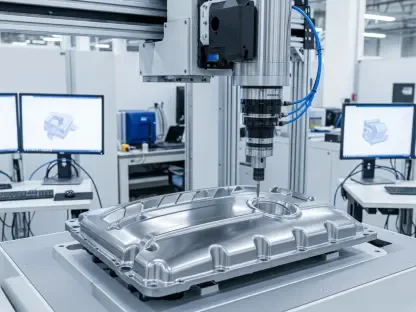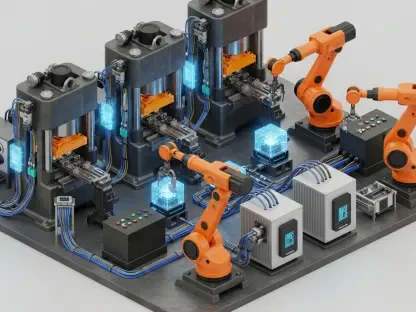

The sheer volume of American patents filed annually paints a vibrant picture of ingenuity, yet this creative output starkly contrasts with the sluggish pace of its real-world application across the nation’s industries. America has long defined its global leadership through its capacity to invent the future. From the semiconductor to the smartphone, its laboratories have produced technologies that reshape the world. Today, however, that legacy faces a quiet but profound challenge. The nation excels at creating groundbreaking ideas but struggles to put them to work, creating a paradox where its greatest strength—innovation—is becoming insufficient to secure its competitive edge.
The Innovation Paradox of a Nation Inventing Itself into a Corner
The United States stands as a global beacon of research and development, yet a growing disconnect separates this reputation from its tangible economic performance. While venture capital fuels a constant stream of startups and universities pioneer new frontiers in science, the nation’s core industries often lag in deploying these advancements. This gap raises a critical question: What if the primary threat to American prosperity is not a deficit of new ideas, but a systemic failure to implement the ones already created?
This issue represents more than a missed opportunity; it signals a fundamental misunderstanding of what drives progress. The linear model of invent-produce-prosper is breaking down. In its place is a global race where the swiftest adopters of technology, not necessarily the inventors, capture the economic and strategic rewards. The core problem is a failure to translate a wealth of intellectual property into widespread industrial and societal momentum.
Defining the Adoption Gap Where Potential Fails to Go Kinetic
This chasm between invention and implementation is known as the “Adoption Gap.” It is the space where groundbreaking technologies in fields like artificial intelligence, biotechnology, and advanced robotics remain underutilized, existing as untapped potential energy rather than kinetic impact. These innovations are celebrated in academic papers and pilot programs but fail to achieve the scale needed to transform key sectors of the economy.
The consequences of this gap are stark and immediate. While American firms hesitate, global competitors in nations like China, South Korea, and Germany aggressively capitalize on these same technologies, many of which originated in the U.S. They integrate automation, data analytics, and sustainable manufacturing processes into their operations, gaining efficiency and market share. This dynamic effectively allows other nations to reap the benefits of American ingenuity, turning the U.S. into a research hub for its own economic rivals.
The Anatomy of Inaction and Barriers to Progress
The roadblocks hindering technology adoption are rarely technological in nature; instead, they are deeply rooted in human and organizational behavior. A primary factor is cultural inertia—a pervasive resistance to change within both the American workforce and corporate leadership. The fear of disrupting established processes, combined with anxieties about job displacement, creates a powerful drag on progress, making the familiar comfort of the status quo preferable to the uncertainty of transformation.
This reluctance is compounded by a failure to accurately calculate the high cost of standing still. Many organizations excel at analyzing the risks of investing in new technology but neglect to quantify the far greater strategic risk of inaction. This leads to organizational paralysis, where the decision to do nothing is seen as the safest option. This systemic friction is visible everywhere, from bureaucratic slowdowns in government to profound risk aversion in the small and mid-sized manufacturing firms that form the backbone of the nation’s industrial base.
Slow Adoption as a Strategic National Liability
This implementation lag is not merely an economic issue but a threat to national competitiveness, a view echoed by experts like former Chief Manufacturing Officer Paul S. Lavoie, who identifies the “Adoption Problem” as a critical vulnerability. The stark contrast between the high volume of U.S. patents filed and the slow velocity of their practical application on the ground reveals a system that prioritizes discovery over deployment.
Case studies from abroad illustrate the stakes. Germany’s “Industrie 4.0” initiative has systematically integrated digital manufacturing technologies across its industrial sector, while South Korea has become a leader in robotics adoption. These nations are not simply waiting for the next big invention; they are building ecosystems designed to rapidly deploy existing technologies, turning America’s implementation delay into their distinct strategic advantage.
Building a National Adoption Engine for a Competitive Future
Closing the Adoption Gap requires a conscious, coordinated effort to build a national engine for technology implementation. This framework must align the distinct capabilities of industry, government, and academia toward a shared goal. The first mandate falls to industry, which must move beyond pilot projects and proactively invest in comprehensive change management and upskilling programs that empower the existing workforce to master new tools.
Government’s role is to act as a catalyst, not a central planner. By offering targeted tax credits and grants, it can incentivize the risk-taking necessary for technology adoption, especially among smaller firms. Furthermore, funding for centers of excellence can de-risk the implementation process for businesses by providing education and access to shared expertise. Finally, academia serves as the cornerstone of this effort, leveraging its vast infrastructure and talent to forge a unified partnership that connects industrial needs with governmental support, ensuring a seamless flow of knowledge into application.
The narrative of American exceptionalism was long written with the ink of invention. To continue that story, the nation had to recognize that its future prosperity would be determined not by the brilliance of its ideas alone, but by the speed and scale at which it could turn those ideas into reality. Shifting the national focus from a preoccupation with innovation to an obsession with adoption was the central challenge ahead.