
Once the undisputed global leader in robotics, Japan now finds itself in a perplexing position as its historical dominance is being challenged not by a decline in its core capabilities but by a fundamental shift in the technological paradigm it helped create. For decades, Japanese firms set the standard for industrial automation, filling factories worldwide with powerful and precise robotic arms. Yet, in the burgeoning field of AI-driven, general-purpose humanoid robots, the nation that gave the world icons like ASIMO is being conspicuously outmaneuvered by agile startups from the United States and China. This growing gap reveals a critical divergence between Japan’s deep-rooted focus on specialized, mechanical perfection and the new era’s demand for cognitive flexibility and adaptive intelligence, raising questions about whether its industrial empire was built for a world that is quickly fading.
A Tale of Two Robots: The Old Guard vs. The New Wave
Japan’s Industrial Might on Display
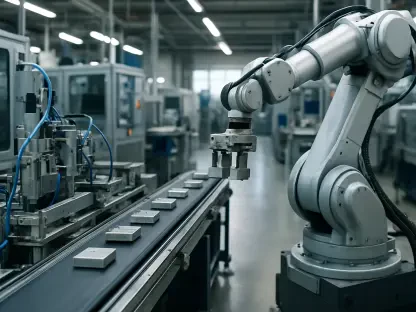
The stark contrast in philosophies was vividly illustrated at the recent International Robot Exhibition (IREX) in Tokyo, where Japan’s established robotics titans showcased their enduring strengths. Industry giants like Kawasaki, Fanuc, Yaskawa, and Nachi commanded massive exhibition spaces, each filled with powerful robotic arms performing intricate tasks with breathtaking precision. These machines, the lifeblood of modern manufacturing, flawlessly executed routines for welding, assembly, and material handling, demonstrating the pinnacle of industrial automation. This display was a testament to Japan’s conservative, application-specific strategy, a model built on delivering mature technologies that offer a clear and predictable return on investment. The focus was unequivocally on efficiency, reliability, and perfecting single-purpose functions within the structured environment of the factory floor. This approach, while immensely successful and profitable, also highlighted a deep-seated adherence to a paradigm where robots are tools programmed for a specific job, not collaborators capable of general problem-solving. It represented the culmination of a decades-long mastery over the mechanics of robotics, a strength that has ironically become a source of strategic inertia in the face of a software-driven revolution.
This unwavering dedication to industrial applications has cultivated an ecosystem optimized for mechanical and electrical engineering, reinforcing a business model that prioritizes incremental improvements over disruptive leaps. For Japanese firms, the primary market remains the global manufacturing sector, where the metrics for success are well-defined: speed, accuracy, and durability. Their technology reflects this, designed for environments where every variable can be controlled and every action pre-programmed. However, this very specialization has created a significant blind spot. The emerging demand is not just for stronger or faster robotic arms but for machines that can operate in the unstructured, unpredictable environments of human life—warehouses, retail stores, and even homes. This requires a fundamentally different kind of intelligence, one based on learning and adaptation rather than rote execution. While Japan’s industrial robots represent the perfected past of automation, they offer few answers for a future where value is increasingly derived from a robot’s cognitive abilities rather than its physical prowess alone, leaving the nation’s industry well-defended in a shrinking territory.
China’s Humanoid Spectacle
In sharp contrast to the methodical displays of Japanese industrial machinery, the most electrifying exhibits at IREX came from a new generation of Chinese technology firms. Young startups, some founded as recently as 2023, captured the public’s imagination with dynamic and versatile humanoid robots. Unitree, an established player among the newcomers, put on a show that felt more like a tech-infused performance art piece than a trade show demonstration. Its humanoid robots were seen boxing with each other, executing complex kung fu forms, dancing in synchronized routines for large crowds, and even serving drinks at a pop-up bar. This spectacle was a deliberate and powerful statement, showcasing a philosophy diametrically opposed to Japan’s industrial focus. The emphasis was not on performing a single task perfectly but on demonstrating general-purpose capabilities and the ability to interact with humans and the environment in a fluid, adaptable manner. It was a clear signal that the frontier of robotics is moving beyond the factory cage and into the dynamic world of human activity.
This focus on versatility and public engagement is more than just a marketing gimmick; it reflects a strategic bet on a future where robots are integrated into a far broader range of economic and social activities. While Japan’s robots solve known problems in controlled settings, these Chinese humanoids are being designed to tackle the unknown in unstructured environments. Their ability to perform such a wide array of actions points to the sophisticated AI and machine learning models that serve as their “brains,” allowing them to learn from data and generalize their skills. This represents the core technological shift defining the current robotics boom: the move from pre-programmed logic to generative intelligence. The spectacle at IREX was a clear demonstration of momentum. While Japanese companies reinforced their image as masters of the old guard, Chinese innovators positioned themselves as the architects of the next wave, successfully capturing global attention and framing the future of robotics around the promise of intelligent, adaptable humanoids.
The Roots of Stagnation: History, Technology, and Strategy
A Legacy of Unfulfilled Promise
Japan’s current lag in the humanoid race is particularly poignant because the nation was not just a participant but a pioneer in the field. Its journey into humanoid robotics began as early as the 1970s with Waseda University’s WABOT-1, widely considered the world’s first full-scale humanoid robot. This early innovation set the stage for decades of groundbreaking research and development. The culmination of this effort was Honda’s ASIMO, which debuted in 2000 and quickly became a global icon and a symbol of Japan’s technological prowess. ASIMO captivated the world with its ability to walk, run, climb stairs, and even kick a soccer ball with world leaders, embodying the dream of a helpful robotic companion. Following in its footsteps, SoftBank’s Pepper, launched in 2014, represented another ambitious leap, focusing on emotional interaction and aiming to place robots in customer service roles in stores and public spaces. For a time, these projects cemented Japan’s reputation as the undisputed leader, pushing the boundaries of what was mechanically and socially possible for robots.
However, this history of technological triumph is also a story of commercial disappointment, a legacy that now casts a long shadow over the nation’s robotics industry. Despite their global fame and advanced capabilities, these high-profile projects failed to translate into sustainable business ventures. Honda officially ended ASIMO’s development in 2018, having never found a viable commercial application for its sophisticated technology. Similarly, SoftBank halted the production of Pepper in 2021 due to persistently weak demand and the robot’s limited practical utility. These prominent failures created a deep-seated skepticism within Japanese corporate culture. The robots that had once been symbols of future potential were ultimately seen as expensive novelties—more suited for entertainment than for solving real-world industrial or societal problems. This history of ambitious research leading to commercial dead ends has fostered a “less positive attitude” and a pervasive sense of caution, making Japanese investors and corporations hesitant to commit to the high-risk, long-term development of the new generation of AI-driven humanoids.
The Missing AI Brain
The fundamental differentiator that separates the current wave of humanoids from their predecessors is not mechanical dexterity but cognitive ability, a domain powered by advances in artificial intelligence. Japan’s pioneering robots like ASIMO and Pepper were marvels of engineering, capable of executing complex and fluid motions. However, their actions were primarily based on pre-programmed routines. They could perform an impressive repertoire of tasks but lacked the ability to learn, adapt, or handle novel situations that fell outside their programming. They were sophisticated puppets, not autonomous agents. This limitation was their ultimate undoing in the commercial sphere, as they could not provide the flexible, adaptive utility required for real-world applications. They could walk a scripted path perfectly but were lost when faced with an unexpected obstacle. Their intelligence was brittle, confined to the narrow parameters set by their human creators.
Today’s humanoid robots, in contrast, are built around an entirely different architecture centered on AI. Large language models and advanced machine learning algorithms serve as a centralized “brain,” enabling them to process vast amounts of data, learn from observation, and develop generalized capabilities. This is the crucial technological leap—the transition from programmed logic to generative intelligence—that defines the modern robotics revolution. This AI-first approach allows robots to understand natural language commands, devise their own strategies for completing tasks, and continuously improve their performance through trial and error. It is precisely in this area of software and AI development that Japan has fallen behind. Its historic strengths in mechanical and electrical engineering, which were paramount in the age of pre-programmed robots, have become less of a competitive advantage. The nation now faces a significant talent gap in AI specialists compared to the United States and China, leaving it ill-equipped to compete in a field where the “brain” has become far more important than the body.
The New Geopolitical Landscape of Robotics
China’s Strategic Ascent
China’s rapid emergence as a leader in the humanoid robotics sector is not a product of chance but the result of a concerted, multi-faceted national strategy. Its ascent is propelled by a powerful combination of top-down government policy, a thriving digital economy that has cultivated a deep pool of AI and software talent, and a massive domestic market that provides an unparalleled training ground for intelligent machines. The government’s “Made in China 2025” industrial blueprint explicitly identified robotics as a strategic priority, channeling immense state resources and investment into the sector. This state-led approach has proven highly effective at scaling up new industries, mirroring the successful patterns previously seen with electric vehicles and solar power. It has created a fertile environment for innovation, fostering intense domestic competition from which the most promising companies can emerge as national champions ready to compete on the global stage. This strategic push ensures that Chinese firms are not only well-funded but also aligned with a national vision for technological supremacy.
This contrasts sharply with the situation in Japan, where success in traditional robotics has bred a form of strategic inertia. Japan’s corporate and university systems, long centered on excellence in manufacturing and mechanical engineering, have been slow to pivot toward the software-first mindset required for modern AI. This has resulted in a relative shortage of top-tier AI talent and a corporate culture that is often more risk-averse compared to the hyper-competitive startup ecosystems in China and the U.S. While Japan launched its own “new robot strategy” in 2015 with the goal of expanding robotics into sectors like healthcare and agriculture, the initiative fell short of its ambitious targets, hampered by high costs and the technological limitations of its non-AI-driven robots. China, unburdened by the legacy systems and market expectations that constrain Japanese firms, is competing on a new technological frontier. It is leveraging its unique strengths to seize leadership in an area where the rules are still being written, turning its latecomer status into a strategic advantage.
An Interdependent Future and Japan’s Attempted Revival
Despite the intensifying narrative of a head-to-head rivalry, the global robotics industry remained a complex web of interdependence. The supply chain was deeply integrated, creating a symbiotic relationship between the established Japanese players and the emerging Chinese challengers. High-precision Japanese components, such as servo motors and sensors, were frequently embedded within the most advanced Chinese-made humanoid robots, serving as critical building blocks for their mechanical capabilities. Conversely, Japanese factories, the bastions of industrial automation, often deployed Chinese-made components like 3D cameras and other vision systems alongside their own robotic arms. This intricate network highlighted a globalized ecosystem where collaboration and competition coexisted, suggesting that the future of robotics would likely be shaped by international partnerships rather than the dominance of a single nation. However, the momentum in innovation and vision had clearly shifted.
The ultimate test for the new generation of AI-driven humanoids became the same one that led to the demise of their Japanese forerunners: proving their real-world utility and commercial viability. The pressure mounted on Chinese developers to move beyond impressive demonstrations and deliver tangible economic value. In response to this shifting landscape, Japan began to show signs of a renewed commitment to reclaiming its position at the cutting edge. The formation of the Kyoto Humanoid Association, a consortium aimed at fostering collaboration, signaled a strategic realignment. Meanwhile, established firms like Kawasaki continued the development of its Kaleido robot for disaster rescue operations, while a landmark “Physical AI” collaboration between Yaskawa and SoftBank aimed to bridge the critical AI gap. These efforts represented a nascent but determined attempt to revitalize the nation’s innovation ecosystem and re-engage in a field it once defined, facing the difficult task of catching up in a race it had inadvertently started decades ago.