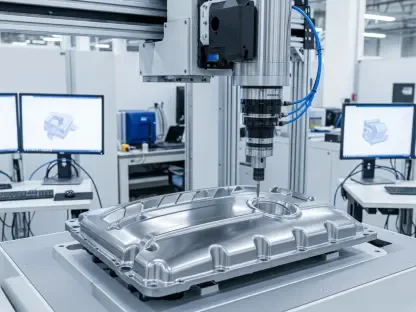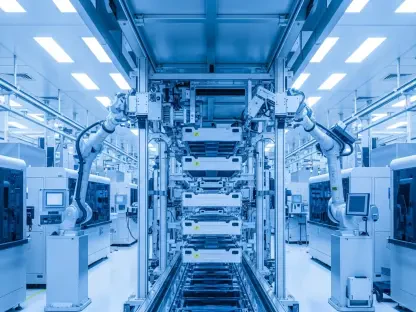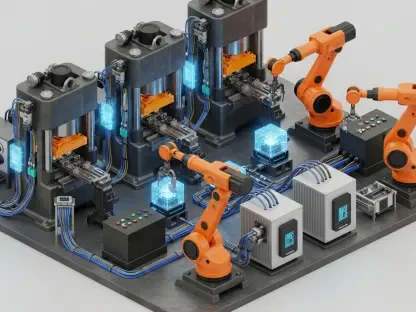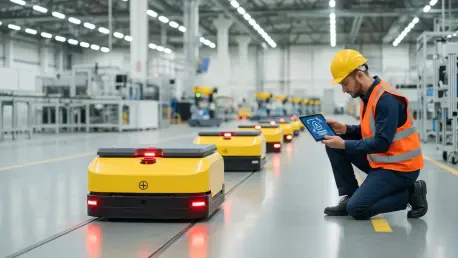

The hum of a modern industrial facility is a symphony of precision, where automated systems and intelligent robots execute tasks with seamless coordination, yet this entire operation hinges on an invisible and increasingly fragile foundation. As industries aggressively integrate automation and artificial intelligence, the wireless network has evolved from a secondary convenience into the primary, mission-critical component dictating efficiency and output. Legacy solutions, however, were never engineered for this high-stakes environment of machine-to-machine communication. This growing chasm between technological ambition and infrastructural reality has positioned private 5G not merely as an upgrade, but as the essential architecture required to realize the full promise of a truly intelligent and automated industrial future.
The Breakdown of Legacy Networks
The Technical Failings of Old Infrastructure
The operational demands of today’s industrial environments have exposed the fundamental weaknesses of traditional network technologies like Wi-Fi. In settings filled with metal structures and heavy machinery, Wi-Fi is notoriously susceptible to signal interference, leading to inconsistent coverage across large facilities and performance degradation that disrupts operations. Its inability to provide seamless handoffs for mobile assets, such as automated guided vehicles and mobile robots, results in communication drops that can halt an entire logistics chain. Even when operating under ideal conditions, a typical “three-nines” (99.9%) uptime still translates to nearly nine hours of unplanned network downtime per year. For a modern factory, this level of unpredictability is untenable; it can stall production lines, interrupt the flow of data from critical environmental sensors, and freeze computer vision systems, where a single outage can trigger a catastrophic and costly cascade of failures throughout the workflow.
Public cellular networks, while offering broader coverage, introduce their own set of limitations that make them unsuitable for mission-critical industrial applications. Performance can be unpredictable due to congestion from public user traffic, making it impossible to guarantee the consistent, low-latency communication required for real-time robotic coordination. Security is another significant concern, as sensitive operational data must traverse a public infrastructure, increasing exposure to potential threats. Furthermore, these public networks lack the customization and control necessary for industrial operators to prioritize specific data flows or tailor network performance to the unique demands of their machinery and processes. This lack of a dedicated, controlled environment runs contrary to the core requirements of modern automation, which depends on a completely reliable and secure communications backbone to function safely and effectively. In essence, public cellular services were designed for consumers, not for the deterministic needs of industrial machinery.
The Soaring Cost of Unreliability
Network downtime has rapidly transformed from a technical inconvenience into a significant and escalating financial liability that directly impacts the bottom line. The trend is alarming: between 2019 and 2024, the percentage of organizations reporting that their most severe outage cost them over $100,000 surged from 39% to an astonishing 54%. In that same timeframe, the occurrence of catastrophic, million-dollar outages doubled, highlighting a critical shift in the business landscape. In the industrial sector, uptime is no longer just an IT metric; it is a direct measure of output, revenue, and profitability. Every moment of network interruption translates directly into lost production cycles, missed shipping deadlines, and compromised quality control. This reality forces a reevaluation of network infrastructure, moving it from a cost center to a paramount operational concern, where reliability is a key driver of financial performance and competitive advantage in an increasingly connected world.
Beyond the immediate financial losses from halted production, the true cost of network unreliability extends into a web of indirect and cascading consequences that can inflict long-term damage on an organization. A single network failure can disrupt intricate supply chains, leading to delays that impact downstream partners and ultimately harm customer relationships. Missed deadlines and inconsistent output can tarnish a company’s reputation, eroding trust and market share. Internally, unreliable connectivity compromises quality control systems that depend on real-time data, leading to increased material waste, costly rework, and potentially defective products reaching the market. These hidden costs underscore the fact that an unstable network creates systemic risk, turning a technological vulnerability into a pervasive business threat that affects everything from operational efficiency to brand integrity. The investment in a robust network is therefore not just about preventing downtime, but about safeguarding the entire operational ecosystem.
A New Architecture for a New Era
The Rise of Edge Computing and AI
A profound architectural transformation is underway as artificial intelligence processing moves from centralized cloud servers to the network edge, right where industrial activity happens. Projections indicate that within the next four years, over two-thirds of all AI workloads will involve “inferencing” at the edge, a paradigm that enables real-time decision-making. In a factory setting, this means an AI-powered camera can identify a product defect on the assembly line and instantly trigger a robotic arm to remove it. This capability relies on a continuous, high-speed, and exceptionally reliable feedback loop between sensors, machines, and local edge-compute resources. This shift is not merely a trend but a necessity for unlocking the true value of industrial AI. The demand for predictable, low-latency connectivity to support this architecture is absolute, as even a momentary disruption can sever this critical feedback loop, effectively blinding the AI system.
The operational risks associated with network failure in an edge-native environment are intensifying dramatically, particularly as industrial systems gain greater autonomy. When an AI-driven process is interrupted by a network glitch, it doesn’t just pause; it can create significant safety hazards and operational chaos. An autonomous mobile robot losing its connection in a busy warehouse could halt, blocking a critical pathway, or worse, lose its situational awareness. A computer vision system that fails mid-inspection could allow thousands of defective products to pass through unchecked. As human oversight is gradually reduced in favor of these intelligent systems, the reliability of the underlying network becomes paramount. The integrity of the entire automated workflow depends on the unbroken flow of data, making network resilience a foundational pillar of the modern, autonomous industrial operation and a critical factor in mitigating catastrophic risk.
Private 5G as the Purpose Built Solution
Private 5G emerges as a technology engineered from the ground up to meet the rigorous demands of the modern industrial landscape, offering a level of performance that legacy systems cannot match. Its core strength lies in providing deterministic performance, where latency is not just low but consistently predictable. This is a crucial requirement for complex industrial use cases, such as coordinating the precise movements of a fleet of autonomous robots or synchronizing multiple components of a high-speed production line. Unlike the “best-effort” delivery of Wi-Fi, private 5G is designed for mission-critical reliability, delivering high uptime and robust support for mobile assets across a facility. This fundamental shift from unpredictable connectivity to a stable, responsive network provides the essential foundation upon which truly intelligent and interconnected industrial operations can be built, turning the promise of full-scale automation into a practical reality.
Beyond its performance characteristics, private 5G offers critical advantages in scalability and security that are essential for large-scale industrial deployments. The technology is designed to support a massive density of devices operating simultaneously across expansive and structurally complex facilities, effectively eliminating the coverage gaps and interference issues that commonly plague Wi-Fi networks in such environments. From a security standpoint, creating a dedicated, on-premises network ensures that sensitive operational data, intellectual property, and control signals remain entirely within the organization’s control. This on-site data sovereignty significantly enhances security posture, protects privacy, and simplifies compliance with stringent industry regulations. By combining deterministic performance with comprehensive coverage and fortified security, private 5G provides the complete, reliable framework needed to transition automation initiatives from isolated pilot projects to fully integrated, end-to-end production workflows.
Proving the Value and Shaping the Future
Real World Success and Market Validation
The business case for adopting private 5G is not theoretical; it is actively being proven by tangible results from industry leaders. A powerful example is the deployment by Cargill across 20 of its remote sites, a project that successfully achieved consistent sub-25-millisecond latency for its mission-critical applications. Perhaps more compellingly, this superior performance was achieved at a 50% lower cost than what a comparable Wi-Fi upgrade would have required. This case study powerfully demonstrates that private 5G is not only a technologically superior solution but also an economically viable one. It refutes the notion that next-generation connectivity is prohibitively expensive, showing instead that it can deliver a strong return on investment by simultaneously boosting performance and reducing long-term operational costs, grounding the abstract benefits of the technology in a clear and compelling success story.
The momentum behind private 5G is further reinforced by compelling market data and widespread industry adoption. Findings from GlobalData’s Industrial Digitalization Report reveal that 68% of enterprises utilizing private wireless for their AI applications achieve a positive return on investment within an impressive six-month timeframe. The report also highlights a powerful symbiotic relationship between technologies, with 94% of these enterprises pairing private 5G with edge computing to enable real-time analytics and automation. This is not a niche trend confined to early adopters. Major corporations such as BP, LyondellBasell, and Standard Steel are now treating private 5G as the foundational backbone of their digital transformation strategies. This broad, cross-sector movement signifies a clear consensus: industrial leaders recognize that a new standard for connectivity is required to unlock the next level of productivity and innovation.
The Network as the New Industrial Backbone
The evolution of industry made it clear that leaders had to elevate their perception of connectivity, treating it not as an IT commodity but as foundational infrastructure as critical as the machinery on the factory floor. In an environment where AI copilots guided frontline workers through complex tasks, augmented reality provided real-time maintenance guidance, and autonomous systems seamlessly managed logistics and quality assurance, the network functioned as the central nervous system of the entire operation. This new paradigm demanded a shift in strategy, where network architecture was no longer an afterthought but a primary consideration in the design of every automated process and intelligent system, directly influencing the capacity for innovation and growth.
Ultimately, the future of industrial operations was defined by uptime, throughput, and the network’s capacity to support real-time processes at scale. Competitive differentiation emerged not just from the intelligence of the machines but from the robustness and reliability of the network that connected them. As the industry advanced toward “physical AI”—intelligent systems that interact directly and autonomously with the physical world—the indispensable role of private 5G became solidified. The organizations that proactively built their wireless strategy around the principles of industrial intelligence, with private 5G as the cornerstone, were the ones that not only realized significant gains in productivity and reliability but ultimately defined and led the subsequent era of industrial innovation.