
Kwame Zaire is a distinguished visionary in the realm of industrial automation, possessing a deep-seated passion for the intersection of electronics and large-scale production management. As a leading voice on predictive maintenance and operational safety, he has spent years analyzing how emerging technologies can bridge the gap between theoretical AI and the gritty reality of the factory floor. With the recent launch of Mind Robotics and its massive influx of capital, Kwame provides a critical perspective on how data-driven machinery will redefine global manufacturing competitiveness.
In this conversation, we explore the strategic shift toward AI-native automation, the role of bespoke silicon in industrial processing, and the practical challenges of integrating high-level physical reasoning into traditional robotics.
Why prioritize traditional robot designs over humanoid models, and how do you plan to solve for human-like dexterity and physical reasoning in a factory setting? What specific labor gaps are these machines meant to fill first?
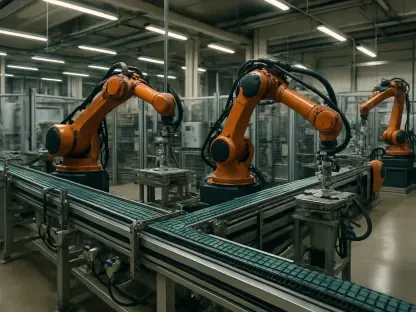
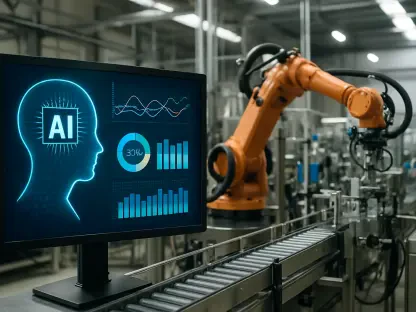
The decision to stick with traditional industrial forms rather than chasing the humanoid trend is rooted in the reality that doing cartwheels simply doesn’t create value on a production line. We are focused on solving the structural gap where classical robotics fail—specifically tasks that require adaptation and physical reasoning to handle variability in parts or environments. By building a dedicated AI foundation and sophisticated hardware deployment infrastructure, we can give existing form factors the “brains” they need to perform complex value-add work. The first labor gaps we are targeting involve roles that demand high precision and consistent dexterity, which are currently the hardest positions to fill due to global worker shortages. Our goal is to move beyond rigid, pre-programmed paths to a system that perceives and reacts to the physical world with the same nuance as a skilled human technician.
With global robot installations expected to exceed 700,000 by 2028, what does a $2 billion valuation signal about the current appetite for industrial AI? How does this influx of capital accelerate your deployment timeline through the end of 2026?
That $2 billion valuation, achieved just months after our November 2025 launch, is a powerful signal that the market is hungry for AI-native solutions that actually work in the physical world. When you consider that global installations reached 542,100 in 2024—more than double the figures from a decade prior—it is clear that manufacturers are no longer just experimenting; they are scaling. The US$500 million in Series A funding we secured allows us to move at an aggressive pace, providing the liquidity needed to refine our models and hardware simultaneously. This capital acts as a catalyst, ensuring we remain on track to deploy a substantial number of industry-ready robots across global manufacturing systems by the end of 2026. We aren’t just building prototypes; we are building the infrastructure for an era where intelligent automation is the baseline for production.
Rivian has developed bespoke silicon for autonomous software; how might these proprietary processors be integrated into factory robotics? Furthermore, how does utilizing data from an active electric vehicle factory refine the machine learning models used for monitoring industrial equipment?
It doesn’t take a lot of imagination to see how our bespoke silicon, originally designed for autonomous vehicles, becomes the heartbeat of an industrial robot. These are high-performance robotics processors by nature, and utilizing our own chips allows for a seamless integration of AI models that can process massive amounts of sensory data in real-time. By leveraging the live data streaming from an active electric vehicle factory, we can train our machine learning models on real-world edge cases that you simply cannot replicate in a lab. This feedback loop is essential for developing predictive systems that monitor industrial equipment, allowing the AI to identify microscopic signs of wear or impending failure before they lead to costly downtime. The synergy between vehicle autonomy and factory automation creates a unique ecosystem where every mile driven and every bolt tightened makes the entire system smarter.
Industrial labor shortages are a persistent global challenge, so how will AI-native automation shift the baseline for manufacturing competitiveness? What specific metrics should factory managers monitor to ensure these AI systems are successfully reducing human error and enhancing efficiency?
We are entering an era where AI-native automation is no longer an optional upgrade but a requirement for staying relevant in a global economy. As labor shortages continue to squeeze margins, the companies that thrive will be those that use advanced robotics to maintain high-throughput operations without a proportional increase in human headcount. To measure success, factory managers should look beyond simple speed and focus on the reduction of scrap rates and the frequency of “unplanned interventions” where a human has to reset a machine. When these AI systems are functioning correctly, you should see a measurable drop in human error-related defects and a significant increase in the mean time between failures for critical equipment. Ultimately, the metric that matters most is the shift in factory value-add, where machines handle the repetitive physical reasoning, allowing the workforce to focus on high-level oversight.
What is your forecast for industrial AI automation?
I believe we are on the cusp of a total transformation where the largest at-scale application for advanced robotics will be found squarely within the industrial sector. By 2028, as global installations soar past the 700,000 mark, the divide between “dumb” machines and “intelligent” systems will vanish, making AI-powered machinery the standard for any competitive manufacturing economy. We will see a shift away from isolated automation toward fully integrated data ecosystems that not only build products but also self-optimize their own maintenance and energy consumption. This evolution will be the primary driver in solving the chronic labor gaps that have hindered growth for years, eventually turning the factory into a dynamic, learning environment. My forecast is that by the end of this decade, the physical world will finally catch up to the digital one in terms of intelligence and adaptability.