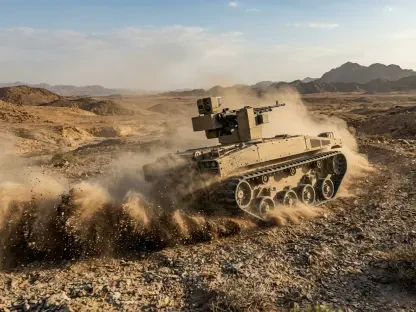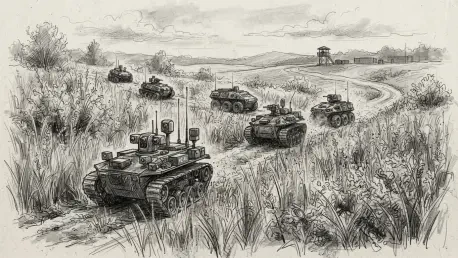

The Department of Defense recently showcased a swarm of four unmanned ground vehicles at Fort Knox to test how autonomous strike teams might secure the European eastern flank. This demonstration highlights a pivot toward high-technology solutions to address modern geopolitical tensions. By leveraging autonomous systems, military planners aim to create a formidable buffer that can detect and respond to threats without immediately risking human lives. This initiative, facilitated by the Defense Advanced Research Projects Agency, represents a significant leap from traditional static defenses to a dynamic, networked shield. As regional stability becomes increasingly complex, the shift toward these robotic systems serves as a deterrent against potential aggression. These machines are not merely tools for reconnaissance; they are the precursors to a new era of combined arms maneuver where the first contact with an adversary is entirely digital and mechanical. This modernization is essential for ensuring that NATO forces remain agile and capable in an evolving landscape of attrition-based warfare.
Strategic Deployment of Autonomous Strike Teams
Adapting to High-Intensity Conflict Zones
The selection of Fort Knox as a testing ground was no coincidence, as its geographical features closely mirror the environmental challenges of the European eastern flank. During the recent exercises, the unmanned ground vehicles (UGVs) were tasked with navigating complex terrains, identifying simulated targets, and coordinating movement without constant human intervention. This environmental fidelity allows engineers and strategists to assess how autonomous sensors and propulsion systems handle the mud, foliage, and varying elevations typical of a potential theater of operations. The broader objective remains centered on the Eastern Flank Deterrence Initiative, which seeks to replace traditional, manpower-heavy defensive lines with a sophisticated web of interconnected machines. By establishing this robotic shield, NATO hopes to absorb the initial kinetic energy of a conflict, thereby preserving the lives of allied soldiers. This shift reflects a tactical acknowledgment that modern borders require a 24/7 autonomous presence capable of rapid reaction.
Ethical Frameworks and the Human-in-the-Loop Model
Despite the advanced level of autonomy displayed by these strike teams, a core tenet of the program is the strict adherence to a “human-in-the-loop” protocol. This safety mechanism ensures that while the robots can independently manage navigation, scouting, and initial target detection, the authority to engage with lethal force remains exclusively with a human operator. During the Fort Knox trials, this balance was tested through various scenarios where the UGVs identified potential threats and transmitted high-resolution data back to a command post for verification. This hybrid approach addresses significant ethical concerns regarding fully autonomous weaponry while maintaining the speed and efficiency benefits of robotic reconnaissance. The integration of these platforms into the existing military structure requires a seamless communication link that can withstand electronic interference or jamming. By keeping humans central to the final decision-making process, the military aims to foster trust among the ranks and ensure that every action taken on the battlefield complies with established international standards.
Technical Specifications and Future Integration
Multi-Mission Platforms for Diverse Combat Scenarios
The technical architecture of the demonstrated UGV swarm utilizes a specialized “lead” vehicle that acts as a mobile hub for the entire unit. Equipped with a suite of sophisticated onboard sensors and a launchable reconnaissance drone, this lead unit provides a comprehensive view of the surrounding environment, feeding data to support units that can then pivot into offensive or defensive positions. These platforms are designed for modularity, allowing them to be outfitted with various payloads ranging from machine guns and rocket launchers to specialized equipment for medical evacuation. Beyond their offensive capabilities, these autonomous systems provide vital logistical support by transporting heavy ammunition and supplies across dangerous territory without putting human drivers at risk. This versatility makes the robotic shield an adaptable asset that can transition from high-intensity combat to humanitarian logistics or casualty recovery. The ability of these machines to perform coordinated maneuvers suggests a future where autonomous swarms act as a force multiplier, enhancing the presence of smaller, specialized troop detachments.
Refinement through Continuous Soldier Feedback
Moving forward, the development cycle for these autonomous systems will prioritize direct feedback from the soldiers who will eventually deploy alongside them. DARPA and the Army have scheduled an extensive round of follow-up testing for December to refine the user interface and operational utility of the strike teams. By involving active-duty personnel in the iterative design process, the Department of Defense ensures that the technology remains practical and intuitive in high-stress combat situations. This collaborative approach helps identify potential friction points in the integration of robotic and human units, such as communication lags or tactical misunderstandings. There is currently a strong consensus among NATO planners that these autonomous systems are no longer a luxury but a fundamental necessity for maintaining a credible deterrent in the modern era. The lessons learned from recent global conflicts emphasize that attrition warfare demands a high-tech approach to minimize casualties and maximize defensive resilience. This evolution in military doctrine marks a transition toward a defense strategy that is both technologically superior and morally focused on preserving human life.
Implementing Resilient Defensive Infrastructure
The successful conclusion of the Fort Knox demonstration established a clear trajectory for the future of NATO’s defensive infrastructure on the eastern flank. Stakeholders recognized that the next logical phase involved the mass production of these autonomous platforms to achieve a significant presence at the border. Military leadership emphasized the urgent need to standardize communication protocols across all NATO member states to ensure that diverse robotic units could operate as a unified force. Furthermore, designers focused on enhancing the electronic warfare resilience of these vehicles to prevent adversarial interference with autonomous navigation systems. Investment was directed toward developing advanced training programs for operators, ensuring they possessed the technical proficiency required to manage complex swarms in the field. These proactive measures were intended to transform the theoretical concept of a robotic shield into a functional, persistent reality. By prioritizing the integration of autonomous strike teams, planners aimed to secure regional stability and provide a robust response to the challenges of modern conventional warfare.