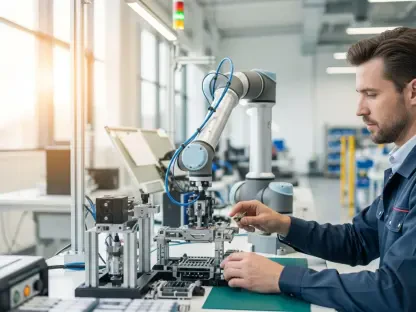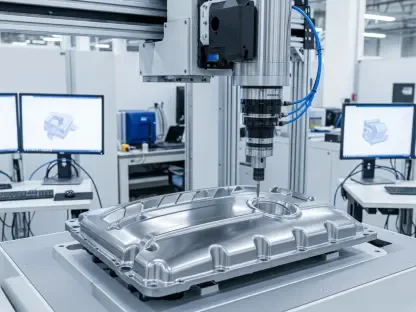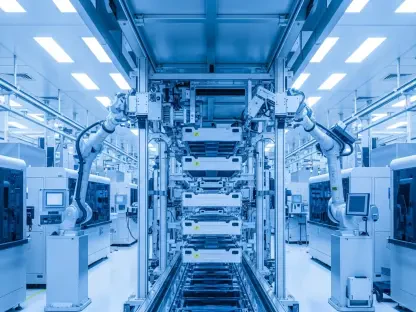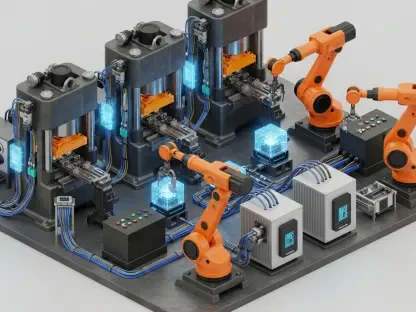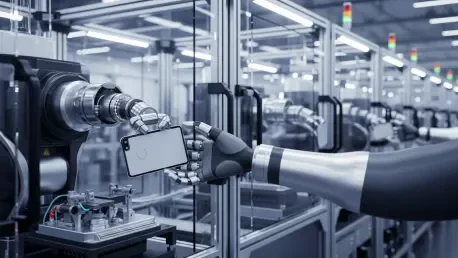

The landscape of global electronics production is undergoing a profound transformation as fully autonomous facilities move from conceptual prototypes to high-capacity industrial realities. At the forefront of this shift is a newly established production facility that operates as a dark factory, where machines perform complex assembly tasks in total darkness without human intervention on the shop floor. This advancement is not merely a feat of mechanical engineering but a sophisticated integration of artificial intelligence and the industrial internet, signaling a departure from traditional labor-intensive manufacturing. By removing the limitations of human shifts and environmental requirements like ambient lighting, the facility achieves a level of consistency and throughput that was previously unattainable in the competitive smartphone market. This evolution reflects a broader trend toward industrial independence, where software and hardware are developed in tandem to create a seamless, self-correcting production ecosystem.
The Architecture of Autonomous Production
Industrial Independence: Proprietary Software and Hardware
The transition to a fully automated manufacturing environment is anchored by a significant commitment to self-developed technological infrastructure. Statistics indicate that the facility utilizes 96.85% self-developed equipment, a figure that highlights a move toward total industrial sovereignty and away from reliance on third-party vendors. This internal development extends to the software layer, where 100% of the manufacturing execution systems and control logic are proprietary. Such an integrated approach allows the facility to maintain absolute control over the data flow between various robotic units and assembly stations. This level of synchronization ensures that every micro-adjustment in the assembly process is recorded and analyzed by centralized AI systems, facilitating a feedback loop that optimizes performance in real-time. By owning the entire technological stack, the company can implement rapid updates and scale production without the friction often associated with integrating disparate third-party platforms.
Beyond the hardware components, the proprietary software serves as the nervous system of the facility, managing everything from component sourcing to final quality verification. This digital backbone utilizes complex algorithms to predict potential bottlenecks before they manifest on the physical assembly line, allowing for proactive adjustments to the workflow. The integration of the industrial internet means that every sensor and actuator is part of a massive data network, providing granular visibility into the health of the machinery. This prevents unexpected downtime and ensures that the manufacturing process remains fluid and efficient throughout the day. The result is a highly resilient production environment that can adapt to the shifting demands of flagship smartphone manufacturing. By prioritizing domestic innovation and internal software engineering, the facility sets a new standard for how modern electronics companies can safeguard their supply chains and maintain a competitive edge through technical self-sufficiency.
Precision Engineering: Analyzing Real World Throughput
Operational efficiency in this modern facility is often discussed in terms of rapid-fire production cycles, yet a deeper look at the data reveals the true complexity of high-speed assembly. While the peak performance of the automated lines allows for incredible bursts of speed, a statistical analysis of the annual output of 10 million flagship smartphones reveals a sustained average production rate of one device every 3.15 seconds. This metric is a testament to the precision of the robotic arms and the AI-driven line balancing that ensures no single station becomes a point of congestion. Every smartphone undergoes a rigorous assembly process that involves thousands of tiny components, all handled by machines capable of sub-millimeter accuracy. This speed does not come at the cost of quality, as the automated systems are programmed to detect even the slightest deviation from engineering specifications, ensuring that only perfect units move toward the packaging and shipping phase.
The ability to maintain such high throughput consistently is driven by the application of artificial intelligence in quality inspection and mechanical maintenance. Unlike human inspectors who may experience fatigue or subjective bias, the AI-powered visual systems analyze each unit against a massive database of perfect examples. This ensures a level of uniformity that is nearly impossible to replicate in traditional factories. Furthermore, the 24-hour operational cycle of the dark factory maximizes the return on investment for the expensive robotic systems. By operating continuously, the facility minimizes the idle time that typically plagues manufacturing plants during shift changes or breaks. This persistent activity is managed by a centralized control center that monitors energy consumption and mechanical heat signatures to prevent overheating or component wear. Consequently, the factory serves as a high-speed engine for economic growth, demonstrating that automation can deliver both volume and meticulous detail in a high-stakes market.
Sustainability and Future Industrial Stewardship
Waste Reduction: Achieving Zero Waste to Landfill
Environmental responsibility has become a core component of the manufacturing strategy, particularly through the implementation of AI-driven waste management systems. The facility has earned a Zero Waste to Landfill certification, an achievement made possible by a waste diversion rate of 99.35% across all production stages. This success is largely attributed to the precision of the automated assembly lines, which significantly reduce material scrap by eliminating human errors that lead to damaged parts. When the robotic arms operate with perfect repeatability, the quantity of wasted aluminum, glass, and circuit board material is drastically minimized. Furthermore, the AI systems identify defective components early in the process, allowing for the immediate recovery and sorting of materials before they are contaminated or further damaged. This proactive approach to resource management ensures that sustainability is built into the very logic of the production line rather than being treated as an afterthought.
The focus on a circular economy is further evidenced by the factory’s integration of recycled materials into the manufacturing of new flagship devices. Efforts are underway to increase the proportion of recycled aluminum, gold, and copper used in internal components, which helps to decouple production growth from the extraction of virgin raw materials. By setting a goal to recycle 38,000 metric tons of electronic waste by the end of the current cycle, the company is attempting to address the full lifecycle of its products. This strategy involves not only the efficient creation of new devices but also a robust system for the recovery and reprocessing of older hardware. Such initiatives are critical in an era where the electronics industry faces intense scrutiny over its environmental footprint. By leveraging automation to facilitate more precise material sorting and recovery, the facility demonstrates that advanced manufacturing can be a primary driver of ecological preservation rather than a contributor to the global e-waste crisis.
Strategic Outcomes: Harmonizing Industry and Environment
The implementation of this autonomous manufacturing model established a new benchmark for how technology and sustainability could coexist in a high-volume industrial setting. Engineers and strategists successfully demonstrated that total automation provided the necessary control to monitor and mitigate energy consumption effectively across the entire facility. By utilizing proprietary software to balance the power load of thousands of robotic units, the company minimized the carbon footprint associated with large-scale electronics assembly. This technical mastery allowed the facility to achieve its production targets while maintaining strict adherence to international environmental standards. The transition toward self-developed machinery proved to be a decisive factor in maintaining operational resilience, as it allowed for rapid iterations in both design and energy efficiency without the need for external consultants or third-party hardware modifications.
Ultimately, the operation of the smart factory provided valuable insights into the future of global supply chains and the necessity of circular resource management. The success of the project highlighted that the true value of automation lay not only in the speed of production but in the ability to create a more transparent and accountable manufacturing process. Industry leaders observed that the integration of AI-driven quality control and waste diversion systems resulted in a significant reduction in the total cost of ownership for manufacturing infrastructure. Moving forward, the focus shifted toward expanding these practices to a global scale, ensuring that the lessons learned from this facility could be applied to diverse industrial sectors. The project concluded that the path to a sustainable future required a fundamental rethinking of how products were designed, manufactured, and eventually recycled, placing the burden of stewardship directly on the innovators who built the systems.