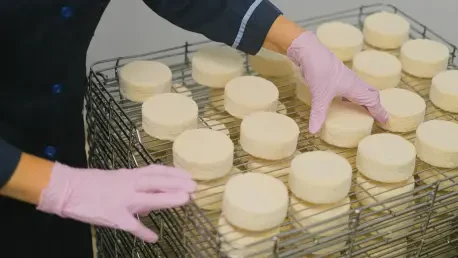

A Breakthrough in the Quest for the Perfect Dairy-Free Melt
Finding a plant-based cheese that possesses the same gooey elasticity and savory satisfaction as traditional mozzarella has remained one of the most persistent challenges in modern food science. While the supermarket shelves are increasingly crowded with dairy-free options, most of these products force a difficult compromise upon the consumer. One might find a block that melts reasonably well but offers the nutritional profile of a plastic bag, or perhaps a protein-rich nut-based version that remains tragically gritty and refuses to stretch. The “holy grail” of a plant-based cheese that looks, cooks, and nourishes like the real thing has been elusive until very recently.
Researchers at the Arkansas Agricultural Experiment Station have now stepped into this gap, utilizing the most famous crop of the state to create a revolutionary alternative. By applying advanced extraction techniques to humble rice milling byproducts, the team developed a high-protein, hypoallergenic cheese that addresses both culinary expectations and environmental concerns. This breakthrough transforms what was once considered agricultural waste into a functional, nutritious ingredient that could fundamentally change how people view vegan dairy substitutes. The project bridges the gap between industrial sustainability and the personal joy of a satisfying meal.
Why the World Needs a Better Plant-Based Alternative
The urgency for such an innovation stems from a growing intersection of dietary restrictions and ecological imperatives. Millions of individuals live with sensitivities to dairy, gluten, or nuts, leaving them with few options in the current plant-based market. Many popular nut-based cheeses are dangerous for those with allergies, and coconut-oil-based variants, while allergy-friendly, are almost entirely devoid of the protein necessary for a balanced meal. Consequently, there is a massive void for a product that is safe for almost everyone while still providing a legitimate source of nutrition.
Simultaneously, the agricultural sector is grappling with the inefficiencies of food production. Every year, the rice industry generates massive volumes of rice bran and broken kernels that are often sold for pennies as animal feed or simply discarded. Repurposing these materials represents a significant step toward a circular food economy, where every part of the harvest is utilized to its highest potential. By reclaiming these “waste” materials, the food industry can create a more sustainable supply chain that relies on domestic crops rather than expensive, imported specialty fats or proteins.
From Rice Paddy to Pizza Topping: The Science of Extraction
The secret to this rice-based cheese lies in the intricate protein profiles found within different parts of a single rice grain. Scientists focused on isolating four major subunits—albumin, globulin, glutelin, and prolamin—each of which contributes unique structural properties to the final product. The way these proteins interact determines whether a cheese will be firm enough to slice for a sandwich or soft enough to bubble and brown on top of a pizza. This molecular tailoring is what allows rice-based proteins to mimic the complex behavior of animal-derived proteins.
Different sources within the rice milling process yield distinct culinary results. Proteins extracted from broken white rice kernels tend to produce a softer texture with superior melting properties, making them the perfect candidate for gooey, melted applications. In contrast, brown rice provides the most nutritionally robust foundation, packed with essential amino acids and offering the stability required for a firmer, more versatile cheese. Finally, rice bran protein, which is rich in albumin, acts as a natural emulsifier. It is exceptionally efficient at holding water and preventing the unsightly oil separation that often plagues low-quality vegan cheeses.
Expert Insights into Protein Functionality and Nutrition
Under the leadership of Assistant Professor Mahfuzur Rahman and graduate student Ruslan Mehadi Galib, the research team achieved a significant milestone in nutritional density. Typical commercial vegan cheeses often contain a meager zero to one percent protein, making them little more than flavored starch and fat. However, the rice-based prototypes developed in this study maintained a protein content of approximately 12 percent, rivaling the nutritional value of some traditional dairy products. This increase in protein not only improves the health profile but also enhances the structural integrity of the cheese.
As detailed in findings published in Future Foods, these proteins are functional ingredients rather than mere fillers. They significantly improve the “mouthfeel” and digestibility of the cheese, ensuring that the eating experience is satisfying rather than rubbery. The research demonstrated that by carefully selecting the ratio of rice proteins, manufacturers can mimic the complex molecular structure of casein, the primary protein in cow’s milk. This scientific precision allows for a product that satisfies the palate while remaining entirely plant-derived and hypoallergenic.
Practical Applications for the Food Industry and Beyond
This research provides a clear framework for how the food industry can pivot toward more sustainable and allergen-friendly manufacturing. By utilizing the 3.3 million tons of potential protein currently hidden in U.S. rice byproducts, manufacturers could reduce reliance on imported ingredients and lower their carbon footprint. The environmental benefits are compounded by the fact that rice is a renewable resource already being grown at a massive scale, requiring no additional land to produce these high-value proteins.
The team moved toward even more sustainable methods by testing ultrasound technology to extract proteins without damaging their nutritional integrity. This shift away from chemical solvents ensured that the final product remained as clean and natural as possible. Looking ahead, the focus shifted to sensory refinement, with researchers working to fine-tune the aroma and flavor profiles to ensure the product appealed to traditional cheese lovers. These strategies for isolating rice proteins were also explored for other crops, suggesting a future where a wide variety of agricultural byproducts are upcycled into premium health foods. The success of this project established a new standard for the plant-based industry, proving that nutrition and flavor did not have to be sacrificed for the sake of sustainability.