
A New Frontier in National Security: The Dawn of Intelligent Manufacturing
The intricate web of global supply chains, once a symbol of efficiency, now represents a critical vulnerability for the United States’ defense industrial base. Recent geopolitical shifts have exposed the risks of relying on foreign sources for essential components, creating an urgent demand for resilient and sovereign manufacturing capabilities. This challenge has catalyzed a search for transformative technologies capable of repatriating production and securing national interests.
At the heart of this quest lies a powerful convergence: the fusion of Artificial Intelligence with advanced Additive Manufacturing. This synergy promises not just to build parts, but to do so with unprecedented speed, intelligence, and reliability. A new generation of manufacturing platforms, exemplified by systems like Precision Additive’s PA-300, now raises a pivotal question: can this intelligent approach to printing provide the definitive solution to America’s supply chain dilemma?
The Evolution of Additive Manufacturing in Defense
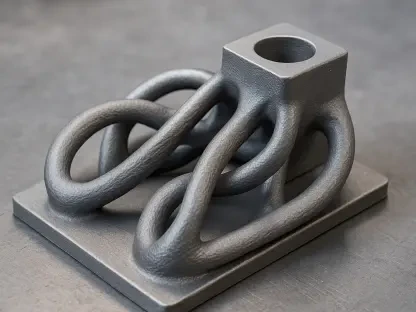
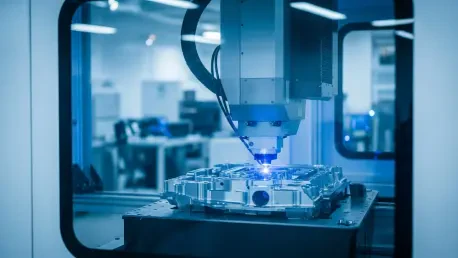
For years, Additive Manufacturing (AM), particularly metal printing techniques like Laser Beam Powder Bed Fusion (PBF-LB), has held the promise of on-demand production for complex defense hardware. This process involves using a high-powered laser to fuse metallic powders layer by layer, building a solid object from a digital design. The potential to create intricate geometries and lightweight components has long been recognized by military and aerospace engineers.
However, the technology’s widespread adoption has been hampered by significant limitations. Traditional PBF-LB systems have often been characterized by slow build speeds, making them unsuitable for producing parts at scale. Furthermore, inconsistencies in build quality and the difficulty of working with mission-critical reactive alloys have created barriers to certifying 3D-printed components for use in high-stakes applications, from aircraft to missile systems.
Introducing the PA-300: A Paradigm Shift in Metal Printing
Emerging from this landscape of promise and challenge is the PA-300, the inaugural metal AM machine from the Indiana-based company Precision Additive. This system was engineered from the ground up to directly confront the historical hurdles that have limited the strategic impact of metal printing. It represents a significant technological leap forward, integrating multiple innovations into a single, cohesive platform.
Unprecedented Speed with SSLM Technology
The centerpiece of the PA-300’s design is its proprietary Selective Stepped Laser Melting (SSLM) technology. This advanced laser system fundamentally reworks the fusion process to achieve build speeds reportedly up to ten times faster than comparable PBF-LB machines. This dramatic increase in throughput transforms the economic and logistical calculus of additive manufacturing, enabling faster production of critical parts and rapid prototyping for new defense systems.
AI-Powered Precision and Real-Time Quality Control
To complement its speed, the PA-300 incorporates an embedded Artificial Intelligence framework developed in collaboration with NVIDIA. This sophisticated AI acts as a vigilant overseer during the entire build process. It continuously monitors thousands of data points, identifies microscopic deviations from the design specifications, and makes autonomous corrections in real time. This predictive quality control ensures that each part meets exacting standards without the need for extensive post-build inspection.
The PAQ System: Ensuring Qualification-Ready Components
These hardware and software innovations are unified under the Precision Additive Qualification (PAQ) system. PAQ is a data-driven framework designed to deliver consistent, repeatable, and high-quality results essential for part certification in strictly regulated industries. By providing a tightly controlled and documented process, the system enables the reliable manufacturing of even challenging materials like tungsten and other reactive alloys, which are crucial for many defense applications.
Beyond Speed: The Integration of Intelligence and Accountability
What truly sets the PA-300 apart is its holistic, system-level approach. While its production speed is a headline feature, the machine’s core innovation lies in the seamless integration of speed with AI-driven quality assurance and a qualification-centric data framework. This combination elevates the technology from a simple part-making tool to a dependable, intelligent manufacturing platform.
This focus on an accountable and verifiable process signals a crucial shift in the industry. The objective is no longer just to print a component, but to create a digital thread that validates its integrity from the first layer to the last. This provides the traceability and confidence required for producing mission-critical parts destined for the most demanding environments.
From Concept to Launch: The PA-300 Enters the Market
With its official market launch, the PA-300 is strategically targeted at sectors where supply chain integrity and component reliability are paramount: US defense, aerospace, energy, and medical. Precision Additive has positioned the machine as a direct solution to national manufacturing vulnerabilities, offering a domestic alternative for producing complex components that are often sourced from overseas.
The company’s vision is clear: to empower American industries to reclaim control over their supply chains. By enabling on-demand, localized production of high-complexity parts, the PA-300 aims to reduce lead times, mitigate geopolitical risks, and foster a new era of technological self-reliance.
Reflection and Broader Impacts
The introduction of intelligent manufacturing platforms like the PA-300 holds significant potential to reshape the US defense industrial base and other critical sectors. Its influence, however, will depend on a careful balance of its strengths and the challenges of industry-wide implementation.
Reflection
The primary strengths of the PA-300 are its potent combination of speed, AI-driven reliability, and its explicit focus on domestic production. This triad directly addresses the most pressing needs of the defense sector. However, potential challenges remain, including the rate of industry adoption, the initial capital investment required, and the need to develop and standardize new certification protocols for parts produced with this novel technology.
Broader Impact
In the long term, the implications of this technology extend far beyond a single machine. It represents a foundational step toward true technological sovereignty for the United States, ensuring that the nation can produce what it needs, when it needs it. This capability could redefine national readiness and pave the way for a future of decentralized, on-demand manufacturing for all forms of critical infrastructure, fundamentally strengthening domestic resilience.
The Verdict: A New Era of Dependable Domestic Production
The integration of artificial intelligence with next-generation additive manufacturing presents a powerful tool for modernizing defense production. Systems like the PA-300 demonstrate that the industry is moving past the experimental phase and into an era of dependable, scalable, and intelligent manufacturing.
This technological leap offers more than just a new way to make parts; it provides a strategic pathway toward a more secure and innovative domestic industrial base. By successfully fusing speed with intelligence, these platforms are poised to redefine what resilience and self-sufficiency mean in the 21st-century defense landscape.