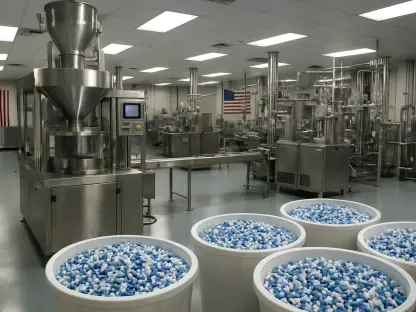

The journey from a promising chemical compound to a life-saving medicine on a pharmacy shelf is notoriously long, arduous, and astronomically expensive, often representing a decade-long gamble with billions of dollars at stake. This traditional “artisanal” approach to chemistry, reliant on manual experimentation and iterative, slow-moving processes, has become a significant bottleneck in medical progress. However, a seismic shift is underway, powered by the convergence of artificial intelligence, robotics, and a strategic push to secure domestic supply chains. At the heart of this transformation is Excelsior Sciences, a company that has just secured a substantial $95 million in funding to build what many believe is the missing link between AI-driven drug design and real-world manufacturing. This infusion of capital, a blend of venture investment and state-level support, signals a strong belief that automating the very building blocks of chemistry could not only accelerate the discovery of new medicines but also fundamentally reshape the global pharmaceutical landscape by bringing critical production back to American soil.
A New Financial and Technological Dawn
Securing a Landmark Investment
The financial commitment to Excelsior Sciences’ vision is both substantial and strategically diverse, underscoring the broad consensus on the urgency of its mission. The company successfully closed a $95 million financing package, which is composed of a $70 million Series A round and a significant $25 million grant from New York’s Empire State Development. The investment round was led by a trio of influential firms—Deerfield Management, Khosla Ventures, and Sofinnova Partners—each known for backing transformative technologies. Their leadership in the round signals strong confidence from the financial community in the viability and potential of Excelsior’s platform. Furthermore, the participation of strategic partners, most notably the pharmaceutical giant Eli Lilly and Company, adds a crucial layer of industry validation. This blend of venture capital and corporate backing suggests that the technology is not merely a theoretical curiosity but a practical solution that established industry players believe can solve real-world challenges in their drug development pipelines. This capital will be instrumental in scaling the company’s operations and expanding its automated chemistry platform.
The funding represents more than just a capital injection for a single company; it serves as a powerful indicator of a broader shift in investment strategy within the life sciences and technology sectors. For years, AI in medicine has been heavily focused on digital discovery—analyzing data, predicting protein structures, and identifying potential drug targets. However, investors are increasingly recognizing that without a corresponding revolution in physical synthesis and testing, the value of these digital designs remains locked in servers. This $95 million commitment to Excelsior reflects a growing understanding that the next frontier is in building the physical infrastructure to support the AI era. It’s a strategic bet that the true bottleneck is no longer in the design phase but in the slow, labor-intensive process of actually creating and validating new molecules. By financing the bridge between digital blueprints and physical reality, these investors are not just backing a startup; they are helping to build a foundational capability for the entire industry, positioning this technology as a critical enabler for future medical breakthroughs.
The Smart Blocc Breakthrough
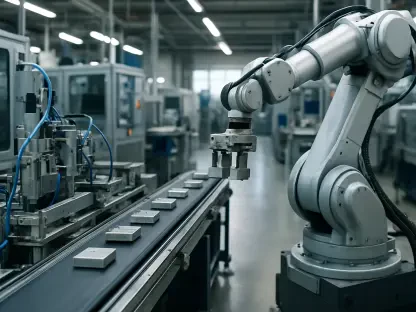
At the core of Excelsior’s innovative approach is its proprietary “smart blocc” technology, a system designed to fundamentally change how chemical synthesis is performed. This platform operates as a machine-executable, modular chemical language, effectively translating the abstract concepts of molecular design into concrete, automated actions. Unlike traditional chemistry, which relies on the bespoke, often intuitive skills of individual chemists, the “smart blocc” system standardizes chemical reactions into interchangeable modules that can be digitally orchestrated. This allows an AI system to not only conceive of a novel compound but also to generate the precise, step-by-step instructions for its physical creation using robotic hardware. This integrated framework creates a seamless workflow from digital design to real-world production, replacing the slow, sequential, and often unpredictable nature of manual lab work with a highly scalable, repeatable, and rapid process. The goal is to move beyond the limitations of “artisanal” chemistry and establish a new paradigm where molecules are built with the precision and speed of modern manufacturing.
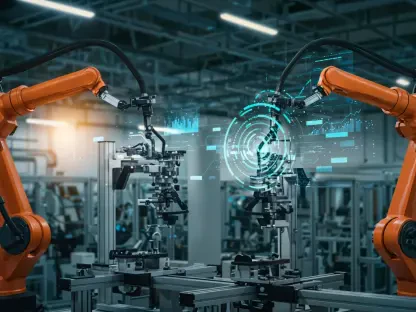
The true power of this technology is realized in its application as a continuous, “closed-loop” system, which represents a radical departure from conventional drug discovery timelines. In a traditional setting, a chemist might synthesize a compound, send it for testing, wait for results, and then manually adjust the next iteration—a cycle that can take weeks or months. Excelsior’s platform automates this entire feedback loop. The AI designs a molecule, the robotic system synthesizes it, an integrated testing module analyzes its properties, and the results are fed directly back into the AI. This allows the system to learn and adapt in real time, intelligently refining subsequent molecular designs based on immediate experimental data. This continuous cycle of design, build, test, and learn can drastically compress discovery timelines, enabling the exploration of a vast chemical space with unprecedented speed. What once took years of painstaking manual labor could potentially be accomplished in a fraction of the time, dramatically accelerating the pace at which new therapeutic candidates are identified and optimized.
Reshaping the National Pharmaceutical Landscape
The Strategic Imperative of Reshoring
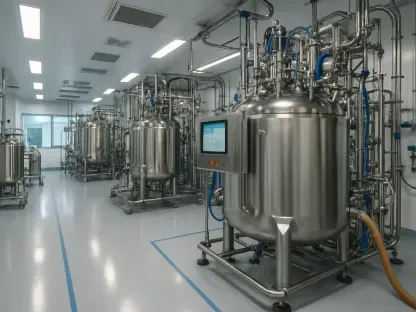
The mission driving Excelsior Sciences aligns directly with a pressing national security and economic priority: reducing the United States’ heavy reliance on offshore manufacturing for essential medicines. Over the past several decades, a significant portion of pharmaceutical production, particularly for active pharmaceutical ingredients (APIs), has moved overseas, creating fragile and extended supply chains vulnerable to geopolitical instability, trade disputes, and public health crises. Excelsior’s technology offers a potent solution to this strategic vulnerability. By enabling rapid, scalable, and cost-effective domestic production of small molecules, the platform provides a viable pathway to reshore critical parts of the pharmaceutical industry. Stakeholders, from the company’s leadership to government officials, view this capability not merely as a commercial opportunity but as a foundational element for building a more resilient and secure national health infrastructure. The ability to quickly stand up production of a needed medicine within the country’s borders is a powerful tool for ensuring a reliable supply of therapeutics.
This initiative is further strengthened by a clear synergy between private innovation and public policy, as exemplified by the $25 million grant from New York’s Empire State Development. This government support underscores the recognition that building a domestic, high-tech manufacturing base is a shared objective with significant economic benefits. By fostering a company like Excelsior, New York aims to establish itself as a central hub for the emerging field of AI-enabled chemistry, attracting talent, investment, and ancillary businesses. This public-private partnership model is crucial for de-risking the development of such a capital-intensive and groundbreaking technology. It sends a strong signal that reshoring the pharmaceutical industry is not just a federal talking point but a tangible economic development strategy at the state level. The ultimate vision is a robust domestic ecosystem where advanced technology provides a secure and reliable alternative to foreign-dependent supply chains, bolstering both national security and regional economic prosperity.
From Blueprint to Reality a New Era in Chemistry
The unified perspective among investors was clear: while AI could theoretically design an infinite number of novel drugs, its true potential was shackled by the physical limitations of traditional chemistry. Excelsior Sciences was seen as the crucial missing piece, the technological bridge required to close the vast gap between what AI could model in silico and what chemists could painstakingly create in the lab. The company’s platform represented the physical manifestation of AI’s promise, a system capable of translating digital designs into tangible molecules with unprecedented speed and scale. This ability to rapidly synthesize and test what AI could imagine was considered a transformational leap forward. The investment was not merely in a faster process but in a foundational capability that unlocked the full power of computational drug discovery, creating a direct path from algorithm to reality.
This convergence of substantial capital, cutting-edge technology, and strategic national interest marked a pivotal moment for the American pharmaceutical industry. The funding and development of Excelsior’s automated chemistry platform represented a definitive transition from theoretical AI potential to its tangible, industrial-scale application in molecular creation. It was a development that addressed the core bottlenecks in drug discovery while simultaneously providing a powerful engine for reshoring critical manufacturing capabilities. The successful integration of AI-driven design with robotic synthesis established a new paradigm, one that not only accelerated the search for future medicines but also began to fundamentally redraw the global map of pharmaceutical innovation and production, anchoring a new, more resilient industry firmly on U.S. soil.