
A seismic shift is underway in the American pharmaceutical landscape, as a politically charged push to reshore manufacturing has unleashed a torrent of domestic investment pledges unlike anything seen in decades. In response to mounting pressure from the Trump administration, the biopharma industry has committed to staggering levels of capital expenditure, with some estimates projecting an infusion of nearly $500 billion into new U.S.-based facilities and infrastructure over the next five years. This movement, while celebrated as a victory for American industrial policy, presents a complex web of operational hurdles and strategic compromises. The central question is not whether the capital exists to fund this homecoming, but whether the industry can navigate the immense logistical challenges and geopolitical realities to build a resilient, competitive, and truly self-sufficient domestic supply chain without fracturing its global operational backbone. The answer will define the future of American drug manufacturing for generations to come.
The High Cost of a Domestic Pivot
The catalyst for this industrial realignment has been a concerted campaign of political pressure, primarily through threats of significant tariffs and the potential implementation of “Most-Favored-Nation” drug pricing policies. This has compelled major pharmaceutical corporations to publicly commit to vast domestic investments, effectively redirecting capital that might have otherwise been deployed globally. The scale of this financial pivot is monumental. Industry giants are leading the charge, with Merck earmarking over $70 billion and Johnson & Johnson planning a $55 billion investment in their American operations. This wave of spending is seen as a powerful tailwind for the domestic manufacturing sector, promising to create jobs and reduce reliance on foreign supply chains. However, this shift represents a fundamental reordering of corporate strategy, driven less by market optimization and more by political imperative, forcing companies to weigh the long-term costs of domestic production against the immediate risks of regulatory action. The move is a high-stakes wager on the future of American industrial policy.
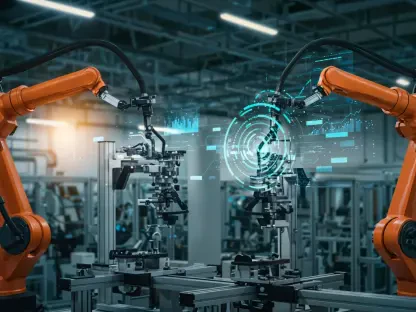
This unprecedented influx of capital, however, is colliding with significant operational realities on the ground. Industry analysts and consulting firms like West Monroe have been quick to issue warnings about the practical difficulties of such a rapid scale-up. Companies are expected to face considerable headwinds, including increasingly tight labor markets for skilled technicians and scientists, as well as longer lead times for the construction and validation of advanced manufacturing facilities. To overcome these obstacles and make domestic operations economically viable in the face of higher wages, automation has emerged as a critical and non-negotiable strategy. The widespread adoption of robotics, artificial intelligence, and continuous manufacturing processes is now viewed as essential for enabling the necessary scaling while maintaining the operational agility required in a dynamic market. This technological investment is the key to offsetting the inherent cost disadvantages and ensuring that the newly established American facilities can compete on a global stage beyond simply fulfilling a political mandate.
A Global Strategy in a Nationalized World
Contrary to the narrative of a complete retreat from international operations, a more nuanced, hybrid strategy is taking shape across the pharmaceutical industry. The reshoring initiative does not signal a total abandonment of well-established global supply chains; rather, it reflects a move toward a dual-track approach. Companies are making highly selective and strategic investments in the United States while simultaneously working to keep their global networks intact and functional. This balanced strategy is perfectly exemplified by Eli Lilly, which is in the process of investing a massive $27 billion across four new sites within the U.S. At the same time, the company is also constructing a state-of-the-art $3 billion manufacturing facility in the Netherlands. This concurrent investment in both domestic and European capacity demonstrates a sophisticated hedging of geopolitical and economic risks, acknowledging that a resilient supply chain in the modern era may require a diversified, rather than a purely localized, footprint.
The continued investment in European facilities underscores the region’s enduring competitiveness in the high-stakes world of advanced biopharmaceutical manufacturing. According to analysis from GlobalData, the decision by companies like Eli Lilly to build major new plants in the European Union is driven by factors that extend beyond immediate cost considerations. The EU offers a highly stable and predictable regulatory environment, a stark contrast to the often volatile political climate that has recently characterized American industrial policy. Furthermore, Europe boasts a number of mature and deeply integrated science clusters, providing access to a rich ecosystem of talent, research institutions, and specialized suppliers. These established advantages ensure that the EU remains a formidable competitor for cutting-edge manufacturing projects. It suggests that while political pressure can steer investment toward the U.S., the fundamental business case for maintaining a significant operational presence in other stable, high-tech regions remains overwhelmingly strong.
The Uneven Burden of an Industrial Shift
While multinational corporations possess the financial resources and operational scale to absorb the complexities of this policy-driven pivot, the reshoring trend has placed a disproportionate burden on the nation’s smaller biotechnology firms. These companies, often at the forefront of medical innovation, typically lack the capital to build and operate their own manufacturing facilities. As the Biotechnology Innovation Organization (BIO) has emphasized, this segment of the industry relies heavily on a global network of contract development and manufacturing organizations (CDMOs) to advance their products from the laboratory to the clinic and eventually to the market. The sudden, massive demand for U.S.-based production is creating a bottleneck, as domestic CDMO capacity is not currently positioned to scale up rapidly enough to meet the needs of both its existing and prospective clients. This squeeze threatens to slow the pace of innovation by making it harder and more expensive for smaller players to secure the manufacturing slots necessary for their development pipelines.
The industry’s politically motivated homecoming had successfully mobilized billions in capital from its largest players, yet it soon became clear that the ultimate success of a resilient American biotech sector hinged on more than just the actions of these giants. The critical challenge that emerged was the urgent need to fortify the foundational ecosystem of contract manufacturing that supports the industry’s most innovative, and often most vulnerable, members. It was understood that domestic CDMOs could not meet this unprecedented surge in demand without significant and targeted support to expand their capacity and technological capabilities. The long-term viability of this great industrial homecoming depended not just on bringing the titans of pharma back to American shores, but on building a robust and accessible manufacturing infrastructure for the entire life sciences community, ensuring that the next generation of therapies would be developed and produced within the nation’s borders.